The Red-fan Parrot: A Vibrant Jewel of the Amazon Rainforest
The Red-fan Parrot, scientifically known as Deroptyus accipitrinus, is a captivating and unique species of parrot that resides deep within the lush landscapes of South America. Known for its striking appearance and vibrant personality, this bird is a true marvel of the avian world. In this article, we will explore the fascinating characteristics, habitat, behavior, and conservation status of the Red-fan Parrot, providing a comprehensive understanding of this remarkable species.
Taxonomy and Physical Description
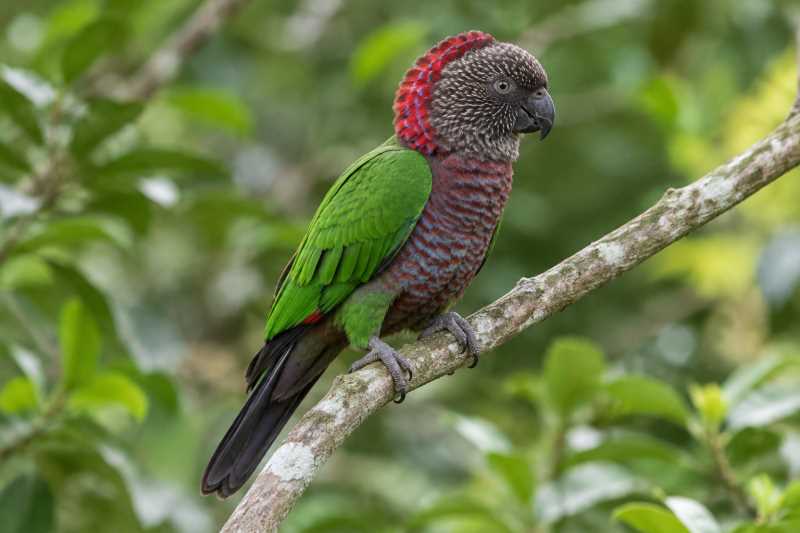
Belonging to the family Psittacidae, the Red-fan Parrot is the sole member of the genus Deroptyus. It is known for its distinctive appearance, characterized by its vibrant plumage and striking fan-like crown of feathers. The parrot is medium-sized, measuring approximately 35-40 cm in length, with a wingspan of about 22-24 cm. Its most notable feature is the semi-circular crown of red and blue feathers that can be raised to form a dramatic fan-like display, giving the bird its common name.
The body of the Red-fan Parrot is predominantly green, with intricate patterns of red, blue, and brown adorning the plumage. Its beak is robust and hooked, adapted for cracking nuts and seeds, while its zygodactyl feet (two toes facing forward and two backward) allow it to skillfully grasp branches and food items.
Habitat and Distribution
The natural habitat of the Red-fan Parrot is the tropical rainforests of northern South America, particularly in countries such as Brazil, Guyana, Suriname, Venezuela, and Colombia. These parrots thrive in dense, humid, and lowland forest environments, where they can be found at altitudes ranging from sea level to around 500 meters. They are often seen in the canopy layer, where their vibrant plumage blends seamlessly with the lush foliage.
The Red-fan Parrot is a nomadic species, exhibiting seasonal movements in response to food availability. They are known to travel in small flocks, which enhances their foraging efficiency and provides protection against predators.
Behavior and Diet
Red-fan Parrots are highly social birds, often observed engaging in playful interactions within their flocks. They are known for their loud and varied vocalizations, which include a range of squawks, whistles, and mimicry. These vocal abilities are not only used for communication within the flock but also to establish territory and ward off potential threats.
The diet of the Red-fan Parrot is predominantly frugivorous, consisting mainly of fruits, seeds, nuts, and berries. They play a crucial role in their ecosystem as seed dispersers, aiding in the regeneration of forest vegetation. Their strong beaks allow them to crack open hard-shelled nuts, making them important agents in the propagation of various plant species.
Breeding and Reproduction
Breeding for the Red-fan Parrot typically occurs during the wet season when food resources are abundant. These birds are monogamous, forming long-term pair bonds. The nesting sites are usually located in tree cavities, where the female lays a clutch of 2-4 eggs. Both parents participate in the incubation process, which lasts for about 24-26 days.
Once hatched, the chicks are altricial, meaning they are born blind and helpless, relying entirely on their parents for nourishment and protection. The fledging period lasts approximately 8-10 weeks, during which the young parrots develop their plumage and learn essential survival skills from their parents.
Conservation Status and Threats
The International Union for Conservation of Nature (IUCN) currently classifies the Red-fan Parrot as a species of "Least Concern." However, like many rainforest species, they are threatened by habitat loss due to deforestation, logging, and agricultural expansion. These activities lead to fragmentation of their natural habitat, posing significant challenges to their survival.
Additionally, the pet trade poses a risk to their populations, as their striking appearance makes them highly sought-after as exotic pets. Conservation efforts are essential to ensure the protection of their habitats and to mitigate the impact of human activities on their populations.
Conclusion
The Red-fan Parrot is a true testament to the beauty and diversity of the avian world. Its vibrant plumage, unique behavior, and ecological significance make it a species worth celebrating and protecting. As stewards of the planet, it is our responsibility to ensure that future generations can continue to marvel at the wonders of species like the Red-fan Parrot. Through concerted conservation efforts and sustainable practices, we can help preserve the rich biodiversity of the Amazon rainforest and the countless species that call it home.
References
- Forshaw, J. M. (2010). Parrots of the World. Princeton University Press.
- Juniper, T., & Parr, M. (1998). Parrots: A Guide to Parrots of the World. Yale University Press.
- BirdLife International. (2021). Species factsheet: Deroptyus accipitrinus. IUCN Red List for birds.
Related posts