The Black-bodied Woodpecker: A Rare Gem of the Avian World
The Black-bodied Woodpecker (*Dryocopus schulzii*) is a remarkable yet elusive bird that inhabits the subtropical forests of South America. Known for its striking appearance and fascinating behaviors, this woodpecker is a subject of great interest among ornithologists and bird enthusiasts alike. This article delves into the unique characteristics, habitat, and conservation status of the Black-bodied Woodpecker, offering insights into its life and the challenges it faces in the wild.
Physical Characteristics
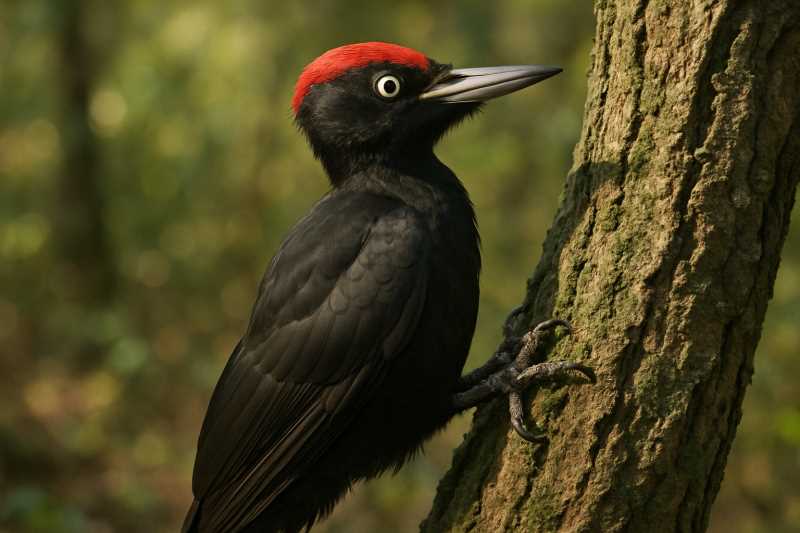
The Black-bodied Woodpecker is a large, robust bird, with adults measuring approximately 33 to 38 centimeters in length. As its name suggests, this woodpecker boasts a predominantly black plumage, which is contrasted by its striking red crest. The males and females can be distinguished by the intensity and extent of the red coloration on their heads, with males typically exhibiting a more pronounced red patch. The bird’s beak is large and chisel-like, perfectly adapted for its wood-boring lifestyle.
One of the most distinctive features of the Black-bodied Woodpecker is its loud drumming on tree trunks, which serves as both a communication tool and a method of foraging. This drumming is not only a territorial display but also a way to locate insects and larvae hidden beneath the bark.
Habitat and Distribution
The Black-bodied Woodpecker is primarily found in the subtropical and temperate forests of South America, with its range extending across parts of Argentina, Brazil, and Paraguay. It prefers dense, mature forests where it can find ample opportunities for foraging and nesting. These forests provide the necessary resources, such as large trees with decayed wood, where the woodpecker excavates its nests and searches for food.
Unfortunately, the Black-bodied Woodpecker’s habitat is under threat due to deforestation and land conversion for agriculture and urban development. This loss of habitat poses significant challenges for the species, as it relies heavily on large territories with abundant resources.
Diet and Foraging Behavior
The Black-bodied Woodpecker is an insectivore, feeding primarily on wood-boring beetles and their larvae. It uses its powerful beak to excavate deep into tree trunks, extracting insects and grubs hidden beneath the bark. This foraging behavior not only serves to nourish the bird but also plays a crucial role in controlling insect populations within the forest ecosystem.
In addition to insects, the Black-bodied Woodpecker’s diet may also include fruits, seeds, and nuts, particularly during the winter months when insects are less abundant. This dietary flexibility allows the woodpecker to adapt to seasonal changes in food availability, although it remains heavily reliant on forest habitats for survival.
Reproduction and Lifespan
The breeding season of the Black-bodied Woodpecker typically occurs during the spring and early summer months. During this time, males engage in elaborate displays of drumming and calling to attract females. Once a pair has formed, they work together to excavate a nesting cavity in a suitable tree, where the female lays a clutch of two to four eggs.
Both parents share the responsibility of incubating the eggs and feeding the hatchlings. The chicks fledge after about four weeks, although they may remain with their parents for several months as they learn to forage and develop their skills.
In the wild, the Black-bodied Woodpecker can live for several years, although its lifespan is influenced by factors such as predation, habitat quality, and food availability.
Conservation Status and Efforts
The Black-bodied Woodpecker is currently classified as “Near Threatened” by the International Union for Conservation of Nature (IUCN). The primary threat to the species is habitat destruction, particularly the loss of mature forests due to logging and agricultural expansion.
Conservation efforts aimed at protecting the Black-bodied Woodpecker focus on preserving its natural habitat and promoting sustainable forestry practices. Protected areas and national parks play a crucial role in safeguarding critical habitats for this and other forest-dependent species.
In addition, raising public awareness about the importance of forest conservation and the role of species like the Black-bodied Woodpecker in maintaining ecological balance is essential for long-term conservation success.
Conclusion
The Black-bodied Woodpecker is a captivating bird that embodies the beauty and complexity of South America’s subtropical forests. Its survival depends on our ability to protect and restore its natural habitat, ensuring that future generations can continue to marvel at this rare gem of the avian world. By supporting conservation initiatives and sustainable land-use practices, we can help secure a future for the Black-bodied Woodpecker and the diverse ecosystems it calls home.
Related posts