Introduction
The Ashy Woodswallow (Artamus fuscus) is a captivating avian species that belongs to the family Artamidae. This bird is primarily found in South and Southeast Asia, making its home in open country, edge of forests, and farmlands. Due to its distinct appearance and behavior, the Ashy Woodswallow has become a subject of interest for ornithologists and bird enthusiasts alike.
Physical Characteristics
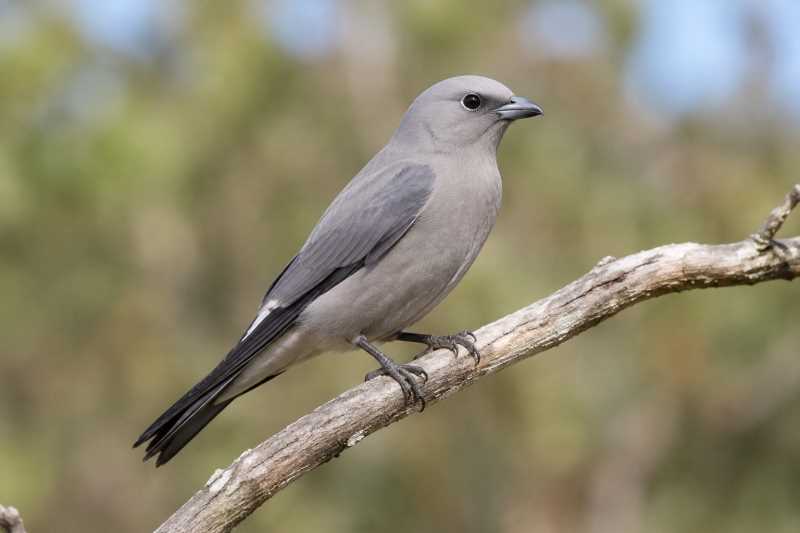
The Ashy Woodswallow is a medium-sized bird, measuring about 18-20 cm in length. Its plumage is predominantly bluish-grey, with a lighter underside and a slightly darker mantle. The wings and tail are dark, adding a striking contrast to its overall appearance. The bill of the Ashy Woodswallow is short and stout, adapted for its insectivorous diet. Its eyes are dark, and it has a small, hook-like projection at the tip of the bill, which is typical of the woodswallow family.
Habitat and Distribution
Artamus fuscus is widely distributed across the Indian subcontinent and parts of Southeast Asia, including Bangladesh, Sri Lanka, Myanmar, Thailand, and Vietnam. It thrives in open landscapes, preferring areas with scattered trees and shrubs. The Ashy Woodswallow is commonly found in agricultural lands, grasslands, and the edges of forests. This adaptability to various environments contributes to its stable population trend and wide distribution.
Behavior and Ecology
The Ashy Woodswallow is a highly social bird, often seen in flocks ranging from a few individuals to more than a dozen. These flocks are usually perched in close proximity on power lines, tree branches, or other elevated spots. Known for its acrobatic flight, the Ashy Woodswallow is skilled at catching insects mid-air. Its flight is swift and agile, characterized by rapid wing beats and short glides.
These birds communicate through a series of calls, which are often described as soft and musical. They are most vocal during the breeding season, using their calls to establish territory and attract mates. The Ashy Woodswallow also exhibits cooperative breeding behavior, where multiple individuals assist in raising the young.
Breeding and Nesting
The breeding season of the Ashy Woodswallow typically spans from March to June, although it can vary depending on the region. They build their nests in tree cavities, crevices, or on man-made structures like buildings and bridges. The nest is constructed using twigs, grass, and feathers, forming a loose cup-like structure.
A typical clutch consists of 3 to 5 eggs, which are incubated by both parents for about two weeks. After hatching, the chicks are altricial, meaning they are born blind and helpless. The parents, along with other flock members, participate in feeding and protecting the young. The fledglings leave the nest after 18 to 21 days but remain dependent on the adults for several weeks.
Conservation Status
According to the International Union for Conservation of Nature (IUCN), the Ashy Woodswallow is classified as a species of Least Concern. Its stable population is attributed to its adaptability to diverse habitats and its widespread distribution. However, habitat destruction due to urbanization and agricultural expansion poses potential threats to its natural habitats. Conservation efforts are essential to ensure that these birds continue to thrive in their native environments.
Cultural Significance
In many regions, the Ashy Woodswallow is considered a symbol of grace and agility. Its presence is often welcomed by farmers as it helps control insect populations, thereby benefiting agriculture. The bird’s social nature and cooperative behavior are admired and often featured in local folklore and stories.
Conclusion
The Ashy Woodswallow is an intriguing bird that plays a vital role in its ecosystem. Its adaptability, social behavior, and insectivorous diet make it an essential component of the avian biodiversity in South and Southeast Asia. While currently not under significant threat, ongoing habitat preservation and environmental awareness are crucial to ensuring the continued prosperity of this elegant bird.
References
- BirdLife International. (2022). Artamus fuscus, Ashy Woodswallow. The IUCN Red List of Threatened Species.
- Ali, Salim, and S. Dillon Ripley. (1987). Handbook of the Birds of India and Pakistan. Oxford University Press.
- Rasmussen, P.C., and J.C. Anderton. (2012). Birds of South Asia: The Ripley Guide. Smithsonian Institution and Lynx Edicions.
Further Reading
For those interested in learning more about the Ashy Woodswallow and other fascinating avian species, the following resources are recommended:
- "The Birds of South Asia: A Field Guide" by Richard Grimmett, Carol Inskipp, and Tim Inskipp.
- "The Complete Birds of the World" by David Brewer.
These resources provide comprehensive information on the identification, behavior, and conservation of birds across the region.
Related posts