The White-capped Parrot: Nature’s Feathery Jewel
The world of ornithology is replete with a variety of fascinating and colorful species, each one contributing uniquely to the intricate tapestry of avian biodiversity. Among these captivating creatures is the White-capped Parrot (Pionus seniloides), a species that stands out due to its distinctive appearance and intriguing behavior. This article delves into the world of the White-capped Parrot, exploring its habitat, physical characteristics, behavior, and conservation status.
Habitat and Distribution
The White-capped Parrot is primarily found in the Andean regions of South America, with a range that extends through parts of Colombia, Ecuador, Peru, and Venezuela. These birds are typically associated with montane forests, residing at elevations ranging from 1,000 to 3,400 meters above sea level. The lush, verdant environments of these high-altitude regions provide an ideal habitat for the White-capped Parrot, offering abundant food resources and ample nesting sites.
The parrot’s preference for montane forests is linked to the availability of fruits, seeds, and nuts, which constitute the bulk of its diet. Additionally, these areas offer natural protection from predators and human disturbances, although expanding agricultural and urban developments pose an increasing threat to their habitat.
Physical Characteristics
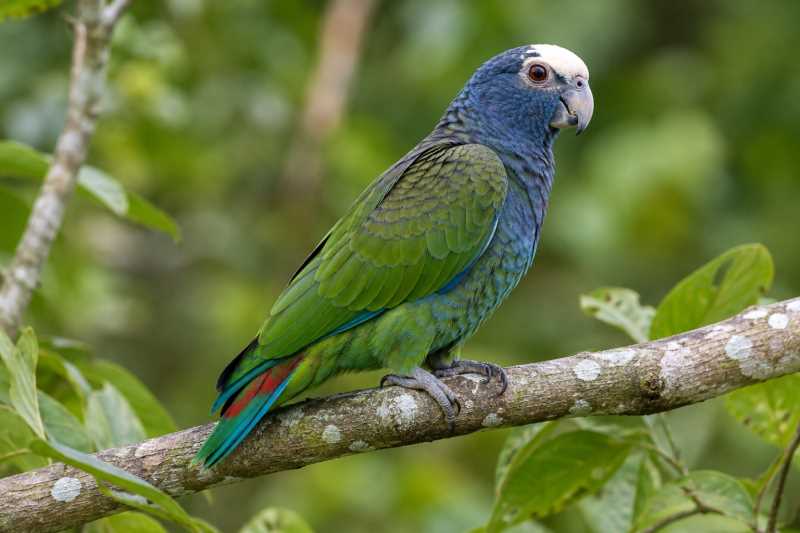
One of the most striking features of the White-capped Parrot is its vibrant plumage. As its name suggests, the parrot is adorned with a conspicuous white cap on its head, which contrasts beautifully with its predominantly green body. The rest of its feathers exhibit a subtle interplay of hues, including shades of blue and violet, particularly on the wings and tail.
The White-capped Parrot is a medium-sized bird, measuring approximately 27 to 29 centimeters in length and weighing between 220 to 280 grams. Its robust build is complemented by a short, squared tail and a strong, curved beak, adapted for cracking open hard seeds and nuts.
Behavior and Social Structure
White-capped Parrots are known for their social nature, often observed in small flocks or family groups. They are generally active during the day, engaging in feeding, preening, and social interactions. These parrots communicate with a range of vocalizations, including squawks, whistles, and softer calls used for maintaining contact within the flock.
The breeding season for the White-capped Parrot varies depending on its geographic location, but it typically spans from February to June. During this period, the parrots engage in elaborate courtship displays, characterized by mutual preening and synchronized movements. Nesting usually occurs in tree cavities, where the female lays a clutch of two to four eggs. Both parents share the responsibilities of incubating the eggs and feeding the chicks once they hatch.
Conservation Status and Threats
The International Union for Conservation of Nature (IUCN) currently lists the White-capped Parrot as a species of "Least Concern." However, this does not imply that the species is free from threats. The primary challenge facing the White-capped Parrot is habitat destruction, driven by deforestation, agricultural expansion, and urbanization. As montane forests are cleared or fragmented, the parrots lose critical breeding and foraging grounds.
Moreover, while the White-capped Parrot is not a primary target for the illegal pet trade, its attractive appearance does make it susceptible to capture. Conservation efforts for this species are thus focused on habitat preservation and monitoring population trends to ensure that any potential threats are addressed promptly.
The Role of the White-capped Parrot in Ecosystems
Beyond their intrinsic beauty and ecological importance, White-capped Parrots play a vital role in their ecosystems. As frugivores, they contribute to seed dispersal, aiding in the regeneration of forested areas. By consuming fruits and dispersing seeds over wide areas, these parrots help maintain the health and diversity of their habitats.
Furthermore, the presence of White-capped Parrots can serve as an indicator of ecosystem health. Because they rely on intact forest environments, a stable or increasing parrot population often signifies a well-preserved habitat.
Conclusion
The White-capped Parrot is a testament to the rich biodiversity found within South America’s montane forests. Its striking appearance, social behavior, and ecological significance make it a species worthy of attention and conservation. Protecting the White-capped Parrot requires a concerted effort to preserve its habitat and address the broader environmental challenges facing montane forests. By doing so, we not only safeguard this remarkable bird but also contribute to the overall health and resilience of the ecosystems it inhabits.
In conclusion, the White-capped Parrot is more than just a pretty face; it is an integral part of the ecological web, deserving of our respect and protection. Through continued research and conservation initiatives, we can ensure that future generations have the opportunity to marvel at this feathery jewel of nature.
Related posts