Southern Screamer (Chauna torquata): An Avian Marvel of South America
The Southern Screamer, scientifically named Chauna torquata, is a fascinating bird species that captivates ornithologists and bird enthusiasts alike. This distinctive bird, belonging to the family Anhimidae, is renowned for its unique vocalizations and striking appearance. Native to South America, the Southern Screamer inhabits wetlands and grasslands, contributing significantly to the biodiversity of the continent.
Physical Characteristics
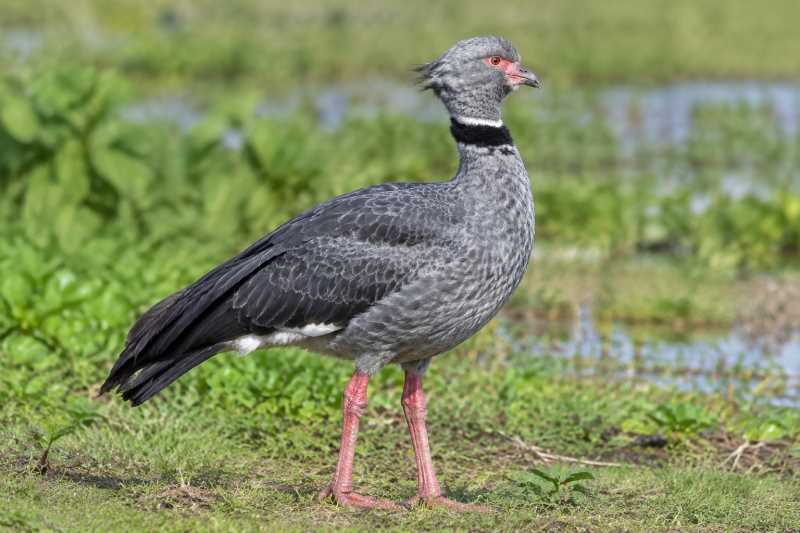
The Southern Screamer is a large bird, measuring approximately 81 to 95 centimeters in length, with a wingspan that can reach up to 2 meters. Its robust body is adorned with a mottled gray plumage, accented by a distinctive white ring around its neck. This contrasting coloration not only aids in identification but also offers a degree of camouflage in its natural habitat.
One of the most striking features of the Southern Screamer is its crest of feathers atop its head, adding a regal appearance to its demeanor. Unlike many other bird species, the Southern Screamer possesses a unique skeletal structure with pneumatic bones that are less dense, aiding in its buoyancy in water.
Habitat and Distribution
Southern Screamers are predominantly found in the wetlands and savannas of South America, with their range extending across countries such as Argentina, Bolivia, Brazil, Paraguay, and Uruguay. These birds are highly dependent on aquatic environments, favoring marshes, lagoons, and riverbanks where they can forage for food.
The rich biodiversity of these ecosystems provides the Southern Screamer with a bountiful supply of vegetation, seeds, and insects. Their presence is often considered an indicator of healthy wetland environments, making them a critical species for ecological monitoring and conservation efforts.
Behavior and Diet
Southern Screamers are predominantly herbivorous, feeding on a variety of plant materials including leaves, stems, and seeds. However, they occasionally supplement their diet with small invertebrates, showcasing their adaptability to available resources.
These birds are known for their loud, trumpet-like calls, which can be heard over long distances. Their vocalizations serve multiple purposes, including mate attraction, territory defense, and communication among flock members. The Southern Screamer’s call is a defining characteristic, contributing to its name and making it a subject of interest for bioacoustic studies.
Reproduction and Lifespan
Southern Screamers are monogamous birds, forming lifelong pairs. During the breeding season, which typically occurs during the wet months, these birds engage in elaborate courtship displays characterized by synchronized vocalizations and aerial acrobatics.
Nesting usually takes place on elevated platforms built from reeds and vegetation. The female Southern Screamer lays between two to seven eggs, with both parents sharing incubation duties. This cooperative breeding strategy ensures a higher survival rate for the offspring. The chicks are precocial, meaning they are relatively mature and mobile shortly after hatching, allowing them to quickly adapt to their environment.
In the wild, Southern Screamers can live up to 15 years, although factors such as habitat destruction and predation can impact their longevity.
Conservation Status
Currently, the Southern Screamer is classified as a species of Least Concern by the International Union for Conservation of Nature (IUCN). However, like many other wetland-dependent species, they face threats from habitat loss due to agriculture, urbanization, and climate change.
Conservation efforts are crucial to ensuring the survival of the Southern Screamer and the health of their habitats. Protection of wetland areas, along with initiatives to restore degraded ecosystems, can help mitigate the impacts of human activities and preserve biodiversity.
Conclusion
The Southern Screamer is a remarkable bird that embodies the ecological richness of South America. Its distinctive calls, striking appearance, and ecological role underscore the importance of conserving wetland habitats. As an indicator species, the Southern Screamer serves as a reminder of the delicate balance within ecosystems and the need for continued conservation efforts to protect our planet’s avian diversity for future generations.
Related posts