The Majestic Cape Eagle-Owl: A Comprehensive Overview
The Cape Eagle-Owl (Bubo capensis) is one of the most remarkable avian species native to the African continent. Known for its majestic appearance and formidable hunting skills, this owl is a subject of fascination for ornithologists and bird enthusiasts alike. In this article, we delve into the characteristics, habitat, behavior, and conservation status of the Cape Eagle-Owl, offering an in-depth understanding of this magnificent bird.
Physical Characteristics
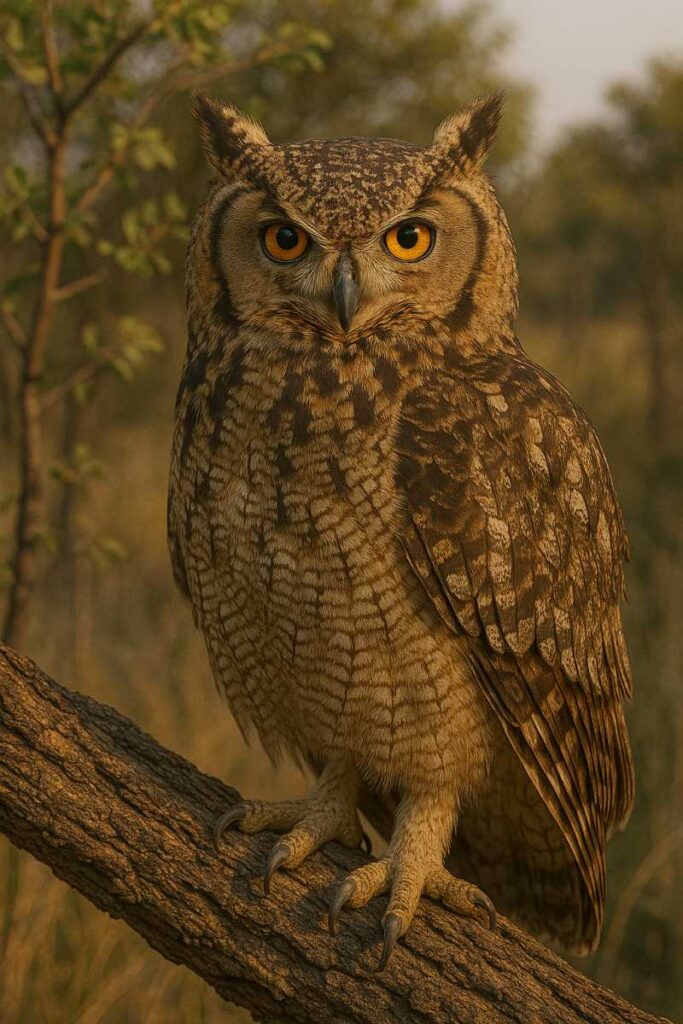
The Cape Eagle-Owl is a large bird, measuring between 46 to 58 cm in length, with a wingspan that can extend up to 140 cm. This owl is distinguished by its striking plumage, which is predominantly a mix of rich browns, grays, and whites, providing excellent camouflage in its natural habitat. The facial disc is accentuated by bright orange or yellow eyes, which are adapted for nocturnal vision. One of its defining features is the prominent ear tufts, which are not ears but feathered extensions that enhance its visual silhouette.
Habitat and Distribution
The Cape Eagle-Owl is widely distributed across sub-Saharan Africa, with populations found in countries like South Africa, Namibia, Botswana, Zimbabwe, and Kenya. This species favors mountainous regions, rocky hillsides, and savannas, where it can find ample food and suitable nesting sites. It is also known to inhabit open woodlands and forested areas, adapting well to various landscapes.
The owl’s choice of habitat is closely linked to the availability of prey and nesting sites. Rocky outcrops and cliffs provide ideal nesting locations, where the owl can lay its eggs in a protected environment away from ground predators. This adaptability in habitat selection has allowed the Cape Eagle-Owl to maintain stable populations across its range.
Diet and Hunting
As a formidable predator, the Cape Eagle-Owl primarily feeds on small mammals, birds, reptiles, and insects. Its diet is largely opportunistic, reflecting the availability of prey in its environment. The owl employs a sit-and-wait strategy, using its excellent hearing and vision to detect prey movements during the night. Once a target is identified, the owl swoops down with silent flight, thanks to its specialized feathers that minimize sound, and captures its prey with powerful talons.
The Cape Eagle-Owl’s role as a top predator in its ecosystem is critical in controlling the population of small mammals and other prey species, maintaining a balanced ecological community.
Breeding and Lifecycle
Breeding occurs during the cooler months, typically between March and August, depending on the region. The Cape Eagle-Owl is monogamous, with pairs often remaining together for life. Courtship involves a series of hooting calls and displays, after which the female lays 1 to 3 eggs in a shallow scrape on rocky ground or cliff ledge.
The female incubates the eggs for about 32 to 38 days while the male provides food. Once hatched, the owlets are dependent on their parents for food and protection. They fledge at around 7 to 9 weeks but may remain under parental care for several months as they learn to hunt and fend for themselves.
Conservation Status
Currently, the Cape Eagle-Owl is classified as Least Concern by the International Union for Conservation of Nature (IUCN). However, like many wildlife species, it faces threats from habitat destruction, human encroachment, and secondary poisoning from rodenticides. Conservation efforts are crucial to ensure that the natural habitats of these owls are preserved and protected from unsustainable practices.
Public awareness and education about the ecological role of the Cape Eagle-Owl can also contribute to its conservation. Encouraging responsible wildlife management and land-use planning can help mitigate the adverse impacts on the owl’s populations.
Conclusion
The Cape Eagle-Owl stands as a testament to the rich biodiversity of the African continent. Its impressive adaptations, ecological importance, and striking appearance make it a vital species in its natural habitat. By understanding and appreciating the Cape Eagle-Owl, we can better appreciate the interconnectedness of ecosystems and the importance of preserving our natural world for future generations. As stewards of the environment, it is imperative that we continue to support conservation initiatives that protect these magnificent birds and the habitats they call home.
Related posts