The Eastern Grass Owl: A Stealthy Denizen of the Grasslands
The Eastern Grass Owl (Tyto longimembris) is a captivating bird, known for its elusive nature and unique adaptations that allow it to thrive in grassland ecosystems. This species, a member of the Tytonidae family, has intrigued ornithologists and bird watchers alike with its silent flight and distinctive appearance. Despite its wide distribution across parts of Asia, Australia, and the Pacific, the Eastern Grass Owl remains somewhat enigmatic due to its secretive lifestyle, making it a subject of interest for research and conservation efforts.
Taxonomy and Distribution
The Eastern Grass Owl is one of the lesser-known members of the Tyto genus, which includes the more famous Barn Owl (Tyto alba). The species is broadly distributed, ranging from the Indian subcontinent and Southeast Asia to Australia and the islands of the Pacific. This wide distribution is primarily due to its adaptability to various grassland habitats, although specific populations show regional preferences and variations.
In the Indian subcontinent, the Eastern Grass Owl is often found in tall grasslands, marshes, and savannas. In Australia, it inhabits similar environments, including the vast expanses of the Northern Territory and Queensland. Despite its extensive range, the owl’s preference for dense grasslands makes it difficult to spot, contributing to its reputation as an elusive and mysterious bird.
Physical Characteristics
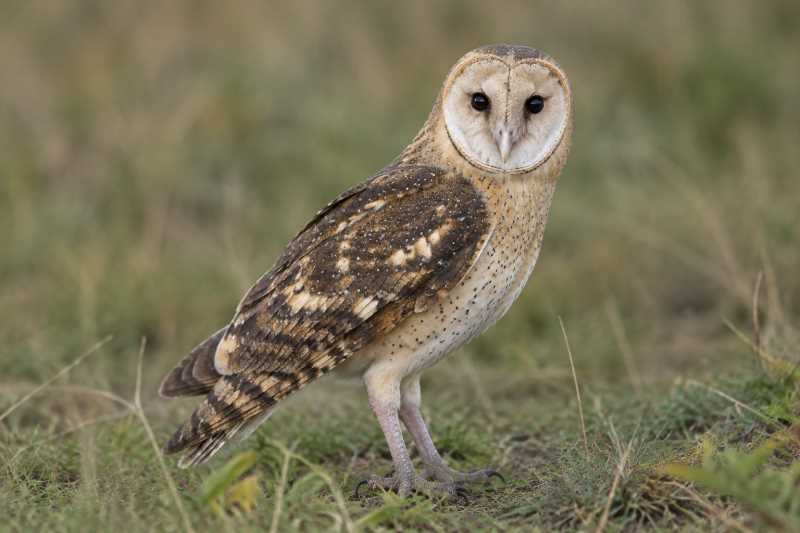
The Eastern Grass Owl is a medium-sized owl, with a body length ranging from 32 to 38 centimeters and a wingspan of approximately 100 to 120 centimeters. Its most striking feature is its heart-shaped facial disc, which is typical of the Tytonidae family. This facial disc is not merely an aesthetic feature; it plays a crucial role in the owl’s hunting strategy by directing sound to the bird’s ears, enhancing its ability to detect prey even in complete darkness.
The plumage of the Eastern Grass Owl is predominantly light in color, with a mix of white, cream, and buff hues. The upper parts are mottled with darker tones, providing excellent camouflage against the backdrop of grasslands. This coloration, combined with the owl’s silent flight, makes it an adept predator, capable of approaching prey undetected.
Behavior and Diet
The Eastern Grass Owl is primarily nocturnal, emerging at dusk to hunt for small mammals, birds, and insects. Its diet mainly consists of rodents, which it detects using its acute sense of hearing. The owl’s ability to fly silently is due to specialized feathers that reduce noise, allowing it to swoop down on unsuspecting prey with remarkable efficiency.
Breeding habits of the Eastern Grass Owl are closely tied to environmental conditions. The breeding season varies across its range, often coinciding with periods of high prey abundance. The owl nests on the ground, usually in a well-concealed location within tall grass. A typical clutch consists of 3 to 8 eggs, which are incubated by the female while the male provides food.
Conservation Status
While the Eastern Grass Owl is not currently listed as threatened, it faces several challenges that could impact its populations. Habitat loss due to agricultural expansion, urban development, and changes in land use pose significant threats to its grassland habitats. In some regions, pesticide use also poses a risk by reducing prey populations and directly affecting the owls through toxic exposure.
Conservation efforts for the Eastern Grass Owl focus on habitat protection and management. Preserving large tracts of grassland is essential for maintaining healthy populations. Additionally, raising awareness about the ecological importance of these owls and their role in controlling rodent populations can help garner support for conservation initiatives.
Conclusion
The Eastern Grass Owl is a remarkable species, perfectly adapted to life in grassland environments. Its elusive nature and nocturnal habits make it a challenging subject for study, yet they also add to the allure of this fascinating bird. As human activities continue to alter natural landscapes, understanding and protecting the habitats of the Eastern Grass Owl is crucial for ensuring its survival. Conservation measures that focus on sustainable land use and habitat preservation will not only benefit this species but also the broader ecosystems that depend on grassland habitats.
In conclusion, the Eastern Grass Owl serves as a reminder of the delicate balance within natural ecosystems and the need for continued efforts to safeguard our planet’s biodiversity. By appreciating and protecting such unique species, we contribute to the health and resilience of the natural world.
Related posts