The Enigmatic Cocos Booby: A Detailed Insight into Sula brewsteri
The Cocos Booby, scientifically known as Sula brewsteri, is a fascinating seabird that captures the interest of ornithologists and nature enthusiasts alike. Endemic to the Eastern Pacific Ocean, particularly around the Cocos Island and the Galapagos Archipelago, this species is a prominent member of the Sulidae family. The Cocos Booby, with its striking appearance and unique behaviors, plays a crucial role in the marine ecosystem, making it a subject worth exploring.
Physical Characteristics
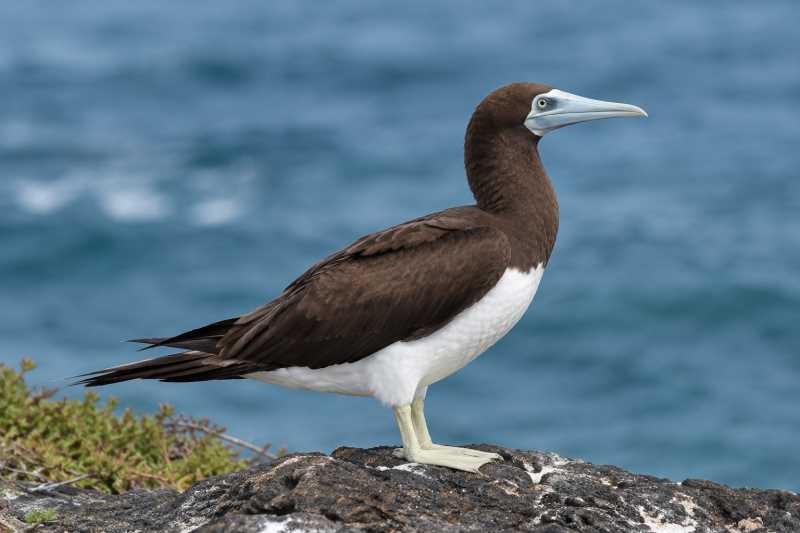
Cocos Boobies are medium to large-sized seabirds, characterized by their elongated bodies, pointed wings, and distinctive coloring. Adults typically measure about 70 to 80 cm in length, with a wingspan reaching up to 150 cm. One of the most striking features of the Cocos Booby is its facial coloration. The face is adorned with a vibrant blue skin around the eyes and a robust, pointed bill that is often a pale blue or gray.
Their plumage is predominantly white, with the exception of the wings and the tail, which are dark brown or black. This contrasting coloration not only aids in identification but also plays a role in their mating displays and social interactions. The robust body and webbed feet are adaptations that aid in their life primarily spent at sea.
Habitat and Distribution
Cocos Boobies are primarily found in the Eastern Tropical Pacific, with significant populations on Cocos Island, off the coast of Costa Rica, and the Galapagos Islands. They prefer nesting on rocky cliffs and islands where they can safely raise their young away from terrestrial predators.
Their habitat is largely influenced by the availability of food sources, typically found in nutrient-rich waters where upwelling currents bring an abundance of marine life to the surface. These areas are crucial for their feeding, as they primarily rely on fish and squid, which they catch via spectacular plunge-diving.
Behavior and Ecology
The Cocos Booby is an adept aerial acrobat, known for its impressive diving skills. These birds hunt by soaring high above the ocean before making steep, rapid dives to capture prey with remarkable precision. This hunting technique is not only efficient but also a spectacle that underscores their evolutionary adaptations for survival in marine environments.
Breeding season for Cocos Boobies varies depending on their location, but it generally occurs during periods when food is most abundant. They are ground-nesters, often forming large colonies that can number in the thousands. Their nests are simple scrapes in the ground, which are defended vigorously against intruders.
Cocos Boobies are monogamous, and both parents share responsibilities in rearing the young. They lay one to two eggs per breeding cycle, with incubation lasting about 41-45 days. The chicks, once hatched, are altricial and rely heavily on parental care for survival during the early stages of life.
Conservation Status
Currently, the Cocos Booby is classified as "Least Concern" by the International Union for Conservation of Nature (IUCN). However, like many seabird species, they face threats from habitat degradation, climate change, and human activities such as overfishing and pollution.
Conservation efforts are essential to ensure their habitats are protected and that food sources remain abundant. Protecting the marine ecosystems where they forage and breed is crucial for their continued survival. Organizations and governments are working to monitor populations and mitigate the impacts of human activity on their habitats.
Conclusion
The Cocos Booby is a testament to the diversity and complexity of the marine avian world. Its striking appearance, fascinating behaviors, and ecological significance make it a subject of interest for both scientific research and conservation efforts. Understanding and protecting this unique species is vital not only for maintaining biodiversity but also for preserving the intricate balance of the marine ecosystems they inhabit.
As we continue to explore and appreciate the wonders of our natural world, the Cocos Booby serves as a reminder of the delicate interplay between species and their environments. Ensuring the survival of such remarkable creatures requires a commitment to sustainable practices and conservation strategies that safeguard their future.
By focusing on the preservation of these seabirds and their habitats, we contribute to the broader effort of maintaining the health and vitality of our planet’s oceans.
Related posts