The Enigmatic Luzon Boobook: A Glimpse into the Life of Ninox philippensis
The Luzon Boobook (Ninox philippensis) is a captivating species of owl endemic to the Philippines, specifically thriving in the diverse ecosystems of Luzon, the largest island in the archipelago. Known for its distinct calls and fascinating behavior, the Luzon Boobook represents a critical component of the island’s biodiversity. This article delves into the life and ecology of this elusive bird, exploring its habitat, behavior, conservation status, and significance in the broader ecological context.
Habitat and Distribution
Luzon, with its varied landscapes ranging from mountainous regions to lowland forests, provides an ideal habitat for the Luzon Boobook. This owl predominantly resides in primary and secondary forests, where it finds ample prey and suitable nesting sites. Its distribution is largely confined to Luzon, although occasional sightings have been reported on neighboring islands, suggesting some degree of dispersal.
The adaptability of the Luzon Boobook to different forest types underscores its resilience. However, it remains susceptible to habitat loss due to deforestation, agricultural expansion, and urban development. These factors pose significant threats to its populations, making conservation efforts crucial for its survival.
Physical Characteristics
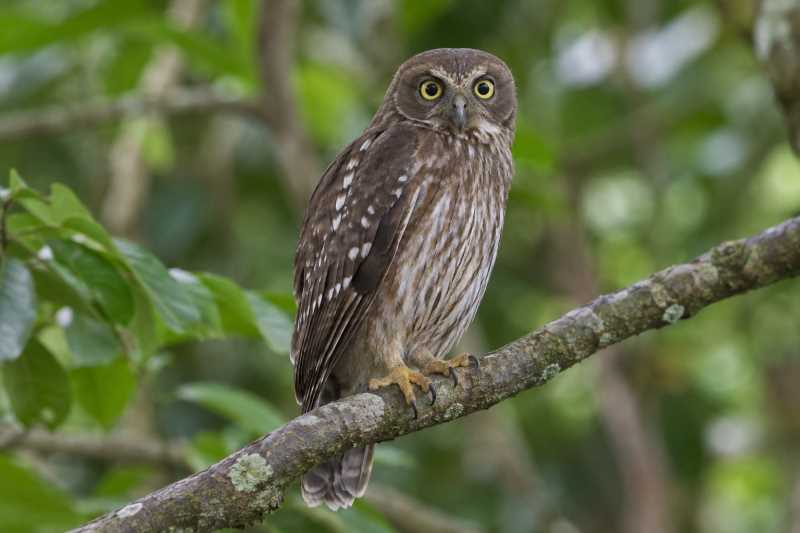
The Luzon Boobook is a medium-sized owl, with a length ranging from 23 to 28 cm and a wingspan of approximately 50 cm. Its plumage is predominantly brown, speckled with white spots, which provides excellent camouflage against the forest backdrop. The bird’s striking yellow eyes and a distinct facial disk enhance its nocturnal vision, enabling it to hunt effectively in low-light conditions.
The sexual dimorphism in Luzon Boobooks is subtle, with females slightly larger than males. This size difference is typical among many owl species and is thought to be an adaptation for breeding, where larger females can better incubate eggs and care for chicks.
Behavior and Diet
Primarily nocturnal, the Luzon Boobook is most active at night when it embarks on hunting expeditions. Its diet consists predominantly of insects, small mammals, and occasionally other birds. The owl’s hunting strategy involves perching silently on branches, waiting patiently to ambush unsuspecting prey. Its acute hearing and exceptional eyesight make it a proficient hunter.
The Luzon Boobook’s vocalizations are another fascinating aspect of its behavior. Its calls, often described as a series of soft hoots, play a crucial role in communication, particularly during the breeding season. These calls serve to establish territories and strengthen pair bonds, ensuring successful reproduction.
Breeding and Lifespan
The breeding season for the Luzon Boobook typically coincides with the onset of the rainy season, which ensures an abundance of food for the raising of chicks. These owls are monogamous, forming long-term pair bonds. Nests are usually located in tree cavities or abandoned nests of other birds, offering protection from predators.
Females lay between 1 to 3 eggs, with both parents sharing responsibilities for incubation and chick rearing. The chicks fledge after about 30 to 35 days, although they remain dependent on their parents for several weeks thereafter. In the wild, Luzon Boobooks can live up to 10 years, although lifespan is heavily influenced by environmental conditions and availability of resources.
Conservation Status and Efforts
Currently, the Luzon Boobook is classified as "Least Concern" by the International Union for Conservation of Nature (IUCN). However, this status does not preclude the species from facing significant challenges, primarily due to habitat destruction. Deforestation and land conversion for agriculture are the primary threats, leading to fragmentation of suitable habitats.
Conservation initiatives aimed at preserving the Luzon Boobook’s habitat are crucial. Efforts include the establishment of protected areas, reforestation projects, and community-based conservation programs. Educating local communities about the ecological importance of owls and promoting sustainable land-use practices are integral components of these initiatives.
Ecological Significance
As a predator, the Luzon Boobook plays a vital role in maintaining the balance of its ecosystem. By controlling populations of rodents and insects, it contributes to the health and stability of the forest environment. This ecological function underscores the importance of preserving not only the Luzon Boobook but also the broader biodiversity of Luzon.
In conclusion, the Luzon Boobook is a remarkable species that embodies the rich natural heritage of the Philippines. Protecting this owl requires concerted efforts from conservationists, local communities, and policymakers alike. Through collaborative action, it is possible to ensure that the Luzon Boobook continues to thrive for future generations to appreciate and admire.
Related posts