Discovering the Papuan Hawk-Owl: A Glimpse into the Enigmatic Uroglaux dimorpha
In the dense and impenetrable rainforests of Papua New Guinea, the Papuan Hawk-Owl (Uroglaux dimorpha) resides as a rare and enigmatic avian predator. Known for its elusive nature and unique characteristics, this species has captured the curiosity of ornithologists and bird enthusiasts worldwide. Despite its relative obscurity in the scientific community, recent studies have begun to shed light on the fascinating life of this nocturnal bird.
Physical Characteristics
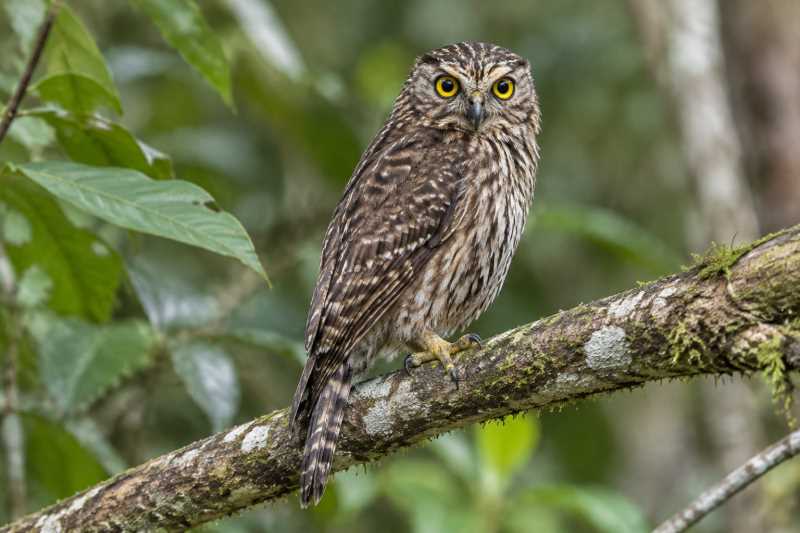
The Papuan Hawk-Owl is a distinctive bird with a striking appearance. Medium-sized, it measures approximately 30 to 35 centimeters in length. Its plumage is characterized by a combination of brown and white, which offers excellent camouflage among the forest foliage. The owl sports a pronounced facial disk, which helps in directing sound to its ears—a crucial adaptation for hunting in low-light conditions. Its bright yellow eyes are an iconic feature, providing it with exceptional night vision.
Habitat and Distribution
Uroglaux dimorpha is endemic to Papua New Guinea, primarily inhabiting the lowland and montane rainforests. The dense canopy and thick undergrowth of these forests provide the ideal cover for this stealthy predator. Its range is limited to remote areas, which has contributed to its elusive reputation. The owl’s presence is often indicated by its distinctive call—a series of hoots that echo through the night, adding an air of mystery to its surroundings.
Behavior and Diet
The Papuan Hawk-Owl is predominantly nocturnal, conducting most of its activities under the cover of darkness. It is a solitary hunter, relying on its acute sense of hearing and exceptional eyesight to locate prey. Its diet consists mainly of small mammals, birds, and insects, showcasing its versatility as a predator. The owl’s hunting strategy involves perching silently on a branch and swooping down with precision to capture its unsuspecting prey.
Despite its solitary nature, the Papuan Hawk-Owl is known to form monogamous pairs during the breeding season. The mating rituals involve elaborate vocalizations and displays, strengthening the bond between partners. Once mated, the female typically lays two to three eggs, which she incubates for about a month. Both parents share the responsibility of feeding and caring for the young until they are ready to fend for themselves.
Conservation Status
The conservation status of the Papuan Hawk-Owl is currently classified as Least Concern by the International Union for Conservation of Nature (IUCN). However, this does not imply that the species is free from threats. Habitat destruction due to logging and agricultural expansion poses a significant risk to its natural habitat. Additionally, climate change and hunting pressures are potential threats that could impact its population in the future.
Efforts to conserve the Papuan Hawk-Owl are primarily focused on habitat protection and raising awareness about its ecological importance. Conservationists are working with local communities to promote sustainable land-use practices that safeguard the owl’s environment. Continued research and monitoring are essential to ensure the long-term survival of this captivating species.
The Role in Indigenous Culture
The Papuan Hawk-Owl holds cultural significance for several indigenous communities in Papua New Guinea. Often regarded as a symbol of wisdom and mystery, the owl is featured in local folklore and traditional stories. It is believed to be a messenger between the human world and the spiritual realm, embodying the deep connection between nature and spirituality in indigenous cultures.
Conclusion
The Papuan Hawk-Owl remains a symbol of the untouched beauty and mystery of Papua New Guinea’s rainforests. As studies continue to unravel the secrets of its existence, this remarkable bird serves as a reminder of the rich biodiversity that thrives within these remote ecosystems. Protecting the Papuan Hawk-Owl and its habitat is not only crucial for the species itself but also for maintaining the ecological balance of the region.
In a world where many species face the threat of extinction, the Papuan Hawk-Owl stands as a testament to the resilience of nature. Its survival depends on a collective effort to preserve the biodiversity of our planet, ensuring that future generations can continue to marvel at the wonders of the natural world.
Related posts