The Crimson-naped Woodpecker: A Jewel of the Forest Canopy
The Crimson-naped Woodpecker (Dryobates cathpharius) is a strikingly beautiful bird, captivating birdwatchers and ornithologists alike with its vibrant plumage and unique behaviors. Inhabiting the lush forests of South Asia, this woodpecker plays a critical role in the ecosystem, contributing to pest control and forest health. This article delves into the fascinating world of the Crimson-naped Woodpecker, exploring its habitat, behavior, and conservation status.
Habitat and Distribution
The Crimson-naped Woodpecker is native to the subtropical and tropical moist lowland and montane forests of South Asia. Its range extends across parts of the Indian subcontinent, including India, Nepal, Bhutan, Bangladesh, and Myanmar. These woodpeckers are typically found in dense forests, both in the lowlands and at elevations up to 2,500 meters. They prefer habitats with abundant tree cover, which provides ample opportunities for feeding and nesting.
The dense canopies of these forests offer protection and resources for the Crimson-naped Woodpecker. The bird’s distribution is closely tied to forested areas, as deforestation and habitat fragmentation pose significant threats to its population. Conservation efforts are essential to ensuring the survival of this species, particularly in regions where forest cover is rapidly declining due to human activities.
Physical Characteristics
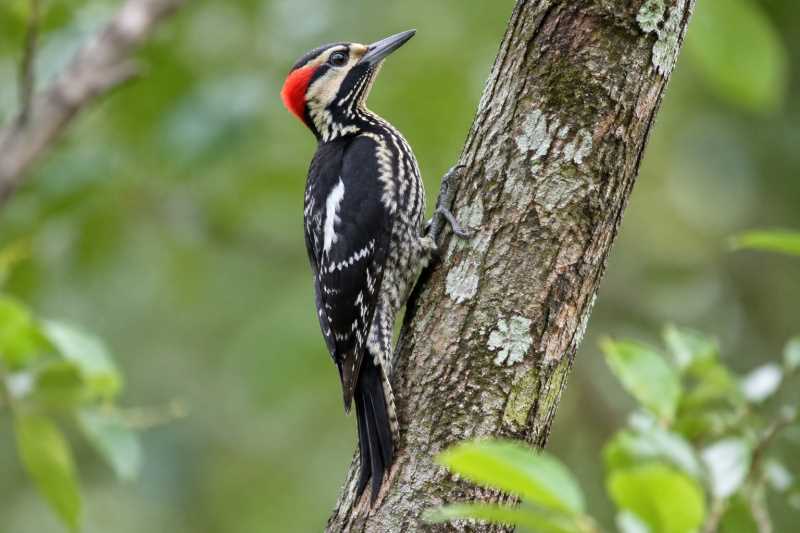
One of the most striking features of the Crimson-naped Woodpecker is its vivid plumage. As its name suggests, the bird has a distinctive crimson-red patch on the nape of its neck, which contrasts sharply with its otherwise black and white body. The rest of the head is predominantly black, with white streaks running down the sides. The bird’s back and wings are black with white barring, while the underparts are white with black spots.
Male and female Crimson-naped Woodpeckers are similar in appearance, although males typically have a slightly larger red nape patch. Juveniles resemble adults but with a more subdued coloration, lacking the full brilliance of the crimson nape. The bird’s strong, chisel-like bill is perfectly adapted for its foraging habits, allowing it to drill into wood in search of insects and larvae.
Behavior and Diet
The Crimson-naped Woodpecker is primarily insectivorous, feeding on a diet rich in ants, beetles, and other insects. Its foraging behavior is characterized by a series of rapid, rhythmic drumming sounds as it pecks at tree bark to uncover hidden prey. This drumming also serves as a form of communication, especially during the breeding season when males use it to establish territories and attract mates.
In addition to insects, the Crimson-naped Woodpecker may also consume fruits and nuts, particularly during times when insect prey is scarce. This opportunistic feeding strategy allows the bird to thrive in a variety of forested environments, adapting its diet based on availability and season.
The woodpecker is known for its solitary nature, although it may be observed in pairs or small family groups during the breeding season. It is a diurnal bird, active during daylight hours, and spends much of its time foraging among the trees.
Reproduction and Lifespan
Breeding for the Crimson-naped Woodpecker typically occurs between March and June, coinciding with the onset of the monsoon season in many parts of its range. Males attract females through a combination of vocalizations and drumming displays. Once a pair forms, they work together to excavate a nest cavity in a tree trunk or branch.
The female lays a clutch of 2 to 4 eggs, which both parents incubate. After about two weeks, the eggs hatch, and the parents take turns feeding the chicks. The young woodpeckers fledge after approximately three weeks, although they may remain with the parents for a short period before becoming fully independent.
The lifespan of the Crimson-naped Woodpecker in the wild is not well-documented, but similar species have been known to live for several years, with some individuals reaching over a decade in age.
Conservation Status
The Crimson-naped Woodpecker is currently classified as a species of Least Concern by the International Union for Conservation of Nature (IUCN). However, the ongoing loss of forest habitats due to logging, agriculture, and urbanization poses a significant threat to its population.
Conservation efforts aimed at preserving forest habitats are crucial for the survival of the Crimson-naped Woodpecker and countless other species that depend on these ecosystems. Protecting large tracts of forest, promoting sustainable land-use practices, and raising awareness about the importance of biodiversity are essential steps in safeguarding this striking bird for future generations.
Conclusion
The Crimson-naped Woodpecker is a remarkable example of the beauty and diversity found within tropical forest ecosystems. Its vibrant colors and unique behaviors make it a species of interest for birdwatchers and researchers, while its ecological role highlights the interconnectedness of forest habitats. By understanding and protecting this species, we contribute to the broader effort of preserving our planet’s natural heritage.
Through continued conservation efforts and public awareness, we can ensure that the Crimson-naped Woodpecker, along with its forest home, thrives for generations to come.
Related posts