The Enigmatic Collared Scops Owl: A Closer Look at Otus lettia
The Collared Scops Owl, scientifically known as Otus lettia, is a captivating creature that has piqued the interest of ornithologists and bird enthusiasts worldwide. Known for its distinctive call and striking appearance, this species of owl is a fascinating subject of study in avian biology. This article delves into the unique characteristics, habitat, behavior, and conservation status of the Collared Scops Owl, providing a comprehensive overview of this enigmatic bird.
Physical Characteristics
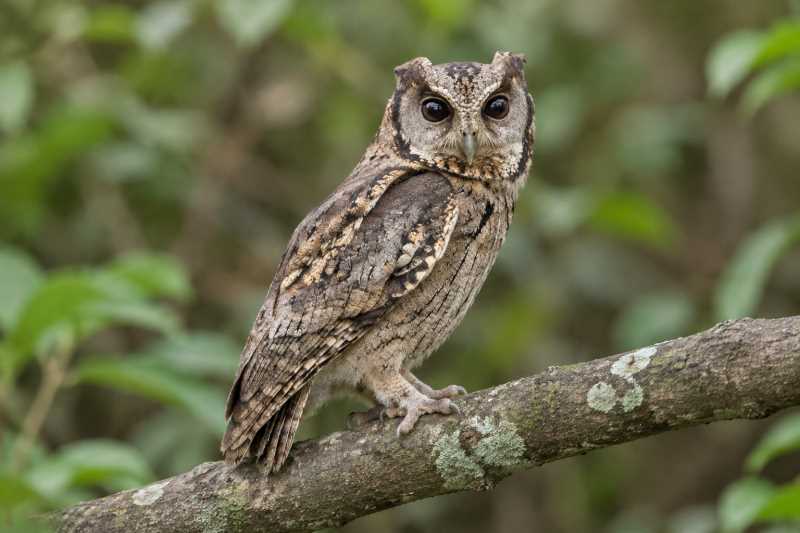
The Collared Scops Owl is a small owl species, measuring approximately 23 to 25 centimeters in length with a wingspan of about 60 centimeters. Its plumage is predominantly gray-brown, which provides excellent camouflage against tree bark and foliage. The owl’s defining feature, however, is the distinct collar of darker feathers around its neck, which gives it its common name. Its large, round head is adorned with small ear tufts that can be raised or lowered depending on the owl’s mood or level of alertness. The eyes are bright yellow, providing sharp vision necessary for nocturnal hunting.
Habitat and Distribution
The Collared Scops Owl is primarily found in South and Southeast Asia, with a range that extends from the Indian subcontinent to parts of China and Indonesia. It thrives in a variety of habitats, including deciduous and evergreen forests, woodlands, and even urban parks and gardens. The adaptability of Otus lettia to different environments is one of the reasons for its relatively stable population. However, like many other species, it faces threats from habitat destruction and fragmentation due to human activities.
Behavior and Diet
A nocturnal predator, the Collared Scops Owl is most active during the night when it hunts for food. Its diet primarily consists of insects, small mammals, and occasionally birds and reptiles. Utilizing its exceptional hearing and vision, the owl can locate and capture prey with remarkable precision. It employs a sit-and-wait strategy, perching silently on a branch until it detects movement below.
The owl’s call is a series of low, musical hoots that can often be heard during the breeding season, which stretches from February to May. These calls serve multiple purposes, including territory establishment and mate attraction. The Collared Scops Owl is monogamous, and once a pair bonds, they are likely to remain together for life.
Reproduction and Lifespan
The breeding season for the Collared Scops Owl typically begins in late winter and extends into the spring. During this time, the owls engage in elaborate courtship displays that include calling, preening, and mutual feeding. The female lays a clutch of 3 to 5 eggs in a tree cavity or abandoned woodpecker hole. Incubation lasts about 27 to 28 days, with the female primarily responsible for keeping the eggs warm while the male provides food.
Once hatched, the chicks are altricial, meaning they are born relatively undeveloped and rely heavily on parental care. Both parents take an active role in feeding and protecting the young until they fledge at around 4 to 5 weeks of age. The Collared Scops Owl has a lifespan of approximately 10 to 12 years in the wild, though this can vary depending on environmental factors and predation.
Conservation Status
The International Union for Conservation of Nature (IUCN) currently classifies the Collared Scops Owl as "Least Concern" due to its wide distribution and stable population. However, ongoing threats such as deforestation, habitat degradation, and urbanization continue to pose risks to its natural habitat. Conservation efforts are essential to ensure that this species remains a thriving part of its ecosystem.
Conclusion
The Collared Scops Owl, with its unique characteristics and behaviors, is a remarkable example of nature’s adaptability and resilience. While it currently enjoys a stable population status, continued vigilance and conservation efforts are imperative to safeguard its future. As urbanization continues to encroach on natural habitats, understanding and protecting species like Otus lettia becomes increasingly important. By appreciating and studying these enigmatic birds, we can contribute to the preservation of biodiversity and the health of our planet’s ecosystems.
Related posts