Madagascar Forest Rail: A Hidden Jewel of the Malagasy Underbrush
The Madagascar Forest Rail, scientifically referred to as Mentocrex kioloides, is a captivating and elusive bird species endemic to the lush forests of Madagascar. This fascinating bird belongs to the family Sarothruridae, a group often overshadowed by its more conspicuous avian neighbors. However, the Madagascar Forest Rail holds a special place in the island’s biodiversity, offering intriguing glimpses into the evolutionary pathways of ground-dwelling birds.
Taxonomy and Description
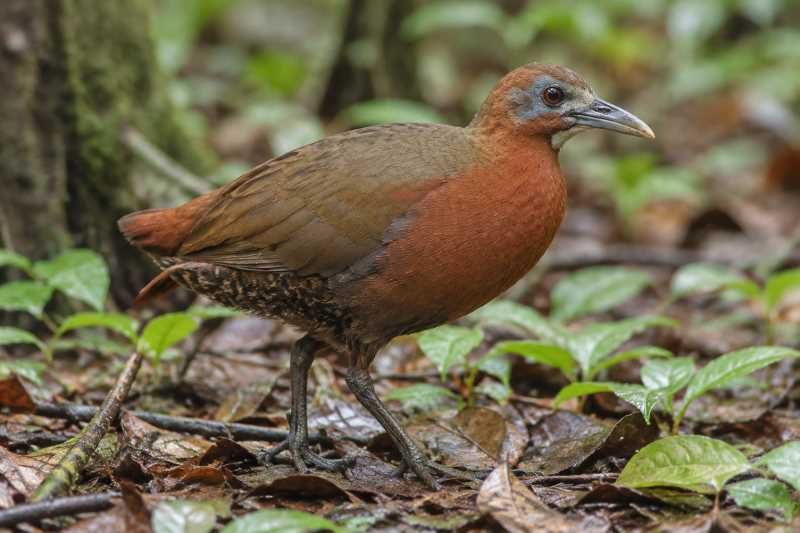
The Madagascar Forest Rail was once classified under the family Rallidae, but recent studies have placed it in Sarothruridae, highlighting its unique evolutionary lineage. The bird is relatively small, measuring approximately 30 cm in length, with a predominantly brown plumage that blends seamlessly with the forest floor. It features distinctive white streaks on its underparts and a striking reddish-brown crown, which, although subtle, offers a beautiful contrast to its otherwise subdued coloration.
The bird’s eyes are a deep red, providing an enigmatic allure, while its legs are a pale yellow, adapted perfectly for its terrestrial lifestyle. The Madagascar Forest Rail is known for its cryptic behavior, often skulking in dense underbrush and remaining elusive to observers.
Habitat and Distribution
Endemic to Madagascar, the Forest Rail inhabits the humid evergreen forests that are primarily located on the island’s eastern and northern regions. These habitats are characterized by dense understories and a rich diversity of plant species, offering both shelter and food resources for the bird.
The Madagascar Forest Rail is typically found at elevations ranging from sea level to about 2,000 meters, although it seems to prefer mid-elevation forests where human activity is less intense. The bird is known to be somewhat adaptable, occasionally venturing into secondary forests and degraded habitats, provided there is sufficient cover and food availability.
Behavior and Diet
The Madagascar Forest Rail is predominantly terrestrial, spending most of its time on the forest floor foraging for food. Its diet primarily consists of invertebrates, including insects, worms, and small mollusks. The bird uses its strong bill to probe through leaf litter and soil, demonstrating a feeding behavior well-adapted to its environment.
Despite its secretive nature, the Forest Rail is known for its distinctive vocalizations, which include a series of low-pitched whistles and trills. These calls are more often heard than the bird is seen, serving as a vital communication tool in the dense undergrowth where visibility is limited.
Reproduction
Information on the breeding habits of the Madagascar Forest Rail is limited, largely due to the bird’s elusive nature and the challenges of conducting field studies in its dense forest habitat. However, it is believed that the species follows a reproductive cycle similar to other ground-dwelling birds in Madagascar.
During the breeding season, which coincides with the island’s rainy season, the Madagascar Forest Rail constructs a nest on the ground or in low vegetation. The nest is usually a simple structure made from leaves and twigs. The female typically lays a clutch of 2-3 eggs, which are incubated by both parents. The chicks are precocial, meaning they are relatively mature and mobile shortly after hatching, an adaptation that helps them evade predators.
Conservation Status
The Madagascar Forest Rail is currently listed as Near Threatened by the International Union for Conservation of Nature (IUCN). The primary threats to its survival include habitat loss due to deforestation, agriculture, and human settlement expansion. Additionally, the introduction of invasive species, such as rats and feral cats, poses a significant risk to both adult rails and their chicks.
Conservation efforts are crucial to ensure the survival of this unique species. Protecting and restoring native forests, along with implementing measures to control invasive species, are essential steps in safeguarding the Madagascar Forest Rail’s habitat.
Significance and Future Research
The Madagascar Forest Rail is not just another bird species; it is a symbol of the island’s rich biodiversity and the complex ecological interactions that define Madagascar’s unique ecosystems. Understanding its behavior, ecology, and evolutionary history provides valuable insights into the broader patterns of avian diversity and adaptation on the island.
Future research should focus on detailed ecological studies to better understand the species’ habitat requirements, reproductive biology, and population dynamics. Such information is vital for developing effective conservation strategies and ensuring that the Madagascar Forest Rail continues to thrive in its natural habitat.
In conclusion, the Madagascar Forest Rail is a testament to the intricate beauty and mystery of Madagascar’s avian fauna. Protecting this species requires concerted efforts from conservationists, researchers, and local communities, all working together to preserve the island’s unique natural heritage.
Related posts