The Amazonian Umbrellabird: A Majestic Marvel of the Rainforest
The Amazonian Umbrellabird (Cephalopterus ornatus) is a striking and enigmatic bird found in the dense rainforests of the Amazon Basin. Known for its unique appearance and fascinating behaviors, this bird is a subject of interest for ornithologists and nature enthusiasts alike. In this article, we delve into the characteristics, habitat, and conservation status of the Amazonian Umbrellabird, shedding light on its role in the vibrant ecosystem of the Amazon rainforest.
Physical Characteristics
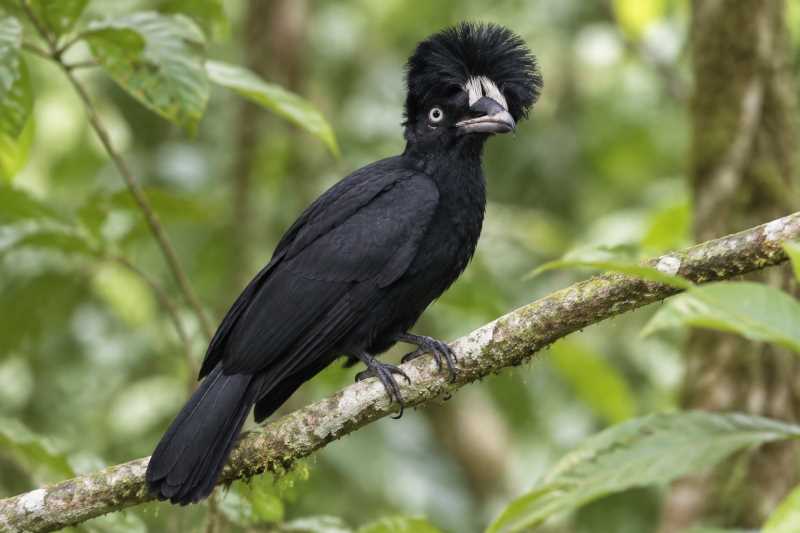
The Amazonian Umbrellabird is renowned for its distinctive appearance. It is one of the largest members of the cotinga family, with males reaching up to 50 cm in length. The bird’s most striking feature is the umbrella-like crest that drapes over its head, giving it its name. This crest is made up of long, curved feathers that can be erected or laid flat depending on the bird’s mood or activity. The males also possess an inflatable wattle on their throats, which they use during mating displays to produce a resonant, booming call that echoes through the forest.
The plumage of the Amazonian Umbrellabird is predominantly black, providing a stark contrast to the bright greens and browns of its rainforest habitat. This coloration, while striking, serves a practical purpose, allowing the bird to blend into the shadowy understory when needed. Females are slightly smaller than males and have less pronounced crests and wattles, though they share the same overall coloration.
Habitat and Distribution
The Amazonian Umbrellabird is endemic to the vast Amazon Basin, which spans several countries in South America, including Brazil, Ecuador, Colombia, Peru, and Venezuela. It thrives in the humid, tropical lowland forests and is particularly associated with regions that have a dense canopy and abundant fruiting trees. These birds are primarily arboreal, spending most of their lives in the mid to upper levels of the forest canopy.
Their presence is often a sign of a healthy forest ecosystem, as they play a vital role in seed dispersal. By consuming a variety of fruits and berries, the Amazonian Umbrellabird helps to propagate plant species throughout the rainforest, contributing to the biodiversity and resilience of this critical habitat.
Behavior and Diet
Amazonian Umbrellabirds are known for their solitary and secretive nature, making them a challenging species to study in the wild. They are frugivorous, with a diet primarily consisting of fruits and berries. However, they may occasionally consume insects and small vertebrates, especially during the breeding season when the nutritional demands are higher.
One of the most fascinating aspects of the Amazonian Umbrellabird is its courtship behavior. During the breeding season, males gather in loose aggregations known as leks, where they perform elaborate displays to attract females. These displays involve puffing up their throat wattles, spreading their crests, and producing deep, booming calls that can be heard over long distances. This vocal performance is not only a testament to the bird’s unique anatomy but also plays a crucial role in mate selection.
Conservation Status and Threats
The Amazonian Umbrellabird is currently listed as "Near Threatened" on the IUCN Red List. The main threats to its survival include habitat loss due to deforestation, logging, and agricultural expansion. The Amazon rainforest, often referred to as the "lungs of the Earth," is under constant threat from human activities, and the destruction of this critical habitat poses a significant risk to the species that depend on it.
Conservation efforts are underway to protect the Amazonian Umbrellabird and its habitat. These include the establishment of protected areas, reforestation projects, and initiatives to promote sustainable land-use practices. Additionally, raising awareness about the importance of preserving the Amazon rainforest is crucial in garnering support for conservation measures.
Conclusion
The Amazonian Umbrellabird is a captivating symbol of the rich biodiversity found within the Amazon rainforest. Its unique appearance, intriguing behaviors, and ecological significance make it a species worth protecting. As we continue to face the challenges of habitat destruction and climate change, it is imperative that we recognize the value of preserving the natural wonders of the Amazon Basin. By safeguarding the Amazonian Umbrellabird and its habitat, we contribute to the conservation of one of the most vital and vibrant ecosystems on our planet.
In summary, the Amazonian Umbrellabird is not just a remarkable bird; it is an integral part of the intricate web of life that sustains the Amazon rainforest. Through dedicated conservation efforts and a commitment to sustainable practices, we can ensure that future generations will have the opportunity to marvel at this extraordinary creature and the verdant paradise it inhabits.
Related posts