The White-headed Woodpecker (Dryobates albolarvatus) is a striking and uncommon bird species that inhabits the coniferous forests of the western United States. Instantly recognizable by its stark black-and-white plumage and unique feeding behavior, this woodpecker plays an important ecological role in the pine-dominated mountain ranges it calls home. As a species highly adapted to a specific habitat, it is also a prime example of how forest management and environmental change can affect specialized wildlife.
Identification and Appearance
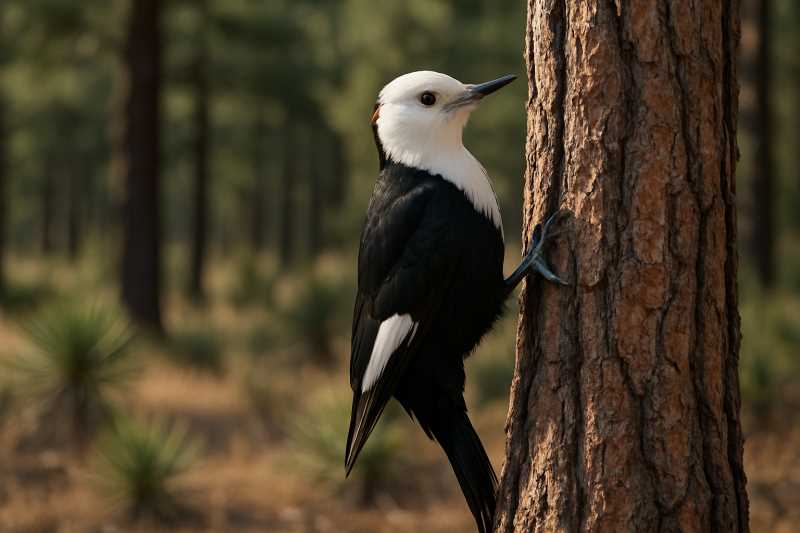
The White-headed Woodpecker is a medium-sized woodpecker, measuring approximately 8.5 to 9 inches (21–23 cm) in length. Its bold coloration makes it easy to distinguish from other North American woodpeckers. Adults are primarily black, with a bright white head and large white wing patches. Males feature a small but vivid red patch at the rear of the crown, which is absent in females. The underparts are black, and the tail is stiff and pointed, aiding in its climbing and foraging behavior.
Unlike most woodpeckers, the White-headed Woodpecker has a relatively short, sharp bill, which reflects its unique feeding strategy that relies less on drilling for insects and more on prying off bark to access pine seeds and beetle larvae.
Range and Habitat
This species is endemic to the pine forests of the western United States, particularly in mountainous regions from southern British Columbia down through Washington, Oregon, and California, extending east into parts of Idaho and Nevada. It is closely associated with mature coniferous forests, especially those dominated by ponderosa pine, Jeffrey pine, and sugar pine.
These birds are typically found at elevations between 1,200 and 2,400 meters (4,000 to 8,000 feet), although they may range lower during winter. Their strong preference for large-diameter pines and snags makes them dependent on old-growth or late-successional forests.
Diet and Foraging Behavior
The White-headed Woodpecker’s diet is unique among woodpeckers, being heavily focused on pine seeds, particularly in late summer and winter. They often forage by prying apart pine cones or stripping bark to uncover hidden caches of seeds. Insects—especially wood-boring beetles, ants, and larvae—are also consumed, but these make up a smaller portion of the diet compared to other woodpeckers.
This bird does not typically drum on trees to excavate insects like many of its relatives. Instead, it uses its bill to flake off bark and probe crevices, displaying a quieter, more methodical foraging style.
Breeding and Nesting
Breeding season begins in late spring, typically from May through July. White-headed Woodpeckers are cavity nesters, excavating holes in dead or decaying trees—often ponderosa pine snags. Both sexes participate in nest excavation and incubation, with the female laying 3 to 6 eggs per clutch.
Chicks are altricial (born naked and helpless) and are fed by both parents until fledging, usually around 3 to 4 weeks after hatching. Because the species depends on standing dead trees for nesting, forest management practices that remove snags can severely impact their reproductive success.
Conservation Status and Threats
While not currently listed as globally threatened, the White-headed Woodpecker is considered a species of concern in several U.S. states due to its specialized habitat needs and limited range. Its dependence on large-diameter pines and dead trees makes it particularly vulnerable to logging, fire suppression, and habitat fragmentation.
Catastrophic wildfires—often exacerbated by climate change and forest mismanagement—pose both risks and opportunities. While intense fires can destroy nesting and foraging areas, low-intensity fires can help maintain the open forest structure preferred by the species.
Efforts to conserve this bird include preserving large tracts of mature forest, retaining snags during logging operations, and implementing fire regimes that promote ecological health.
Ecological Importance
The White-headed Woodpecker plays a critical role in forest ecosystems. By feeding on bark beetles and other insects, it helps regulate pest populations that can damage trees. Its nesting cavities are often reused by other species such as chickadees, nuthatches, and small owls, enhancing the biodiversity of the forest.
As a pine seed disperser and insect predator, the White-headed Woodpecker is a key contributor to the health and regeneration of coniferous woodlands in the western United States.
Conclusion
The White-headed Woodpecker is a charismatic and specialized bird, emblematic of the majestic pine forests of the American West. Its unique adaptations, striking appearance, and ecological significance make it a species worthy of attention and protection. As pressures on natural habitats continue to mount, maintaining the integrity of western pine forests will be essential to ensuring the long-term survival of this and many other forest-dependent species.
Related posts