The Chestnut-collared Swallow: A Marvel of Avian Adaptation
The Chestnut-collared Swallow (Petrochelidon rufocollaris) is a distinctive and fascinating bird species that captivates ornithologists and birdwatchers alike. This article delves into the unique characteristics, habitat, behavior, and conservation status of this remarkable bird, providing a comprehensive overview of its life and significance within the avian world.
Taxonomy and Description
Belonging to the family Hirundinidae, the Chestnut-collared Swallow is known for its distinctive coloration and agile flight. The genus name, Petrochelidon, is derived from Greek words ‘petros’ meaning rock, and ‘khelidon’, a term for swallow. The species epithet ‘rufocollaris’ refers to the bird’s striking chestnut-colored collar.
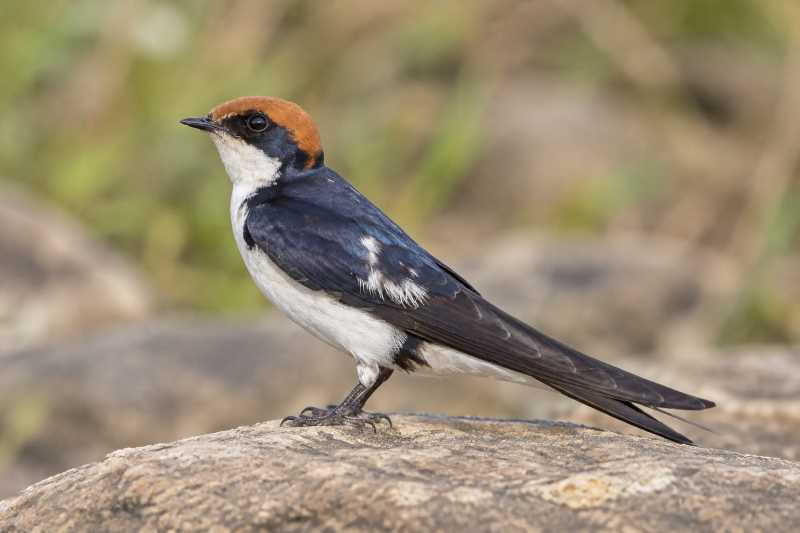
Adult Chestnut-collared Swallows are relatively small, measuring about 12-14 cm in length. They are easily identified by their glossy blue-black upperparts and the prominent chestnut collar that extends to the throat and upper breast. Their underparts are white, creating a sharp contrast with the darker plumage. The tail is short and square, a feature that distinguishes them from other swallows with forked tails.
Habitat and Distribution
The natural habitat of the Chestnut-collared Swallow is primarily in South America, with a distribution range that includes parts of Ecuador and Peru. They are typically found in open areas near water bodies, such as lakes, rivers, and marshes, which provide ample opportunities for feeding and nesting.
These swallows prefer habitats that offer plenty of insects, their primary food source, and mud or clay for nest-building. They are known to inhabit areas at elevations ranging from lowlands to mid-elevations in the Andean foothills.
Behavior and Diet
Chestnut-collared Swallows exhibit fascinating behavioral traits, particularly in their feeding and social habits. They are highly social birds, often found in flocks, especially during the non-breeding season. These swallows are aerial insectivores, capturing a variety of flying insects mid-flight with exceptional agility and precision.
The species is known for its distinctive flight pattern, characterized by swift, acrobatic maneuvers that aid in capturing prey. They often feed in groups, which can be observed as a coordinated aerial ballet, showcasing their impressive flying skills.
Breeding and Nesting
The breeding season for the Chestnut-collared Swallow typically occurs during the wet season, when insect abundance is at its peak. These birds are colonial nesters, often building their nests in large colonies on vertical surfaces such as cliffs, bridges, and buildings.
Nests are constructed from mud and plant material, shaped into a neat, cup-like structure lined with feathers for insulation. Both males and females participate in nest-building and feeding the young. Clutch size usually ranges from three to five eggs, with both parents involved in incubation and rearing of the chicks.
Conservation Status
Currently, the Chestnut-collared Swallow is classified as Least Concern by the International Union for Conservation of Nature (IUCN). However, like many bird species, it faces challenges due to habitat alteration and climate change.
The primary threat to this species is habitat loss caused by deforestation and human encroachment, which reduce the availability of suitable nesting and feeding sites. Conservation efforts are focused on preserving natural habitats and ensuring that important breeding and feeding areas are protected from development.
Significance to Ecosystems and Human Culture
The Chestnut-collared Swallow plays a vital role in ecosystems as a natural pest controller. By consuming large quantities of insects, they help maintain a balance in the ecosystem, benefiting agriculture and human health.
Moreover, these swallows hold cultural significance in some indigenous communities, where they are often regarded as symbols of freedom and agility. Their presence is celebrated in local folklore and art, reflecting the deep connection between people and the natural world.
Conclusion
The Chestnut-collared Swallow is a testament to the beauty and complexity of avian life. Its striking appearance, social nature, and ecological importance make it a fascinating subject for study and appreciation. Continued conservation efforts are crucial to ensure that this remarkable species thrives for future generations to admire and enjoy.
By understanding and protecting the Chestnut-collared Swallow, we not only safeguard a unique bird species but also uphold the integrity of the ecosystems they inhabit, highlighting the interconnectedness of all living things.
References
- BirdLife International. (2023). Species factsheet: Petrochelidon rufocollaris.
- Ridgely, R. S., & Tudor, G. (1989). The Birds of South America, Vol. 1: The Oscine Passerines.
- Turner, A., & Rose, C. (1989). Swallows & Martins: An Identification Guide and Handbook.
Related posts