Rüppell’s Korhaan: A Jewel of the African Savannah
The African landscape is a tapestry of diverse ecosystems, each supporting a unique array of wildlife. Among the myriad of avian species that grace the continent’s skies and earthbound terrains, Rüppell’s Korhaan (Heterotetrax rueppelii) stands out as a distinct and fascinating bird. Native to the arid savannahs and semi-deserts of southwestern Africa, this bird is not only a visual spectacle but also a subject of interest due to its ecological and behavioral adaptations.
Habitat and Distribution
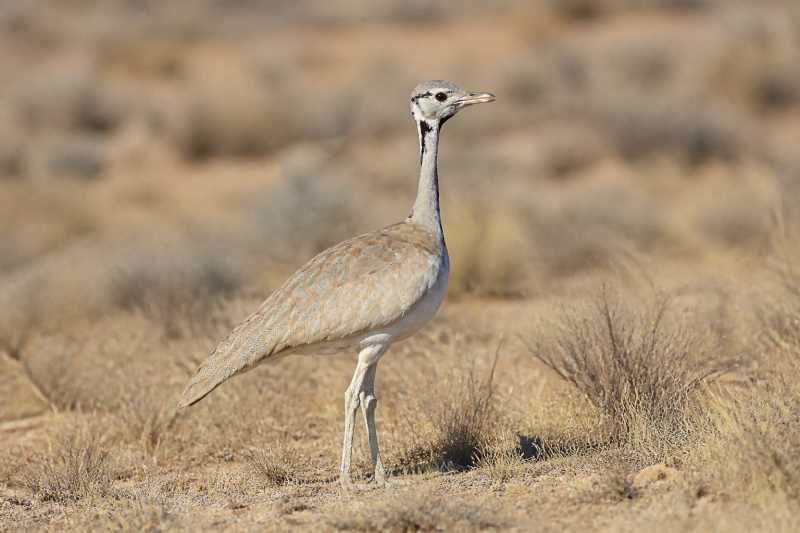
Rüppell’s Korhaan is predominantly found in the arid regions of Namibia and Angola, with some populations extending into Botswana and South Africa. The bird thrives in open, dry savannahs and semi-desert areas where it can blend into its surroundings, thanks to its cryptic plumage. This environment provides ample opportunities for foraging, nesting, and evading predators.
The bird’s habitat preference is influenced by the availability of sparse vegetation, which offers both food resources and nesting sites. The sparse shrubs and grasses of the savannahs offer a balanced environment that supports its diet of seeds, insects, and small reptiles.
Physical Characteristics
Rüppell’s Korhaan is a medium-sized bird, typically measuring about 60 cm in length. The males and females exhibit subtle differences in plumage, with males generally showcasing more vibrant colors and patterns. The bird’s plumage is predominantly a mix of browns, blacks, and whites, which provides excellent camouflage against the dry, earthy tones of its habitat.
One of the most striking features of Rüppell’s Korhaan is its head pattern, which consists of a bold black and white design that adds to its distinctive appearance. This pattern is not only a visual delight but also serves as a means of communication and mate attraction during the breeding season.
Behavior and Ecology
Rüppell’s Korhaan is primarily a ground-dwelling bird, adept at walking and running across the savannah. Flight is usually reserved for escaping predators or covering longer distances quickly. The bird’s diet is omnivorous, consisting of seeds, insects, and small vertebrates, which it forages from the ground.
The breeding season for Rüppell’s Korhaan is closely tied to the rainy season, which typically occurs from November to March. During this period, males engage in elaborate courtship displays to attract females. These displays often involve intricate dances, vocalizations, and the presentation of their striking plumage.
Nest sites are usually simple scrapes on the ground, often concealed by vegetation. Females lay between one to three eggs, which are incubated for approximately 22 to 24 days. Both parents are involved in rearing the chicks, with the male playing a significant role in guarding the territory and protecting the young from predators.
Conservation Status
Currently, Rüppell’s Korhaan is not classified as threatened or endangered. However, its habitat is increasingly under pressure from human activities such as agriculture, mining, and urban expansion. Conservation efforts are essential to ensure that the savannahs and semi-deserts remain viable habitats for this and other species.
Conservationists emphasize the importance of sustainable land use practices that balance human needs with wildlife preservation. Initiatives such as protected areas and community-based conservation programs play a crucial role in safeguarding the habitats of Rüppell’s Korhaan.
Conclusion
Rüppell’s Korhaan is a remarkable example of avian adaptation to the challenging conditions of the African savannah. Its survival is a testament to the intricate balance of its ecosystem, and its presence is a reminder of the rich biodiversity that these landscapes support. Understanding and appreciating such species are vital steps toward ensuring their conservation for future generations.
As we continue to explore and document the natural world, Rüppell’s Korhaan stands as a symbol of the beauty and complexity of life in the African wilderness, urging us to protect and cherish these irreplaceable natural treasures.
Related posts