The Enigmatic Beauty of the Carunculated Fruit Dove (Ptilinopus granulifrons)
The natural world is teeming with avian wonders, and among them, the Carunculated Fruit Dove (Ptilinopus granulifrons) stands out as a vivid emblem of biodiversity. Known for its striking appearance and enigmatic behavior, this species of fruit dove captivates ornithologists and bird enthusiasts alike. As we delve into the intricate details of its habitat, physical characteristics, and conservation status, the Carunculated Fruit Dove emerges not only as a symbol of nature’s artistry but also as a reminder of the fragility of ecosystems.
Habitat and Distribution
Endemic to the remote archipelagos of Indonesia, the Carunculated Fruit Dove is primarily found on the islands of Sumba and Flores. This restricted distribution underscores its rarity and the importance of these islands as biodiversity hotspots. The doves inhabit lowland and montane forests, thriving in dense, humid environments where fruit-bearing trees are abundant. These forests provide both sustenance and shelter, forming the backbone of the dove’s ecological niche.
The Carunculated Fruit Dove’s reliance on fruiting trees for sustenance makes it an essential component of its habitat. It is primarily frugivorous, feeding on a variety of fruits that contribute to the seed dispersal and regeneration of its forest environment. This mutualistic relationship highlights the dove’s role as both a consumer and a facilitator of forest health.
Physical Characteristics
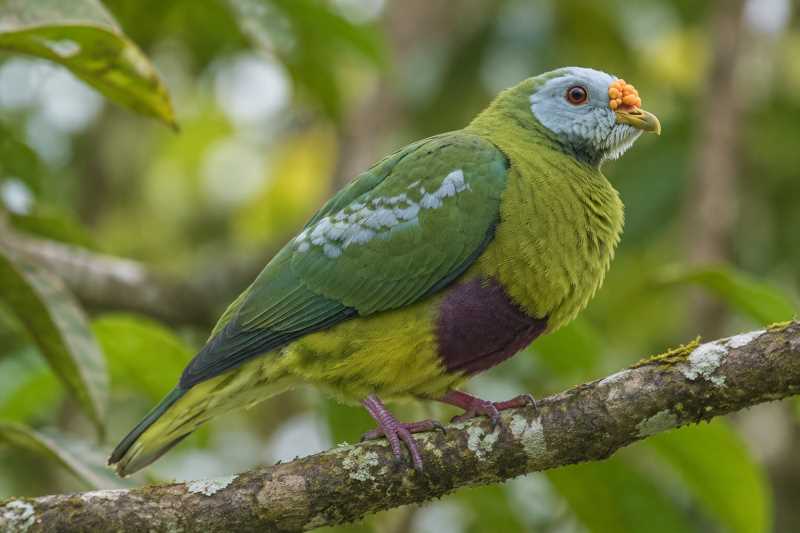
One of the most distinguishing features of the Carunculated Fruit Dove is its vibrant plumage. The bird boasts a kaleidoscope of colors that include shades of green, yellow, and purple, with intricate patterns that make it a visual spectacle against the backdrop of the forest. The dove’s name, "carunculated," refers to the small, fleshy protuberances on its face, which are unique among fruit doves and add to its distinctive appearance.
Measuring approximately 20-24 centimeters in length, the Carunculated Fruit Dove is relatively small, yet its vivid coloring allows it to stand out. Its eyes are encircled by a delicate ring of bare skin, often contrasting sharply with its plumage, and its bill is short and stout, perfectly adapted for its frugivorous diet.
Behavior and Ecology
Despite its striking appearance, the Carunculated Fruit Dove leads a relatively inconspicuous life. It is known for its solitary or loosely paired behavior, although it may gather in small flocks when food is abundant. Its call is a soft, melodious cooing, a sound that resonates through the forest and signals its presence to fellow doves.
The dove’s role in seed dispersal is crucial. By consuming fruits and excreting the seeds in different locations, it aids in the propagation of various plant species, contributing to the ecological balance of its habitat. This function is vital for maintaining the health and diversity of the forests it inhabits.
Conservation Status
The Carunculated Fruit Dove is currently classified as Near Threatened, with its population trend showing a decline. Habitat loss due to deforestation and land conversion for agriculture poses significant threats to its survival. The limited distribution of this species makes it particularly vulnerable to environmental changes and human activities.
Conservation efforts are imperative to ensure the survival of the Carunculated Fruit Dove. Protecting its natural habitat through the establishment of reserves and sustainable land management practices is essential. Moreover, raising awareness about the ecological importance of this species can foster community involvement in conservation initiatives.
Conclusion
The Carunculated Fruit Dove, with its breathtaking beauty and ecological significance, embodies the intricate connections within nature. Its vibrant presence serves as a reminder of the delicate balance that sustains biodiversity. As we continue to explore and understand the natural world, the need to protect and preserve such species becomes increasingly clear.
In the tapestry of life, the Carunculated Fruit Dove is a vibrant thread, weaving together the stories of forests and the creatures that inhabit them. By safeguarding its future, we honor the complexity and wonder of the natural world, ensuring that generations to come can marvel at the beauty of this extraordinary bird.
Related posts