Van Hasselt’s Sunbird: A Jewel of the Tropics
Van Hasselt’s Sunbird, scientifically known as Leptocoma brasiliana, is a small but captivating bird found in the lush landscapes of Southeast Asia. This vibrant species, with its iridescent plumage and energetic behavior, is a delight for bird enthusiasts and a vital component of its ecosystem. This article delves into the intriguing world of Van Hasselt’s Sunbird, exploring its habitat, behavior, diet, and conservation status.
Habitat and Distribution
Van Hasselt’s Sunbird is predominantly found in the tropical and subtropical regions of Southeast Asia, including countries such as Thailand, Malaysia, Indonesia, and the Philippines. It thrives in a variety of habitats ranging from lowland forests and mangroves to garden environments and plantations. This adaptability to different habitats is a testament to its resilience and ability to coexist with human developments.
The bird’s presence in diverse habitats underscores its role as a pollinator in these ecosystems. By feeding on nectar, the sunbird inadvertently transfers pollen from one flower to another, facilitating plant reproduction and contributing to the biodiversity of its habitat.
Physical Characteristics
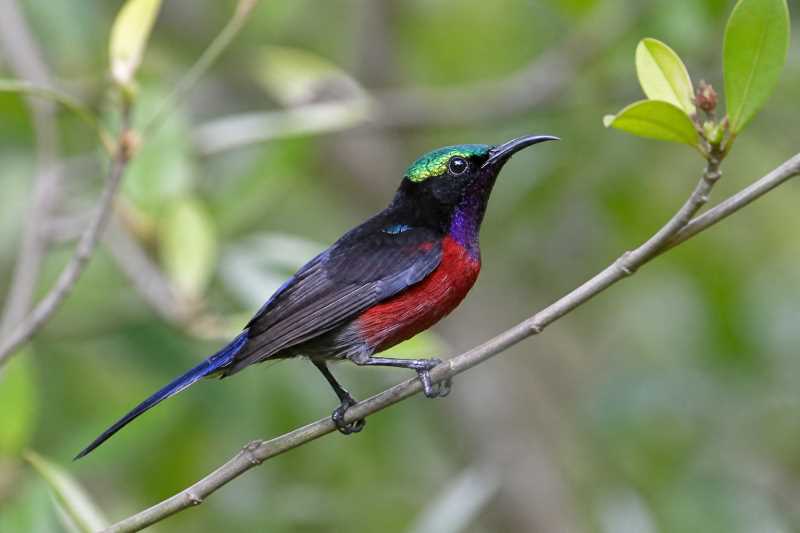
The Van Hasselt’s Sunbird is a small bird, measuring approximately 10 to 12 centimeters in length. Despite its diminutive size, it is easily recognizable by its striking plumage. Males are adorned with a brilliant metallic green head, throat, and chest, contrasted by a deep maroon back. This shimmering appearance is due to the microscopic structure of their feathers, which refract sunlight, creating a dazzling display of colors. Females, while less flamboyant, possess a more subdued olive-green coloration that provides effective camouflage in their natural surroundings.
Both sexes have a slender curved bill, perfectly adapted for their nectar-feeding lifestyle. This specialized bill, combined with a brush-tipped tongue, allows them to efficiently extract nectar from a variety of flowers.
Behavior and Diet
Van Hasselt’s Sunbird is an active and agile bird, often seen flitting between flowers in search of nectar. Its flight is characterized by rapid wing beats, allowing it to hover momentarily, much like a hummingbird, while feeding. This ability to hover is facilitated by their relatively large pectoral muscles, which provide the necessary power for sustained flight.
While nectar forms the primary component of their diet, Van Hasselt’s Sunbirds also consume small insects and spiders. This supplementary intake of protein is crucial, especially during the breeding season when the nutritional demands are higher. Their insectivorous habits also play a role in controlling pest populations, highlighting their ecological importance beyond pollination.
Reproduction and Lifespan
The breeding season of Van Hasselt’s Sunbird varies across its range but generally coincides with periods of abundant flower blooming. During courtship, males engage in elaborate displays, showcasing their vibrant plumage and singing to attract potential mates.
Nesting typically occurs in trees or shrubs, where the female constructs a small, cup-shaped nest using plant fibers, moss, and spider webs. The nest is strategically camouflaged to protect against predators. After laying a clutch of two eggs, the female incubates them for about two weeks until they hatch. Both parents are involved in feeding the chicks, which fledge approximately 15 to 20 days post-hatching.
In the wild, Van Hasselt’s Sunbirds have a lifespan of around 4 to 5 years, although this can vary based on environmental conditions and predation pressures.
Conservation Status
Currently, Van Hasselt’s Sunbird is classified as a species of Least Concern by the International Union for Conservation of Nature (IUCN). Despite its stable population, the species faces potential threats from habitat loss due to deforestation and land conversion for agriculture and urban development. Conservation efforts aimed at preserving natural habitats and promoting sustainable land-use practices are essential to ensuring the long-term survival of this and other sunbird species.
Additionally, the establishment of protected areas and the promotion of eco-tourism can provide economic incentives for local communities to conserve these vital ecosystems. Public awareness and education programs can also play a significant role in highlighting the ecological importance of sunbirds and the need for their protection.
Conclusion
Van Hasselt’s Sunbird is not only a visual marvel but also a crucial player in the ecosystems it inhabits. Its role as a pollinator and insect controller underscores its ecological significance, while its adaptability highlights its resilience in the face of environmental changes. Preserving this species and its habitat is imperative for maintaining the intricate balance of tropical ecosystems and ensuring that future generations can continue to marvel at the beauty of Van Hasselt’s Sunbird.
References
- BirdLife International. "Leptocoma brasiliana." IUCN Red List of Threatened Species.
- Wells, D.R. "The Birds of the Thai-Malay Peninsula." Christopher Helm.
- Cheke, R. A., and Mann, C. F. "Sunbirds: A Guide to the Sunbirds, Flowerpeckers, Spiderhunters, and Sugarbirds of the World."
Related posts