The Elusive Palani Laughingthrush: A Jewel of the Western Ghats
The Western Ghats of India, a UNESCO World Heritage site, is a treasure trove of biodiversity, home to an array of unique flora and fauna. Among its many wonders is the Palani Laughingthrush (Montecincla fairbanki), a bird that captivates ornithologists and nature enthusiasts alike. This article delves into the world of the Palani Laughingthrush, exploring its habitat, behavior, and conservation status.
Habitat and Distribution
Endemic to the Western Ghats, the Palani Laughingthrush is primarily found in the Palani Hills of Tamil Nadu. These hills, part of the larger Western Ghats mountain range, provide the perfect environment for these birds, characterized by montane evergreen forests and shola grasslands. The Palani Hills are known for their lush greenery and biodiversity, making them an ideal habitat for the Laughingthrush.
The bird’s preferred altitude ranges from 1,200 to 2,200 meters, where it thrives in the dense undergrowth of the shola forests. These forests are interspersed with open grasslands, which offer both food and shelter, essential for the survival of the Laughingthrush.
Physical Characteristics
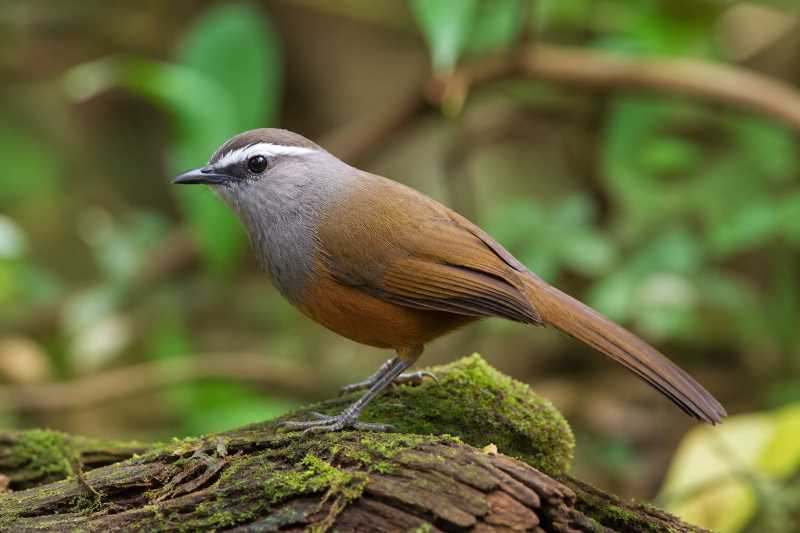
The Palani Laughingthrush is a medium-sized bird, measuring about 22-24 cm in length. It boasts a striking plumage with a blend of earthy tones that provide excellent camouflage against the forest floor and foliage. The bird’s upperparts are a rich olive-brown, while its underparts exhibit a lighter buff color. One of its most distinguishing features is its white throat patch, bordered by dark streaks, which adds to its distinctive appearance.
The bird’s eyes are a vibrant yellow, providing a stark contrast to its darker feathers. Its bill is short and robust, adapted for its insectivorous diet. The Palani Laughingthrush’s legs are strong, aiding its movement through the dense forest undergrowth.
Behavior and Diet
The Palani Laughingthrush is known for its elusive behavior, often remaining hidden within the dense foliage of its habitat. It is a highly social bird, typically found in small groups or pairs, communicating with a variety of calls and songs. Its call, a series of melodious notes, is a distinctive feature that can often be heard echoing through the forests.
Primarily insectivorous, the Palani Laughingthrush feeds on a diet of insects and small invertebrates. However, it is also known to consume berries and fruits, making it an important seed disperser within its ecosystem. The bird forages in the undergrowth, meticulously searching through leaf litter and foliage for food.
Breeding and Lifecycle
The breeding season for the Palani Laughingthrush typically occurs between March and August, coinciding with the pre-monsoon and monsoon periods in the Western Ghats. During this time, the male and female engage in elaborate courtship displays, often involving synchronized movements and vocalizations.
Nests are usually built in dense shrubs or low trees, constructed from twigs, leaves, and moss. The female lays a clutch of 2-3 eggs, which both parents incubate. After hatching, the chicks are altricial, requiring significant parental care before they are ready to fledge. Both parents are involved in feeding and protecting the young, ensuring their survival in the challenging forest environment.
Conservation Status
The Palani Laughingthrush is currently classified as Near Threatened by the International Union for Conservation of Nature (IUCN). Habitat loss due to deforestation, agricultural expansion, and human encroachment poses significant threats to its survival. The fragmentation of its habitat makes it increasingly difficult for these birds to find suitable nesting and foraging areas.
Conservation efforts are crucial to safeguard the future of the Palani Laughingthrush. Protecting the shola forests and grasslands of the Western Ghats, along with promoting sustainable land-use practices, are vital steps in preserving this species. Additionally, raising awareness about the importance of biodiversity in the region can help garner support for conservation initiatives.
Conclusion
The Palani Laughingthrush is a symbol of the rich biodiversity found in the Western Ghats, representing the unique and fragile ecosystems of this region. Understanding and protecting these birds is not only crucial for their survival but also for the preservation of the ecological balance within their habitat. As we strive to protect our planet’s natural heritage, the Palani Laughingthrush stands as a reminder of the beauty and complexity of the natural world, urging us to take action towards its conservation.
Related posts