Lesula (Cercopithecus lomamiensis): A Detailed Exploration
Introduction
The Lesula monkey, scientifically known as Cercopithecus lomamiensis, is a fascinating primate species that has captured the attention of scientists and conservationists alike. Discovered only in 2007 and formally described in 2012, the Lesula is one of the most recent major discoveries in the primate world, highlighting the rich biodiversity of the Congo Basin. This article delves into the various aspects of the Lesula, including its physical characteristics, habitat, behavior, and conservation efforts, providing a comprehensive overview for both enthusiasts and researchers.
Physical Description
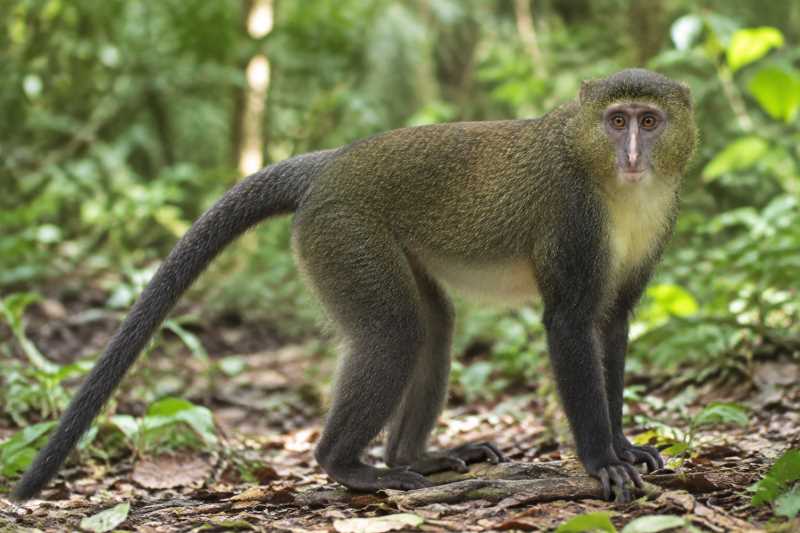
The Lesula is a striking primate characterized by its distinctive facial features and unique coloration. Adult Lesulas typically have a body length ranging from 40 to 50 centimeters, with males generally larger than females. Their tails, which are often longer than their bodies, add an additional 50 to 70 centimeters.
One of the most captivating features of the Lesula is its facial appearance. It possesses a hairless face with a pale, bluish-grey complexion, accentuated by a golden mane that frames its head. The eyes are large and expressive, contributing to the species’ somewhat melancholic expression. The body fur is predominantly a mix of golden-brown and darker shades, providing camouflage within the dappled forest light.
Range and Habitat
The Lesula’s range is confined to the remote forests of the Democratic Republic of the Congo, specifically within the Lomami Basin. This region, part of the central Congo Basin, is characterized by its dense tropical rainforests, which provide a rich and varied habitat for the Lesula and other wildlife.
The Lesula favors primary and secondary forests, often found in areas with a high density of undergrowth and a complex canopy structure. These forests offer abundant resources and protection from predators, making them ideal habitats for the species. However, as deforestation and habitat fragmentation continue to increase, the Lesula’s range is at risk of significant alteration.
Behavior and Diet
Lesulas are diurnal, spending the majority of their day foraging and socializing. They are primarily frugivorous, with a diet composed largely of fruits, supplemented by leaves, seeds, and occasionally small insects or bird eggs. Foraging occurs mostly in the lower and middle strata of the forest, where a variety of fruiting trees are accessible.
Socially, Lesulas are known to live in small groups, often consisting of a dominant male, several females, and their offspring. These groups exhibit a complex social structure, with well-defined roles and hierarchies. Communication within groups is facilitated through a variety of vocalizations, facial expressions, and body postures. The Lesula’s vocal repertoire includes alarm calls, contact calls, and various social signals that help maintain group cohesion and mediate conflicts.
Identification Tips (Field Recognition Cues)
Identifying a Lesula in the wild requires careful attention to several key features:
- Facial Coloration: Look for the distinctive pale blue-grey face devoid of fur, framed by the golden mane. This is one of the most recognizable features.
- Body Size and Shape: Observe the medium-sized body with a long tail, which is characteristic of many arboreal monkeys.
- Vocalizations: Listen for their unique calls. The Lesula’s vocalizations are different from other sympatric primates, often described as deep and resonant.
- Social Behavior: Spot small groups moving through the forest canopy, often led by a dominant male.
Conservation Status (with Threats and Protections)
The International Union for Conservation of Nature (IUCN) currently lists the Lesula as Vulnerable. The primary threats to the species include habitat destruction due to logging and agricultural expansion, as well as hunting for bushmeat.
Conservation efforts are focused on protecting the Lesula’s habitat within the Lomami National Park and surrounding community reserves. These efforts include anti-poaching patrols, community education programs, and habitat restoration projects. Additionally, ongoing research and monitoring are critical for understanding the species’ ecology and informing conservation strategies.
Frequently Asked Questions
What is the Lesula monkey’s scientific name?
The scientific name of the Lesula monkey is Cercopithecus lomamiensis. It was formally described in 2012 after its discovery in 2007.
Where can the Lesula monkey be found?
The Lesula monkey is found exclusively in the Lomami Basin of the Democratic Republic of the Congo, within the central Congo Basin rainforest.
What does the Lesula monkey eat?
Lesulas primarily consume fruits, but their diet can also include leaves, seeds, and occasionally small insects or bird eggs.
How big do Lesula monkeys get?
Adult Lesulas have a body length of 40 to 50 centimeters, with tails that add another 50 to 70 centimeters. Males are typically larger than females.
Why is the Lesula monkey considered vulnerable?
The Lesula is considered vulnerable due to habitat destruction from logging and agriculture, as well as hunting pressures. Conservation efforts are underway to mitigate these threats.
Related posts