Introduction
The Blackish Chat-Tyrant (Ochthoeca nigrita) is a small passerine bird belonging to the Tyrannidae family, known for its striking appearance and distinctive behaviors. Native to the Andean regions of South America, this bird is an intriguing subject for ornithologists and bird enthusiasts alike. In this article, we will explore the characteristics, habitat, behavior, and conservation status of the Blackish Chat-Tyrant, providing a comprehensive overview of this fascinating species.
Physical Characteristics
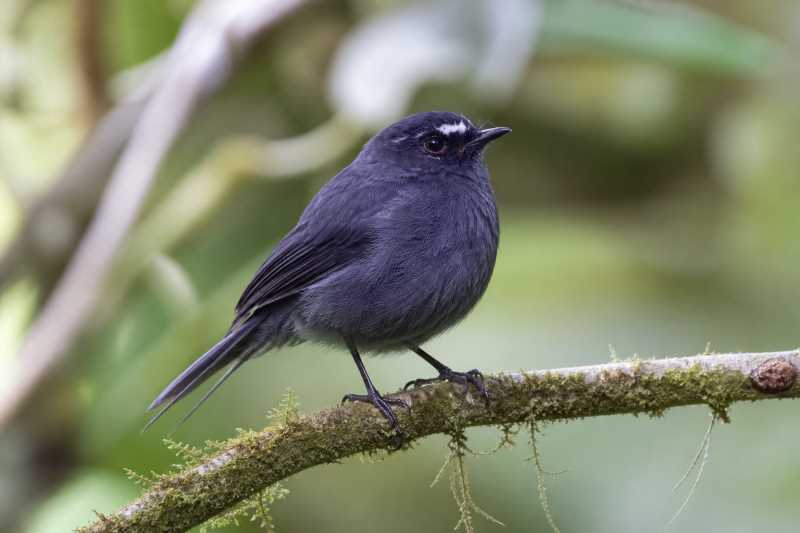
The Blackish Chat-Tyrant is a small bird, measuring approximately 13 centimeters in length. It is characterized by its dark plumage, which appears almost black, with subtle variations in shading across its body. The bird’s wings and tail are typically darker than its head and back, providing a subtle but distinct contrast. Its eyes are dark, and its bill is short and slightly hooked, adapted for its insectivorous diet.
One of the most striking features of the Blackish Chat-Tyrant is its posture. The bird is often seen perching upright, with its tail cocked, a characteristic stance that aids in its identification. Its legs are relatively long, allowing it to hop nimbly between branches and rocks as it forages for food.
Habitat and Distribution
The Blackish Chat-Tyrant is endemic to the Andean Mountains, with its range extending from Venezuela through Colombia, Ecuador, Peru, to Bolivia. It inhabits subtropical or tropical moist montane forests and is commonly found at elevations between 1,200 and 3,500 meters. The bird prefers forest edges and clearings, where it can easily find insects, its primary food source.
The species’ reliance on specific habitats highlights the importance of preserving Andean ecosystems. Deforestation and habitat fragmentation pose significant threats to the Blackish Chat-Tyrant, as these activities reduce the availability of suitable living environments.
Behavior and Diet
The Blackish Chat-Tyrant is an active and agile bird, frequently observed sallying from perches to catch insects in mid-air. Its diet mainly consists of insects and other small invertebrates, which it skillfully captures using its quick reflexes and sharp eyesight.
This bird is typically solitary but may be seen in pairs during the breeding season. It is known for its distinctive calls, which consist of a series of sharp, high-pitched notes that carry well through the dense montane forests. These vocalizations are used for communication between mates and to establish territory.
Breeding and Reproduction
The breeding season for the Blackish Chat-Tyrant varies depending on its geographical location, but it generally coincides with the rainy season when food is abundant. The species is monogamous, with pairs forming long-term bonds.
Nesting occurs in concealed locations, often in crevices or among dense foliage. The female typically lays two eggs, which she incubates for about two weeks. Both parents participate in feeding the chicks, which fledge approximately 15 days after hatching. The parental investment in the young is significant, ensuring a higher survival rate for the offspring.
Conservation Status
The Blackish Chat-Tyrant is currently listed as a species of Least Concern by the International Union for Conservation of Nature (IUCN). However, its population trends should be monitored due to potential threats from habitat loss and climate change.
Conservation efforts in the Andean regions are crucial for protecting this species and its habitat. Initiatives such as reforestation projects and the establishment of protected areas can help mitigate the impacts of human activities. Furthermore, raising awareness about the ecological importance of the Blackish Chat-Tyrant and other Andean species can foster community involvement in conservation efforts.
Conclusion
The Blackish Chat-Tyrant is a remarkable bird that plays a vital role in the ecosystems of the Andes. Its unique adaptations and behaviors make it a subject of interest for researchers and birdwatchers. While currently not endangered, the species faces challenges that require ongoing attention and conservation efforts. By understanding and protecting the Blackish Chat-Tyrant, we contribute to the broader goal of preserving biodiversity in one of the world’s most ecologically rich regions.
References
- BirdLife International. (2021). Ochthoeca nigrita. The IUCN Red List of Threatened Species 2021.
- Schulenberg, T. S., & Kirwan, G. M. (2020). Blackish Chat-Tyrant (Ochthoeca nigrita), version 1.0. In Birds of the World (J. del Hoyo, A. Elliott, J. Sargatal, D. A. Christie, & E. de Juana, Editors).
- Remsen, J. V., & Sharpe, C. J. (2008). Family Tyrannidae (Tyrant-flycatchers). In Handbook of the Birds of the World Alive (J. del Hoyo, A. Elliott, & D. A. Christie, Editors).
Related posts