The Bronze-tailed Plumeleteer: A Jewel of the Neotropics
In the lush, verdant landscapes of Central America, a small and vibrant hummingbird flits through the underbrush, its iridescent feathers catching the dappled sunlight. This avian marvel is the Bronze-tailed Plumeleteer (Chalybura urochrysia), a species that has captured the imagination of ornithologists and bird enthusiasts alike. Known for its striking appearance and unique behaviors, the Bronze-tailed Plumeleteer is a testament to the rich biodiversity of the neotropical regions.
Taxonomy and Distribution
The Bronze-tailed Plumeleteer belongs to the family Trochilidae, which comprises the hummingbirds, a group celebrated for their incredible flying abilities and iridescent plumage. The scientific name, Chalybura urochrysia, hints at its most distinctive feature: the bronze-colored tail. The genus Chalybura includes two species, with the Bronze-tailed Plumeleteer being one of them.
This species is predominantly found in the humid lowland forests and secondary growths from southern Honduras, through Nicaragua, Costa Rica, and Panama, and into northwestern Colombia. Its preferred habitats are characterized by abundant flowering plants, which provide the nectar that constitutes the primary component of its diet.
Physical Characteristics
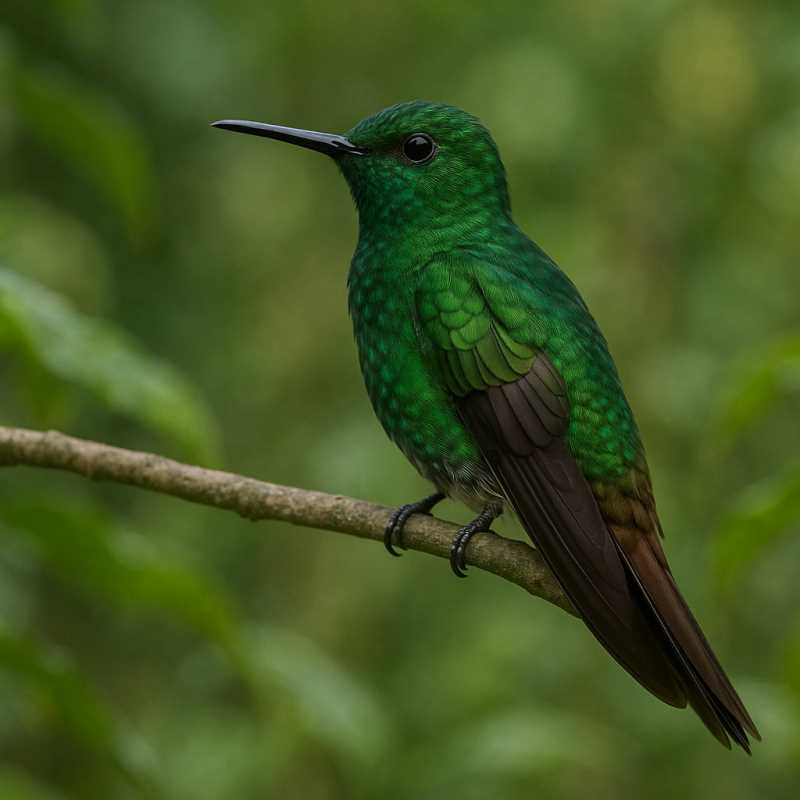
The Bronze-tailed Plumeleteer is a medium-sized hummingbird, measuring approximately 11 to 12 centimeters in length and weighing around 8 to 10 grams. Males and females exhibit slight sexual dimorphism, with males generally being more vividly colored. Males boast a brilliant green plumage with a distinctive bronze sheen on their tails, from which the bird derives its name. In contrast, females tend to have more subdued coloring, with greyish underparts and less pronounced tail coloration.
Both sexes share a few common features: a straight, black bill optimized for accessing nectar deep within flowers, and long wings that enable their characteristic agile flight. Their feet are relatively small, fitting their lifestyle of hovering and swift movement rather than perching for extended periods.
Behavior and Ecology
The Bronze-tailed Plumeleteer is primarily a solitary bird outside of the breeding season, although it may engage in loose social structures when feeding. It is noted for its territorial nature, especially males who aggressively defend their feeding territories against intruders. They are often seen performing spectacular aerial displays to ward off rivals and attract females.
This species is a nectarivore, feeding predominantly on the nectar of a variety of flowering plants. It plays a vital role in the ecosystem as a pollinator, transferring pollen from flower to flower as it feeds. Additionally, it supplements its diet with small insects and spiders, which provide essential proteins and nutrients.
Breeding and Nesting
Breeding for the Bronze-tailed Plumeleteer typically coincides with the rainy season when food resources are abundant. The female is solely responsible for nest building, incubation, and chick-rearing. She constructs a small, cup-shaped nest from plant fibers and spider silk, often camouflaging it with lichens and mosses.
The clutch usually consists of two small, white eggs. The female incubates the eggs for about 15 to 19 days. Once hatched, the chicks are altricial, meaning they are born blind and featherless, requiring considerable care and feeding. The mother feeds them regurgitated food until they are ready to fledge, typically around 20 to 26 days after hatching.
Conservation Status and Threats
Currently, the Bronze-tailed Plumeleteer is classified as a species of Least Concern by the International Union for Conservation of Nature (IUCN). However, like many species inhabiting tropical forests, it faces threats from habitat destruction due to deforestation and land conversion for agriculture.
Conservation efforts aimed at preserving the tropical forests of Central America are crucial for the continued survival of the Bronze-tailed Plumeleteer and countless other species that share its habitat. Protecting these environments not only safeguards biodiversity but also helps in maintaining the ecological balance essential for the health of our planet.
Conclusion
The Bronze-tailed Plumeleteer is more than just a beautiful bird; it is an integral part of its ecosystem, contributing to the pollination of plants and maintaining the health of the forest. As we continue to explore and understand the natural world, species like the Bronze-tailed Plumeleteer remind us of the intricate and delicate web of life that sustains our planet. Conservation and appreciation of such species are vital for ensuring that future generations can also marvel at their beauty and ecological significance.
Related posts