The Black-striped Woodcreeper: An Elusive Avian Architect
Introduction
The Black-striped Woodcreeper (Xiphorhynchus lachrymosus) is a fascinating bird that captures the imagination of ornithologists and birdwatchers alike. Noted for its distinctive plumage and unique behavioral traits, this species is a representative of the diverse avian life found in the Neotropical forests of Central and South America. This article delves into the intriguing world of the Black-striped Woodcreeper, exploring its habitat, physical characteristics, behavior, diet, and conservation status.
Habitat and Distribution
The Black-striped Woodcreeper is primarily found in the humid lowland forests and subtropical or tropical moist montane forests of Central America, ranging from southern Mexico to western Ecuador. Preferring dense forest environments, this species thrives in areas with abundant tree cover, which provides both food and shelter.
The species’ range includes countries such as Guatemala, Belize, Honduras, Nicaragua, Costa Rica, Panama, Colombia, and Ecuador. Within these regions, the Black-striped Woodcreeper occupies a variety of forest types, including primary and secondary forests, as well as forest edges and clearings. The bird’s preference for various forest habitats highlights its adaptability and resilience in the face of environmental changes.
Physical Characteristics
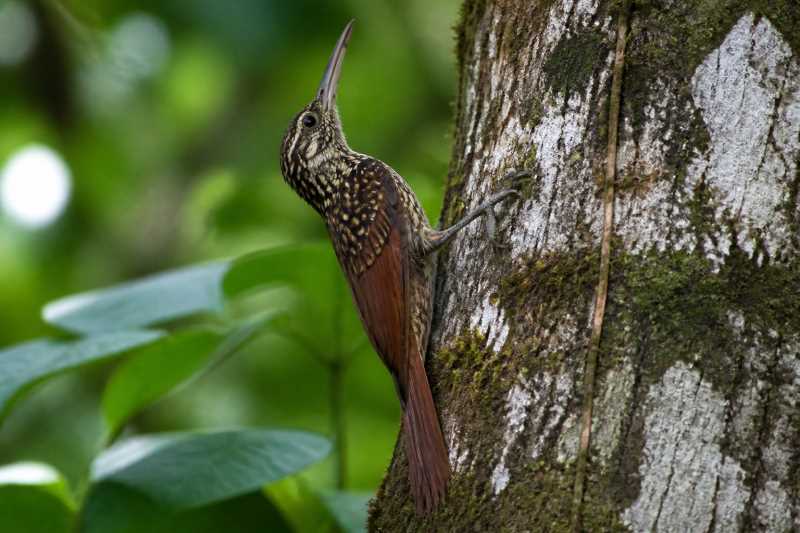
The Black-striped Woodcreeper is a medium-sized bird, typically measuring around 22 to 25 centimeters in length. Its plumage is predominantly brown with distinctive black streaks running down its back and wings, giving the bird its name. The underparts are usually a lighter, more uniform brown, providing a striking contrast to the darker streaks above.
One of the most distinguishing features of the Black-striped Woodcreeper is its long, slightly curved bill, which is perfectly adapted for its feeding habits. The bill is used to probe into crevices in tree bark, allowing the bird to extract insects and other small organisms hidden within. Additionally, the bird’s zygodactyl feet, with two toes facing forward and two backward, facilitate its adept climbing abilities, enabling it to navigate tree trunks and branches with ease.
Behavior and Feeding
The Black-striped Woodcreeper is known for its solitary and secretive nature. It often moves through the forest discreetly, clinging to tree trunks and branches as it searches for food. Its feeding strategy primarily involves probing and gleaning from the bark of trees, where it finds insects, spiders, and other small invertebrates.
Although primarily an insectivore, the Black-striped Woodcreeper may occasionally consume small fruits and seeds when insect prey is scarce. This dietary flexibility is beneficial during periods when insect populations are low, allowing the bird to sustain itself with alternative food sources.
In terms of vocalizations, the Black-striped Woodcreeper produces a series of sharp, high-pitched calls that are often used to communicate with other members of its species. These calls can serve various purposes, including mating, territorial defense, and alerting others of potential threats.
Breeding and Nesting
The breeding season for the Black-striped Woodcreeper typically coincides with the onset of the rainy season, which varies depending on the region. During this time, the availability of food and nesting sites increases, providing optimal conditions for raising young.
Nesting usually occurs in tree cavities, abandoned woodpecker holes, or other natural crevices. The female lays between two to three eggs, which are incubated for approximately two weeks. Both parents share the responsibility of feeding and caring for the chicks until they fledge, which occurs roughly three weeks after hatching.
Conservation Status and Threats
The Black-striped Woodcreeper is currently classified as a species of Least Concern by the International Union for Conservation of Nature (IUCN). However, like many forest-dependent species, it faces threats from habitat destruction and fragmentation, primarily due to deforestation and agricultural expansion.
Conservation efforts aimed at preserving forest habitats are crucial for the continued survival of the Black-striped Woodcreeper. Protected areas, sustainable forestry practices, and reforestation initiatives are key strategies in mitigating the impact of human activities on this species and its habitat.
Conclusion
The Black-striped Woodcreeper is a remarkable bird, embodying the complexity and beauty of the Neotropical forests it inhabits. Its specialized adaptations and ecological role underscore the importance of conserving these rich ecosystems. As we continue to learn more about the Black-striped Woodcreeper and its environment, our understanding of biodiversity and the interconnectedness of life is enriched, highlighting the need for concerted conservation efforts to ensure the longevity of this and many other species.
Preserving the habitats of the Black-striped Woodcreeper not only aids in the survival of this unique bird but also supports the myriad of other species that share its ecosystem. Through increased awareness and conservation actions, we can contribute to the protection of these vital forest environments for future generations.
References
- BirdLife International. "Species factsheet: Xiphorhynchus lachrymosus." BirdLife International, 2021.
- Schulenberg, T. S., Editor. "Xiphorhynchus lachrymosus, Black-striped Woodcreeper." Neotropical Birds Online, Cornell Lab of Ornithology, 2020.
- Stiles, F. Gary, and Alexander F. Skutch. "A Guide to the Birds of Costa Rica." Comstock Publishing Associates, 1989.
Related posts