Ring-billed Gull (Larus delawarensis): A Comprehensive Overview
The Ring-billed Gull, scientifically known as Larus delawarensis, is a prevalent species across North America. Renowned for its adaptability and distinctive appearance, this gull has become a staple of coastal and inland environments, demonstrating remarkable behavioral and ecological traits.
Taxonomy and Evolution
Belonging to the Laridae family, the Ring-billed Gull is one of the medium-sized gulls, closely related to other gulls such as the Herring Gull and the California Gull. Its scientific nomenclature, Larus delawarensis, reflects its historical identification near the Delaware River. Evolutionarily, the species has adapted over millennia to diverse habitats, showcasing a robust ability to thrive in varying climates and regions.
Physical Description
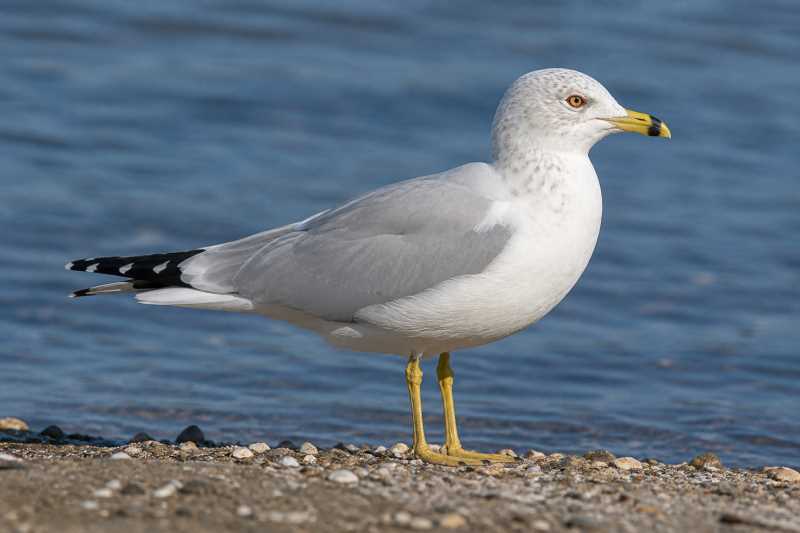
The Ring-billed Gull is easily identifiable by its medium size, averaging 46 cm in length with a wingspan of approximately 120 cm. Adults are characterized by their white heads and underparts, pale gray back, and yellow legs. The most distinctive feature is the black ring encircling their yellow bill, which gives them their common name. During the breeding season, these gulls exhibit a subtle change in plumage, developing a slight streaking on their heads.
Juvenile Ring-billed Gulls, however, present a more mottled brown appearance, which gradually transitions to adult plumage over three years. This transformation is marked by a series of molts that prepare the bird for its adult life.
Habitat and Distribution
The Ring-billed Gull is notably versatile in its habitat preferences. While primarily associated with coastal areas, these birds are equally comfortable in freshwater environments such as lakes, rivers, and reservoirs. Their adaptability is further demonstrated by their presence in urban settings, where they often exploit human-altered landscapes for feeding and nesting.
Geographically, the Ring-billed Gull breeds across Canada and the northern United States, migrating southwards during the winter months. Their winter range extends to the southern United States, the Gulf Coast, and into Central America. This migratory pattern underscores their resilience and adaptability to seasonal changes.
Behavior and Diet
Social by nature, Ring-billed Gulls are often seen in large flocks, especially during migration and in winter roosts. They are opportunistic feeders, with a diet that includes fish, insects, earthworms, and crustaceans, along with human refuse. Their foraging behavior is highly adaptable, allowing them to thrive in diverse environments.
These gulls exhibit intelligent foraging strategies, such as dropping hard-shelled prey from heights to crack them open. In urban areas, they are known to scavenge, capitalizing on food waste and other anthropogenic resources.
Reproduction and Lifespan
Breeding occurs in colonies, often on islands or isolated coastal areas, where the Ring-billed Gull builds nests using grasses and other available materials. The breeding season begins in late spring, with females typically laying two to four eggs. Both parents share incubation duties, which last about 25 days.
Chicks are precocial, meaning they are relatively mature and mobile from birth. They fledge approximately five to six weeks after hatching, although they remain dependent on parental feeding and protection for some time. In the wild, Ring-billed Gulls can live up to 15 years, although many factors such as predation and environmental conditions can affect their lifespan.
Conservation Status and Human Interaction
Currently, the Ring-billed Gull is classified as a species of Least Concern by the IUCN Red List, thanks to its large and stable population. However, their presence in urban areas often leads to conflicts with humans, primarily due to their scavenging habits and noise.
Despite these challenges, Ring-billed Gulls play an important role in ecosystems as both predators and scavengers. They help control pest populations and contribute to the nutrient cycle through their feeding activities.
Conclusion
The Ring-billed Gull is a fascinating example of evolutionary success, showcasing adaptability and resilience across a wide range of environments. As both a common and charismatic species, it offers valuable insights into avian ecology and the challenges of coexisting with human populations. Understanding and appreciating their role in the ecosystem can help mitigate human-wildlife conflicts and ensure that these remarkable birds continue to thrive in the future.
Related posts