The Enigmatic Yellow-billed Malkoha: A Glimpse into Its World
The Yellow-billed Malkoha (Rhamphococcyx calyorhynchus) is a captivating bird species that beckons the curiosity of ornithologists and bird enthusiasts alike. Belonging to the family Cuculidae, this bird is native to the lush forests of Sulawesi, Indonesia. With its striking appearance and unique behavioral traits, the Yellow-billed Malkoha offers a fascinating subject of study in avian biodiversity.
Physical Characteristics
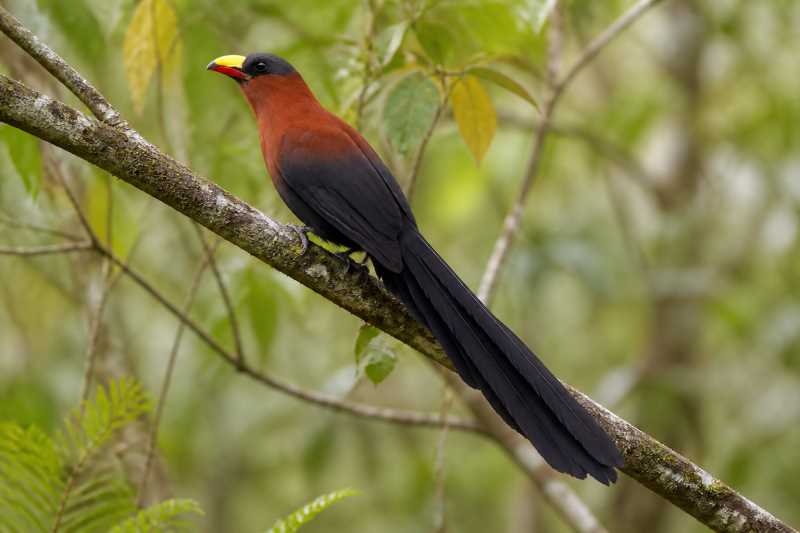
The Yellow-billed Malkoha is easily identifiable by its vibrant plumage and distinctive features. It boasts a sleek body with a predominantly dark greenish-black coloration, which contrasts beautifully with its bright yellow bill. This combination not only gives the bird its name but also makes it a striking figure in its natural habitat. The bird’s eyes are surrounded by a patch of bare skin, which can vary in color from pale blue to grey, adding to its distinctiveness.
Measuring around 42 to 47 centimeters in length, the Yellow-billed Malkoha is relatively large among the cuckoo family. Its long tail feathers, often tipped with white, are a prominent feature that aids in its agile navigation through dense foliage.
Habitat and Distribution
The Yellow-billed Malkoha is endemic to the island of Sulawesi and has adapted well to the tropical climates found there. It inhabits various types of forested environments, including lowland rainforests, montane forests, and occasionally, secondary growth forests. The bird’s presence in both primary and secondary forests highlights its adaptability to different ecological conditions, although it prefers the dense canopy cover offered by primary forests.
Behavior and Diet
Known for its elusive nature, the Yellow-billed Malkoha is often heard before it is seen. It produces a series of soft, cooing calls that resonate through the forest canopy. Despite its size and striking coloration, it can be surprisingly difficult to spot due to its preference for staying high in the trees.
The diet of the Yellow-billed Malkoha is primarily insectivorous. It feeds on a variety of insects, including caterpillars, beetles, and grasshoppers. Occasionally, it supplements its diet with small vertebrates and fruits. The bird forages methodically through the foliage, using its curved bill to probe into crevices and under leaves, a behavior that is typical of malkohas.
Reproduction and Lifespan
Information on the breeding habits of the Yellow-billed Malkoha is relatively sparse, which adds an element of mystery to this already enigmatic bird. However, like many cuckoos, it is believed to practice brood parasitism to some extent, laying its eggs in the nests of other birds. This behavior, however, is not as prevalent in malkohas as it is in other members of the cuckoo family.
Breeding seasons typically coincide with the rainy season when food resources are abundant. The nests are usually constructed high in the canopy, making them difficult to study. The Yellow-billed Malkoha is thought to have a lifespan typical of medium-sized birds, ranging from 5 to 10 years in the wild.
Conservation Status
Currently, the Yellow-billed Malkoha is classified as Least Concern by the International Union for Conservation of Nature (IUCN). However, like many species endemic to specific regions, it faces threats from habitat destruction due to logging and agricultural expansion. Conservation efforts aimed at preserving Sulawesi’s forests are crucial for the continued survival of this species.
Importance to Ecosystem
The Yellow-billed Malkoha plays a significant role in its ecosystem. As an insectivore, it helps control insect populations, which can benefit forest health. Additionally, by occasionally consuming fruits, it may assist in seed dispersal, contributing to the regeneration of its forest habitat.
Conclusion
The Yellow-billed Malkoha, with its striking appearance and intriguing behavior, is a testament to the rich biodiversity found in Sulawesi. While it currently enjoys a stable population, ongoing conservation efforts are essential to ensure its continued presence in the wild. Through increased awareness and research, we can better understand and protect this remarkable bird and the vibrant ecosystem it inhabits.
As we strive to conserve the world’s biodiversity, the Yellow-billed Malkoha serves as a reminder of the wonders that still await discovery in the natural world, urging us to preserve these treasures for future generations.
References
- BirdLife International. (2021). Rhamphococcyx calyorhynchus. The IUCN Red List of Threatened Species.
- Payne, R.B. (1997). Family Cuculidae (Cuckoos). In del Hoyo, J., Elliott, A., & Sargatal, J. (Eds.), Handbook of the Birds of the World.
- White, C.M.N., & Bruce, M.D. (1986). The Birds of Wallacea (Sulawesi, The Moluccas & Lesser Sunda Islands, Indonesia): An Annotated Check-list.
Related posts