An In-Depth Analysis of the Black-bellied Bustard: A Remarkable Avian Species
The Black-bellied Bustard, scientifically known as Lissotis melanogaster, is a striking bird species native primarily to the grasslands and savannas of sub-Saharan Africa. This medium-sized avian is renowned for its distinctive plumage and unique courtship displays, making it a subject of interest for ornithologists and bird enthusiasts worldwide.
Physical Characteristics and Identification
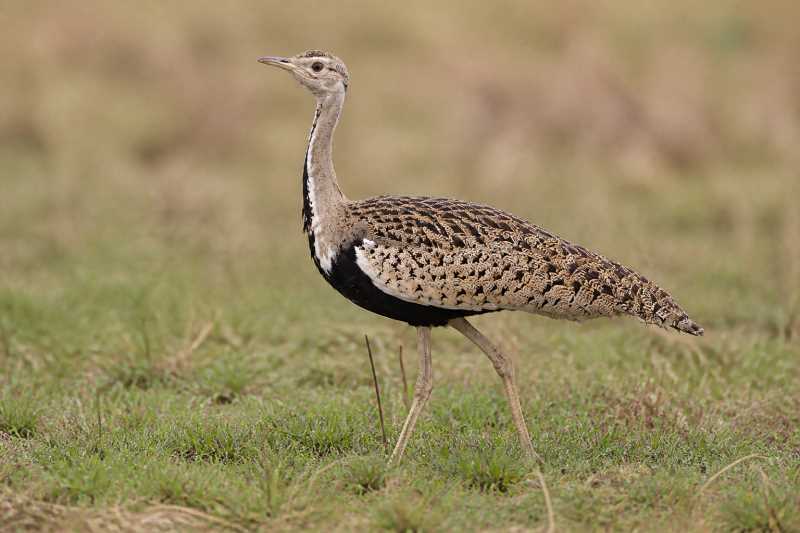
The Black-bellied Bustard is a robust bird, measuring between 58 to 65 cm in length, with males generally larger than females. Its most distinguishing feature is the striking contrast between its pale upper parts and the dark, glossy black belly, which gives the species its name. The male bustard is particularly notable for its more vibrant coloration during the breeding season, exhibiting a chestnut neck and a conspicuous white stripe running from the eye to the base of the neck. Females, on the other hand, are more cryptically colored with a mottled brown appearance that provides effective camouflage against predators.
Habitat and Distribution
This species is predominantly found in the savannas, grasslands, and lightly wooded areas of sub-Saharan Africa, ranging from Senegal in the west to Ethiopia in the east, and extending southwards to South Africa. The Black-bellied Bustard thrives in open landscapes where it can forage for its varied diet, which includes insects, small vertebrates, and plant matter. Seasonal movements are observed in some populations, primarily driven by rainfall patterns and the availability of food resources.
Behavior and Diet
The Black-bellied Bustard is known for its ground-dwelling habits, spending much of its time walking through grasslands as it searches for food. Its diet is omnivorous, comprising a mix of insects, seeds, and occasionally small reptiles and mammals. During the breeding season, males engage in elaborate display flights, often performing a series of deep, guttural calls followed by a sudden upward flight, aimed at attracting females. These displays are not only a testament to the bird’s agility but also serve as an important mechanism for mate selection.
Reproduction and Lifecycle
Breeding in Black-bellied Bustards generally coincides with the rainy season when food is abundant. The species exhibits a lek mating system, where males congregate in specific areas to perform courtship displays while females visit these leks to select a mate. Nesting takes place on the ground, often concealed within tall grass to protect against predators. Females lay a clutch of 1 to 3 eggs, which are incubated for about 23 to 25 days. The precocial chicks are able to leave the nest shortly after hatching, following their mother as they learn to forage.
Conservation Status and Challenges
Currently, the Black-bellied Bustard is classified as Least Concern by the International Union for Conservation of Nature (IUCN). However, like many grassland species, it faces threats from habitat destruction and fragmentation due to agricultural expansion, human settlement, and infrastructural development. Additionally, hunting and trapping pose significant risks in certain regions. Conservation efforts are crucial to ensure that viable populations of this species continue to thrive across its natural range.
Conclusion
The Black-bellied Bustard remains a fascinating subject of study due to its distinctive behaviors and ecological role within African grasslands. Understanding its biology and ecological requirements is essential for developing effective conservation strategies to preserve this iconic species. With continued research and conservation efforts, it is hoped that the Black-bellied Bustard will remain a thriving component of Africa’s rich biodiversity.
References
- BirdLife International. (2023). Lissotis melanogaster species factsheet.
- Collar, N. J., & Stuart, S. N. (1985). Threatened Birds of Africa and Related Islands.
- Sinclair, I., & Ryan, P. (2010). Birds of Africa South of the Sahara.
Related posts