The Enchanting Golden-tailed Sapphire: A Jewel of the Hummingbird World
The avian world is replete with an array of fascinating and visually captivating species, among which the Golden-tailed Sapphire (Chrysuronia oenone) stands out as a particularly dazzling member. These small, vibrant hummingbirds are native to the lush and diverse ecosystems of South America, where they play an integral role in the pollination of various plant species. This article delves into the biology, habitat, behavior, and conservation status of the Golden-tailed Sapphire, providing a comprehensive overview of this remarkable bird.
Taxonomy and Physical Description
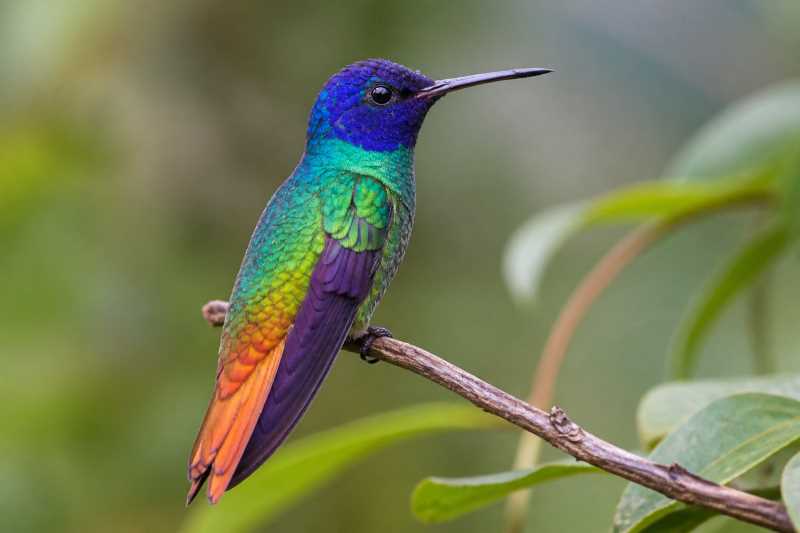
The Golden-tailed Sapphire belongs to the family Trochilidae and is classified under the genus Chrysuronia. Its scientific name, Chrysuronia oenone, pays homage to its stunning tail, which glows with a golden sheen. Adult males are particularly striking with their iridescent blue-green plumage covering the head and back, while the underparts are a lighter hue with a subtle, silvery sheen. The hallmark of this species, however, is its brilliant golden tail feathers, which catch the light as the bird flits through its environment. Females, while less flamboyant, are equally beautiful, displaying a more subdued coloration but still retaining the characteristic golden tail.
Habitat and Distribution
The Golden-tailed Sapphire is predominantly found across a range of South American countries, including Colombia, Venezuela, Ecuador, Peru, Bolivia, and Brazil. These birds favor habitats that offer ample floral resources, such as tropical and subtropical forests, savannas, and shrublands. They are typically seen at elevations ranging from sea level to about 2,400 meters, although they prefer lower altitudes where flowering plants are more abundant.
The hummingbird’s range is closely linked to the availability of nectar-producing flowers, which constitute a significant portion of its diet. This dietary preference makes the Golden-tailed Sapphire an important pollinator in its ecosystem, as it inadvertently transfers pollen from one flower to another during feeding.
Behavior and Feeding
Golden-tailed Sapphires are solitary creatures, known for their territorial nature. Males, in particular, are known to defend prime feeding territories vigorously against intruders, including other hummingbirds. They exhibit remarkable agility and speed, traits that are essential for both foraging and evading predators.
Their diet primarily consists of nectar, which they extract using their long, specialized bills and extendable tongues. In addition to nectar, these hummingbirds consume small insects and spiders, which provide essential proteins and nutrients not found in a nectar-only diet. This dietary flexibility is crucial for their survival, especially during times when floral resources are scarce.
Breeding and Reproduction
The breeding behavior of the Golden-tailed Sapphire is another fascinating aspect of its biology. These birds do not form pair bonds; instead, males and females come together only for mating. The male performs elaborate aerial displays to attract a female, showcasing his iridescent plumage and agility.
Once mating has occurred, the female takes on the responsibility of building the nest, incubating the eggs, and rearing the chicks. Nests are typically constructed from plant down and spider silk, forming a cup-like structure that is securely anchored to a branch. The female lays two white eggs, which she incubates for approximately two weeks. After hatching, the chicks are cared for by the mother until they are ready to fledge.
Conservation Status and Threats
Currently, the Golden-tailed Sapphire is classified as a species of Least Concern by the International Union for Conservation of Nature (IUCN). This classification indicates that the species is not immediately threatened with extinction. However, like many other wildlife species, the Golden-tailed Sapphire faces threats from habitat destruction and climate change.
Deforestation and land conversion for agriculture are major concerns, as they lead to the loss of critical habitats. Additionally, climate change poses a long-term threat by potentially altering the distribution of flowering plants that these hummingbirds rely on for food.
Conservation efforts are crucial to ensure the continued survival of the Golden-tailed Sapphire. Protecting natural habitats, promoting sustainable land-use practices, and supporting reforestation projects are all vital steps in preserving the ecosystems these birds depend on.
Conclusion
The Golden-tailed Sapphire is a mesmerizing example of the beauty and diversity found within the hummingbird family. Its vibrant plumage, dynamic behavior, and ecological significance make it a species worthy of admiration and protection. As we continue to learn more about this incredible bird, efforts to conserve its habitat and support its population will be essential to safeguarding its future. By appreciating and understanding the unique role of the Golden-tailed Sapphire, we contribute to the broader effort of preserving the rich biodiversity of our planet.
Related posts