Introduction
Whitehead’s Swiftlet (Aerodramus whiteheadi) is a poorly known swift endemic to the Philippines. It inhabits high-elevation forests on several of the country’s major mountains and is named after the British explorer and collector John Whitehead. Its restricted distribution, elusive habits and identification difficulties mean that important aspects of its ecology remain uncertain.
Physical Description
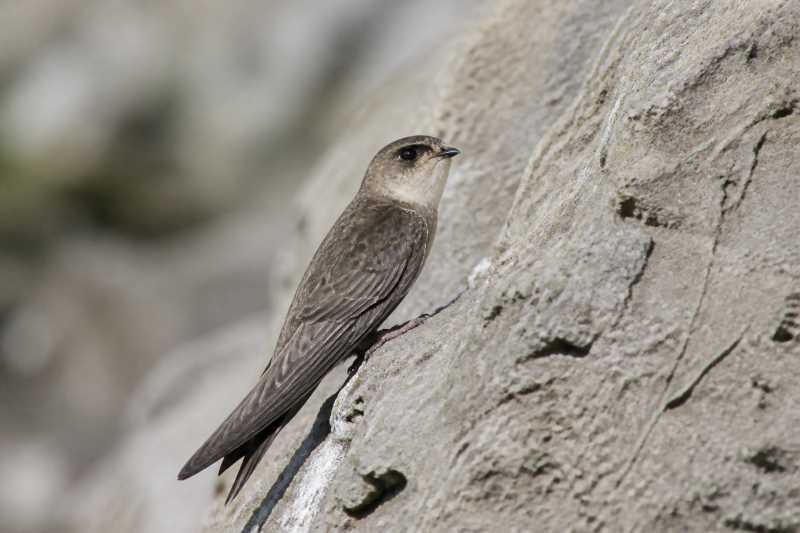
Whitehead’s Swiftlet is a relatively large swiftlet, measuring about 14 cm in length. It has long, narrow wings, a bulky head and a deeply forked tail. The upperparts are dark blackish-brown, while the underparts are generally paler brown. Unlike some similar swiftlets, it does not show a distinctly pale rump. The tarsi are largely unfeathered.
The sexes are not known to show consistent differences in plumage, and reliable descriptions of juvenile or age-related variation are limited. Birds attributed to the Mindanao form, traditionally known as A. w. origenis, have been described as darker overall than birds from Luzon. Taxonomic treatment of regional forms has varied between authorities.
Range and Habitat
Whitehead’s Swiftlet is endemic to the Philippines. Well-documented records come from montane areas of Luzon and Mindanao, including Mount Data and Mount Pulag on Luzon, and Mount Apo, Mount Kitanglad and Mount Matutum or nearby areas on Mindanao. Some older sources have suggested additional island records, but the species’ precise distribution remains incompletely known.
It is associated with naturally forested mountain landscapes, especially mossy and montane forest at elevations of approximately 1,000 metres and above. The bird is generally considered resident rather than migratory, although its movements between feeding areas and nesting or roosting sites have not been studied in detail.
Its breeding biology is particularly poorly documented. Although swiftlets commonly use caves, cliffs or other sheltered sites, Whitehead’s Swiftlet has also been associated with nests found in a hollow tree on Mount Apo. Those nests were described as rounded structures made mainly from mosses and other plant material, apparently without saliva-based nest cement. This evidence does not support assuming that the species always nests in limestone caves or constructs the edible-type saliva nests associated with some other swiftlets.
Where to See This Species
Whitehead’s Swiftlet is difficult to find, and confirmed records are scarce. Visits to the sites below should be treated as specialist birding or mountaineering trips rather than guaranteed opportunities to see the species. Access, permits, trail conditions and seasonal closures should be checked with local authorities before travelling.
Mount Pulag National Park, Benguet, Luzon, Philippines
Mount Pulag National Park is a documented site for Whitehead’s Swiftlet and contains high-elevation forest and open summit habitats. The species is most likely to be encountered in or over the forested mountain approaches, rather than assumed from sightings of swiftlets in open country alone. Identification should be made cautiously because several swift species may occur in the wider highlands.
Nearby accommodation: Bokod is the practical gateway for the park, with homestays, guest houses and other small-scale accommodation. Baguio is a larger regional base with a wider range of hotels and guest houses.
Mount Kitanglad Range Natural Park, Bukidnon, Mindanao, Philippines
Mount Kitanglad is recognised as one of the limited sites where Whitehead’s Swiftlet has been recorded. Its remaining montane and mossy forests provide suitable habitat for this highland specialist, although the species is not known to be common or reliably seen. Birders should work with authorised local guides and follow park access requirements.
Nearby accommodation: Malaybalay City is the main practical base, offering hotels, guest houses, homestays and other accommodation, with mountain access arranged through local tourism or park authorities.
Mount Apo Natural Park, Mindanao, Philippines
Mount Apo is one of the best-known localities associated with Whitehead’s Swiftlet, including the traditional Mindanao form A. w. origenis. The park’s extensive high-elevation forests and remote mountain trails offer suitable habitat, but the species remains elusive and historical records do not guarantee current sightings. Trekking normally requires registration, permits and an accredited guide.
Nearby accommodation: Kidapawan City is a practical gateway for routes approaching Mount Apo from North Cotabato, while Davao City provides a larger selection of hotels and transport connections for routes on the Davao side.
Behaviour and Diet
Very little species-specific information is available. Like other swiftlets, Whitehead’s Swiftlet is expected to spend much of its active period in flight, using its long wings to hawk small insects and other airborne invertebrates. This feeding behaviour is inferred partly from the ecology of related swiftlets, because detailed dietary studies of Whitehead’s Swiftlet are lacking.
Swiftlets in the genus Aerodramus can use clicking calls for echolocation in dark roosting or nesting spaces. Whitehead’s Swiftlet is generally included among these echolocating swiftlets, but direct behavioural studies of the species are limited. There is no reliable evidence that it undertakes long-distance seasonal migration, and it is generally regarded as resident.
Breeding information is restricted to a small number of observations, including plant-material nests collected on Mount Apo in July. The number of eggs, incubation period, nestling period and the extent of shared parental care have not been adequately documented. Claims that the species typically lays one egg and that both parents incubate and feed the chick should therefore be treated as unconfirmed for this species.
Identification Tips
- Look for a relatively large, dark swiftlet with a bulky head and long, narrow wings.
- The deeply forked tail is one of the most useful structural features.
- The plumage is dark blackish-brown above and paler brown below, without a strongly contrasting pale rump.
- Unfeathered or sparsely feathered tarsi may help when a close view is available, but are not normally useful in flight.
- Compare carefully with other swiftlets in the same mountain range. Shape, tail depth, rump colour and overall size are more useful than flight impressions alone.
- Identification is difficult, particularly in poor light or among fast-moving groups. Photographs, sound recordings and precise locality information can be valuable for verification.
Conservation Status
Whitehead’s Swiftlet is currently assessed as Data Deficient on the IUCN Red List. This category reflects the lack of adequate information about its population size, distribution, trend and threats, rather than evidence that the species is secure.
The main concern is the loss and degradation of montane forest through logging, agricultural expansion, mining, infrastructure development and other forms of habitat conversion. Its apparently restricted range and dependence on high-elevation forest may increase its vulnerability, while the difficulty of surveying the species makes declines hard to detect. Protecting remaining montane forests, maintaining habitat connectivity and improving field surveys are important conservation priorities.
There is insufficient evidence to identify commercial nest collection as a major species-specific threat. The nests reported from Mount Apo were made largely from plant material rather than the pure or predominantly saliva-based nests collected from some commercially exploited swiftlets.
Frequently Asked Questions
Where is Whitehead’s Swiftlet found?
Whitehead’s Swiftlet is endemic to the Philippines. Reliable records are associated with montane areas of Luzon and Mindanao, including Mount Pulag, Mount Data, Mount Kitanglad, Mount Apo and Mount Matutum or nearby localities.
Is Whitehead’s Swiftlet migratory?
It is generally considered a resident species. However, its local movements between forest feeding areas, roosts and nesting sites are poorly documented.
What does Whitehead’s Swiftlet eat?
Its diet has not been studied in detail, but it is expected to consist mainly of small flying insects and other airborne invertebrates captured during aerial foraging.
Does Whitehead’s Swiftlet use echolocation?
The species is generally considered capable of echolocation, as are many swiftlets in the genus Aerodramus. It probably uses clicking calls to navigate dark roosting or nesting spaces, although direct observations of this behaviour are limited.
Does Whitehead’s Swiftlet build edible bird’s nests?
There is no good evidence that it produces the commercially important saliva nests associated with some other swiftlets. Nests attributed to the species on Mount Apo were described as rounded structures made mainly from mosses and other plant material.
What is the conservation status of Whitehead’s Swiftlet?
The species is listed as Data Deficient by the IUCN. Its population and trend are not known well enough for a more specific assessment, but the loss and fragmentation of montane forest are important potential threats.
References
- IUCN Red List of Threatened Species
- IOC World Bird List
- World Database of Key Biodiversity Areas
Related posts