The Siberian Grouse: A Hidden Jewel of the Taiga Forests
The Siberian Grouse (Falcipennis falcipennis), a captivating yet elusive species, remains one of the least studied birds within the expansive boreal forests of eastern Siberia. Nestled within the dense taiga, this unique bird exemplifies the delicate balance of life that thrives in one of the harshest climates on Earth. As researchers and ornithologists continue to uncover the mysteries of this elusive species, the Siberian Grouse’s story is a testament to the resilience and adaptability of wildlife in the face of environmental challenges.
Overview and Habitat
The Siberian Grouse resides predominantly in the taiga biome, stretching from the Ural Mountains to the Pacific Ocean, with a particular concentration in the Amur and Khabarovsk regions of Russia. This habitat, characterized by coniferous forests with a mixture of spruce, fir, and pine trees, provides the perfect refuge for this reclusive bird. The dense underbrush and forest floor are covered with a thick layer of moss and lichens, offering both sustenance and protection.
Adapted to the cold, the Siberian Grouse has developed a range of survival strategies. During winter, these birds rely on their cryptic plumage to blend seamlessly into the snow-covered landscape, avoiding predators such as the Siberian weasel and the goshawk. Their diet primarily consists of conifer needles, buds, and berries, which are abundant in their habitat, providing the necessary nutrients to withstand the long, harsh winters.
Physical Characteristics
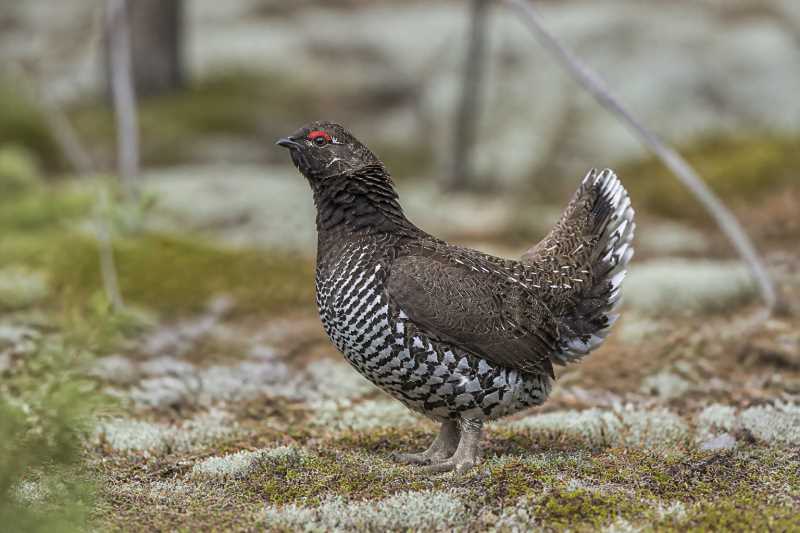
The Siberian Grouse is a medium-sized bird, measuring about 38-42 centimeters in length, with a wingspan of approximately 60-65 centimeters. Males and females are similar in size, but they exhibit different plumage. The males are adorned with a striking dark brown and black plumage, accented with white spots and a distinctive red eye comb, which becomes more pronounced during the breeding season. Females, on the other hand, have a more subdued coloration, primarily brown with intricate patterns that provide excellent camouflage against the forest floor.
Both sexes possess strong, feathered legs that are well-suited for traversing the snowy terrain. Their tails are fan-shaped, which they utilize in displays during mating rituals. Their vocalizations are subtle and are used mainly during courtship, adding to their elusive nature in the wild.
Behavior and Reproduction
The Siberian Grouse is predominantly solitary outside the breeding season, which occurs in late spring. During this time, males perform elaborate displays to attract females. These displays involve a combination of vocal calls, tail fanning, and the inflation of their eye combs. The breeding grounds are typically located in areas with dense understory vegetation, providing secluded spots for nesting.
Females lay a clutch of about 6-10 eggs, which are incubated for approximately 24 days. The chicks are precocial, meaning they are relatively mature and mobile shortly after hatching, which is crucial for survival in the demanding environment. The young are primarily cared for by the female, who leads them to foraging sites and protects them from predators.
Conservation Status
Despite its remote habitat, the Siberian Grouse is considered Near Threatened according to the IUCN Red List. The primary threats to its population include habitat loss due to logging activities and forest fires, which are becoming more frequent due to climate change. Additionally, hunting poses a localized threat, although its impact is less significant compared to habitat destruction.
Conservation efforts are underway to protect the Siberian Grouse’s habitat and ensure its survival. These include the establishment of protected areas, sustainable forestry practices, and ongoing research to better understand the species’ ecological needs. Public awareness campaigns are also crucial in promoting the conservation of this enigmatic bird and its habitat.
The Importance of the Siberian Grouse
The Siberian Grouse plays a vital role in its ecosystem, acting as both a seed disperser and a prey species for larger predators. Its presence indicates a healthy, functioning forest environment, highlighting the interconnectedness of species within the taiga.
As we continue to explore the natural world, the Siberian Grouse serves as a reminder of the beauty and complexity of life that exists in remote corners of the globe. Protecting this species and its habitat not only preserves biodiversity but also maintains the ecological balance that supports countless other forms of life.
Conclusion
The Siberian Grouse is a symbol of the resilience and adaptability of wildlife in one of the world’s most challenging environments. As conservation efforts intensify, understanding and preserving this species will require a collective commitment to sustainable practices and habitat protection. Through these efforts, we can ensure that future generations will have the opportunity to marvel at the Siberian Grouse and the breathtaking landscapes it inhabits.
Related posts