Introduction
The Redthroat (Pyrrholaemus brunneus) is a small, elusive bird that is native to the arid and semi-arid regions of Australia. Known for its distinctive reddish throat plumage, this bird is a member of the Acanthizidae family, which includes a variety of small insect-eating birds. Despite its modest size, the Redthroat plays a significant role in the ecosystem, contributing to insect control and seed dispersal. This article explores the physical characteristics, habitat, behavior, and conservation status of the Redthroat, shedding light on this remarkable avian species.
Physical Characteristics
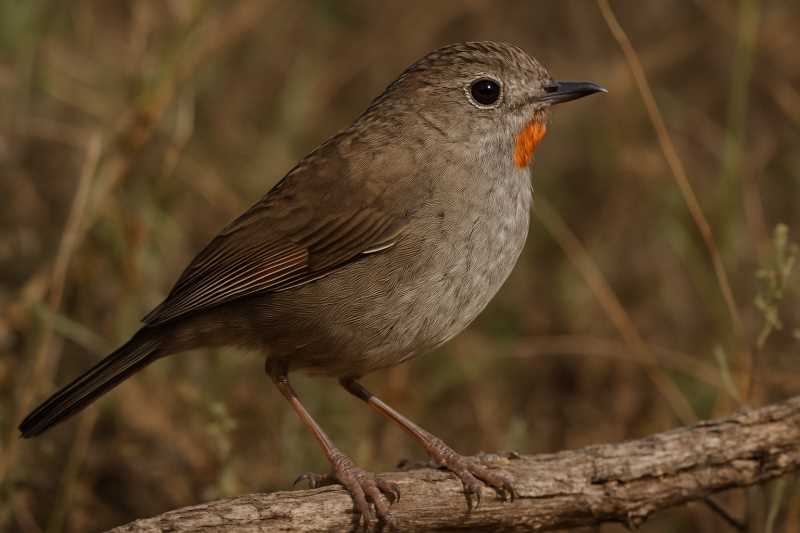
The Redthroat is a small bird, measuring approximately 14 cm in length. It is best recognized by the rusty-red coloration on its throat, which starkly contrasts with its otherwise dull brown upperparts and pale underparts. The bird has a slender, pointed bill adapted for insectivory. Its wings are short and rounded, aiding in its ability to navigate through dense shrubbery and undergrowth.
Both male and female Redthroats exhibit similar plumage, making it challenging to distinguish between the sexes in the field. Juvenile Redthroats resemble adults but typically lack the pronounced red throat patch until they reach maturity.
Habitat and Distribution
Redthroats are primarily found in the dry inland regions of Australia, including parts of Western Australia, South Australia, and the Northern Territory. They inhabit open woodlands, shrublands, and areas dominated by spinifex grass, where they can find ample food and cover. Their preference for such habitats makes them well adapted to the harsh, arid climate that characterizes much of their range.
Despite their wide distribution, Redthroats are often difficult to spot due to their secretive nature and preference for dense vegetation. They tend to stay close to the ground, foraging in low shrubs and grasses where they can remain hidden from predators.
Behavior and Diet
Redthroats are primarily insectivorous, feeding on a diet consisting mostly of insects and other small arthropods. Their foraging behavior involves gleaning insects from foliage and the ground, often in low-light conditions during early morning and late afternoon. This feeding strategy helps them avoid the extreme heat of midday in their arid environments.
In addition to insects, Redthroats occasionally consume seeds and small fruits, especially during times when their primary food sources are scarce. This dietary flexibility is a crucial adaptation that allows them to survive in the unpredictable conditions of the Australian outback.
The Redthroat is known for its distinctive song, a melodious series of whistles and trills that it uses to communicate with others of its kind. Males are particularly vocal during the breeding season, using their songs to attract mates and establish territories.
Breeding and Reproduction
The breeding season for Redthroats typically occurs from August to January, coinciding with the availability of food resources. During this time, males engage in elaborate singing displays to attract females and defend their territories.
Redthroats build their nests close to the ground, often in dense shrubs or grass tussocks. The nest is a cup-shaped structure made from grasses, twigs, and other plant materials, lined with softer materials such as feathers or plant down.
Females lay a clutch of 2 to 4 eggs, which they incubate for about 12 to 14 days. Both parents are involved in feeding and caring for the chicks, which fledge approximately two weeks after hatching. This cooperative parenting strategy helps ensure the survival of the young in the challenging conditions of their environment.
Conservation Status
Currently, the Redthroat is classified as a species of “Least Concern” by the International Union for Conservation of Nature (IUCN). This status reflects its relatively stable population and broad distribution across arid regions of Australia. However, like many native species, the Redthroat faces potential threats from habitat loss due to land clearing and degradation, invasive species, and climate change.
Efforts to conserve the Redthroat focus on habitat preservation and management. Protecting large tracts of arid and semi-arid lands from development and degradation is crucial to maintaining the ecological balance and ensuring the survival of this species.
Conclusion
The Redthroat, with its striking appearance and melodious song, is a testament to the resilience and adaptability of wildlife in Australia’s harsh environments. Although it remains relatively secure in terms of conservation status, ongoing monitoring and habitat protection are essential to safeguarding its future. Understanding and appreciating the role of species like the Redthroat in our ecosystems can inspire conservation efforts that benefit not only this bird but the broader biodiversity of our planet.
Related posts