Introduction
Fea’s Muntjac (Muntiacus feae), also known as the Tenasserim muntjac, is a lesser-known species of barking deer that inhabits the dense forests of Southeast Asia. Named after the Italian naturalist Leonardo Fea, this elusive deer is recognized for its discreet nature and distinctive vocalizations. Despite its modest size, Fea’s muntjac plays a crucial role in the ecosystem, contributing to seed dispersion and providing prey for larger predators. However, like many forest dwellers, it faces significant threats from habitat destruction and hunting.
Physical Description
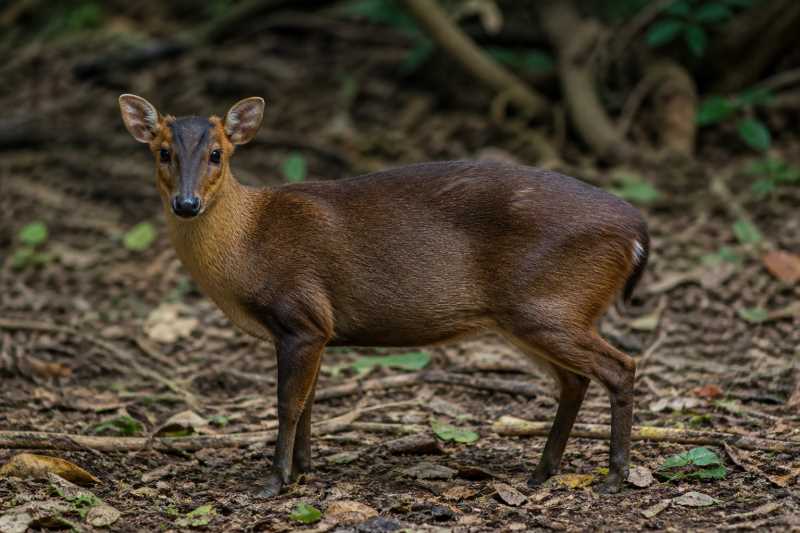
Fea’s muntjac is a small, delicate deer species characterized by a compact body and a short, sleek coat. Typically, individuals weigh between 18 to 21 kilograms and stand approximately 50 to 60 centimeters at the shoulder. Their coat is a reddish-brown color, which provides excellent camouflage in their forested habitats. The underparts are lighter, often a creamy or whitish hue. One of the most distinctive features of Fea’s muntjac is its antlers, which are typically short and unbranched, growing straight from the pedicels. Unlike other deer, the males possess elongated canine teeth that protrude from the mouth and are used during fights with rivals. The facial markings include a dark V-shaped stripe extending from the antlers to the nose, enhancing their unique appearance.
Range and Habitat
Fea’s muntjac is predominantly found in the dense, deciduous forests of Southeast Asia, particularly in the Tenasserim Hills spanning the border between Myanmar and Thailand. This species prefers habitats that offer abundant undergrowth, which provides both food and cover from predators. They thrive in altitudes ranging from lowland areas to elevations of about 1,000 meters. Unfortunately, their range is increasingly fragmented due to deforestation and human encroachment, which poses a significant threat to their survival.
Behavior and Diet
Typically solitary or occurring in small family groups, Fea’s muntjac is primarily crepuscular, being most active during the early morning and late afternoon. This behavior helps them avoid the heat of the day and reduces the risk of predation. Known for their vocalizations, these deer emit a series of bark-like sounds, especially when alarmed, which serve as a warning signal to others.
Fea’s muntjac is an omnivorous browser, feeding on a diverse diet that includes leaves, shoots, fruits, and occasionally small animals or bird eggs. Their diet not only sustains them but also plays a vital role in seed dispersal, contributing to the health and regeneration of their forest habitat.
Identification Tips (Field Recognition Cues)
Recognizing Fea’s muntjac in the field requires keen observation and an understanding of their distinct features. Here are some tips to help identify this elusive species:
- Size and Shape: Look for a small, stocky deer with a compact frame.
- Coloration: Note the reddish-brown coat with lighter underparts.
- Antlers: Males have short, unbranched antlers that are straight.
- Facial Markings: Look for the V-shaped dark stripe on the face.
- Canine Teeth: Males have visible, elongated canines.
Conservation Status (with Threats and Protections)
Fea’s muntjac is classified as Near Threatened on the IUCN Red List. The primary threats to their survival include habitat loss due to logging and agricultural expansion, as well as hunting for bushmeat and traditional medicine. Conservation efforts are underway to protect their habitat and minimize human impact. Establishing protected areas and promoting sustainable land use practices are crucial steps in ensuring the long-term survival of this species. Additionally, raising awareness about the ecological importance of Fea’s muntjac can help garner support for their conservation.
Frequently Asked Questions
What is the habitat of Fea’s muntjac? Fea’s muntjac inhabits dense, deciduous forests in Southeast Asia, primarily in the Tenasserim Hills along the Myanmar-Thailand border. They prefer areas with abundant undergrowth for food and cover.
How do Fea’s muntjacs communicate? Fea’s muntjacs communicate through a series of bark-like vocalizations, especially when alarmed. These sounds serve as warnings to other deer about potential threats.
What is the diet of Fea’s muntjac? Their diet is omnivorous, consisting of leaves, shoots, fruits, and occasionally small animals or bird eggs, which helps in seed dispersal and forest regeneration.
Are Fea’s muntjacs endangered? Fea’s muntjac is classified as Near Threatened due to habitat loss and hunting pressures. Conservation efforts are ongoing to protect their populations.
What unique features help in identifying Fea’s muntjac? Key identifying features include their small size, reddish-brown coat, V-shaped facial markings, short unbranched antlers, and visible elongated canines in males.
Related posts