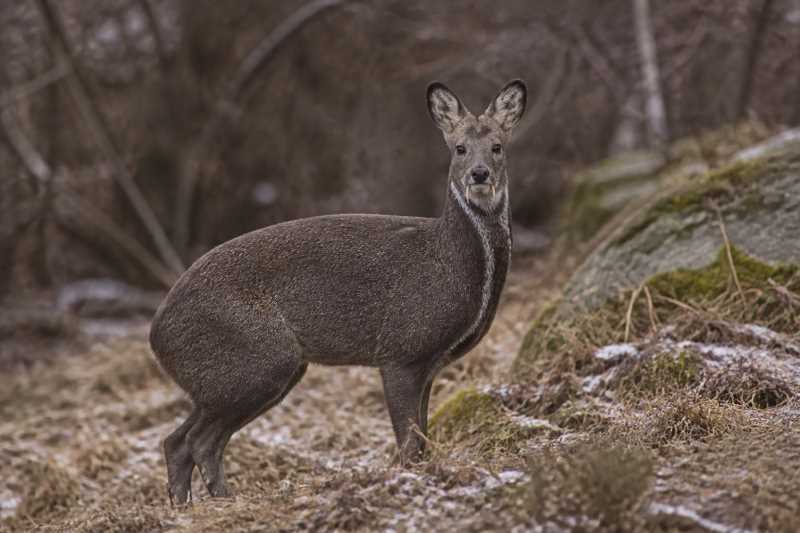
The Siberian Musk Deer (Moschus moschiferus) is a captivating species known for its elusive nature and unique adaptations. Found primarily in the dense forests of Asia, this deer is famed not just for its striking appearance but also for the musk it produces, which has been highly valued in perfumery and traditional medicine for centuries.
The Siberian Musk Deer is a small, stocky deer characterized by its lack of antlers, a trait that differentiates it from many other deer species. Adults typically weigh between 7 to 17 kilograms and measure about 80 to 100 centimeters in length. One of their most distinctive features is the presence of long, protruding canine teeth, especially prominent in males, which they use during mating displays and territorial disputes.
Their coat is thick and coarse, providing insulation against the harsh climates in which they reside. The coloration is generally a mix of brown and grey, with lighter underbellies, allowing them to blend seamlessly into their forested environments.
The Siberian Musk Deer is predominantly found across Northeast Asia, including regions of Siberia, Mongolia, Northeast China, and the Korean peninsula. They thrive in mountainous taiga and deciduous forests, often at elevations ranging from 600 to 3000 meters. These environments provide ample cover and food sources, which are critical for their survival given their solitary and elusive nature.
The species prefers dense, forested areas that offer protection from predators and human disturbances. They are well adapted to cold climates, and their range overlaps with some of the most rugged and isolated terrains in Asia.
Siberian Musk Deer are primarily nocturnal, relying on their keen senses to navigate the forest under the cover of darkness. They are solitary creatures for most of the year, with interactions occurring mainly during the breeding season. Males are territorial and use their musk glands and tusks to assert dominance and attract females.
Their diet consists mainly of lichens, leaves, grasses, and twigs. In winter, when food is scarcer, they rely heavily on lichens and other available vegetation. Their feeding habits play a crucial role in the forest ecosystem, influencing plant community dynamics and forest structure.
Spotting a Siberian Musk Deer in the wild requires patience and a keen eye, given their elusive nature and excellent camouflage. Here are some tips for identifying them:
The Siberian Musk Deer is currently listed as a species of Least Concern by the IUCN Red List, but it faces significant threats that could impact its population. The primary threat to this species is poaching, driven by the high demand for musk in the perfume industry and traditional medicine.
Habitat loss due to logging and human encroachment also poses a serious threat, reducing the available range for these deer and increasing the likelihood of human-wildlife conflicts. Climate change further exacerbates these threats by altering the habitats in which they thrive.
Conservation efforts are in place to protect the Siberian Musk Deer, including legal protections and the establishment of protected areas. However, addressing illegal poaching and ensuring sustainable habitat management remain critical for their long-term survival.
The musk produced by the Siberian Musk Deer is highly valued in the perfume industry for its unique scent and fixative properties. It is also used in traditional medicine for its purported health benefits.
Protecting the Siberian Musk Deer from poaching involves strengthening law enforcement, monitoring wildlife trade, and raising awareness about the species’ plight. Supporting sustainable alternatives to natural musk can also help reduce demand.
The Siberian Musk Deer has several adaptations for surviving cold climates, including a thick, insulating coat, the ability to browse on lichens and other sparse vegetation, and a solitary, nocturnal lifestyle that conserves energy.
Related posts