Nyala (Tragelaphus angasii): An In-depth Exploration
Introduction
The Nyala (Tragelaphus angasii) is a striking and graceful antelope species native to southern Africa. Known for its distinctive striped coat and spiral horns, the Nyala is a member of the Bovidae family, which includes other antelopes, cattle, goats, and sheep. As a browser and grazer, the Nyala plays a crucial role in its ecosystem, maintaining the balance of vegetation in its habitat. This article delves into the physical attributes, habitat, behavior, conservation status, and identification tips for this unique species.
Physical Description
The Nyala is a medium-sized antelope, with males and females exhibiting marked sexual dimorphism. Males are considerably larger, weighing between 98 to 125 kilograms (216 to 276 pounds) and standing about 110 centimeters (43 inches) at the shoulder. Females, on the other hand, are smaller, weighing approximately 55 to 68 kilograms (121 to 150 pounds) and measuring around 90 centimeters (35 inches) at the shoulder.
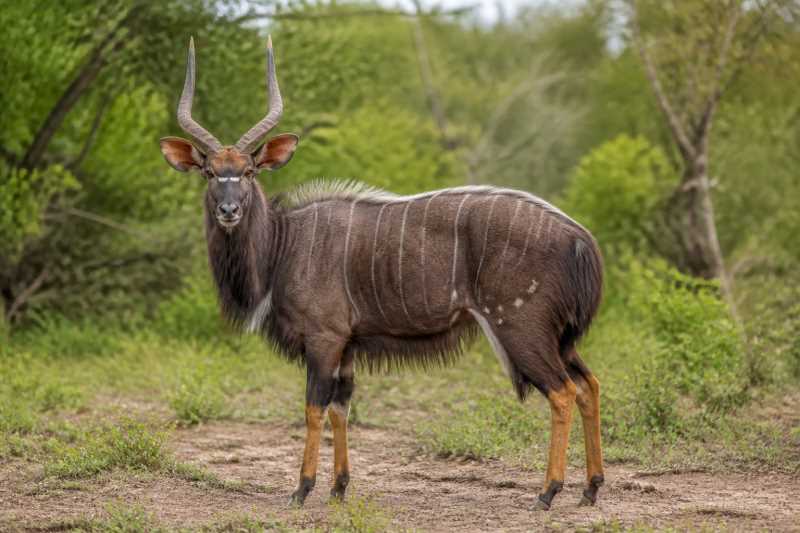
The most striking feature of the male Nyala is its long, spiral horns, which can grow up to 83 centimeters (33 inches) in length. These horns are absent in females. Males have a dark, slate-gray to charcoal-colored coat, while females and juveniles display a reddish-brown hue. Both genders have white vertical stripes running along their flanks, which serve as an effective camouflage in their natural habitat. The Nyala’s coat is also adorned with white facial markings and a bushy tail tipped with white.
Range and Habitat
The Nyala is predominantly found in the southeastern regions of Africa, with a range spanning across countries like Malawi, Mozambique, South Africa, Swaziland, and Zimbabwe. They thrive in a variety of habitats, including dense woodlands, thickets, and riverine forests. Nyalas are particularly fond of areas with abundant water sources such as rivers and wetlands, which provide them with both food and protection.
These antelopes are adaptable and can inhabit both low-lying savannas and mountainous regions up to 2,000 meters (6,562 feet) above sea level. The availability of dense vegetation is crucial for their survival, as it offers shelter from predators and harsh weather conditions.
Behavior and Diet
Nyalas are known for their elusive and shy nature. They are primarily crepuscular, being most active during the early morning and late afternoon hours. During the hotter parts of the day, they retreat to shaded areas to rest. Nyalas are social animals, often forming small groups consisting of females and their young. Males tend to be more solitary, joining these groups only during the mating season.
The Nyala’s diet is highly diverse, comprising a wide range of leaves, twigs, flowers, fruits, and grasses. As a browser, it feeds on the foliage of shrubs and trees, but it also grazes on grasses, especially during the wet season when fresh shoots are abundant. This varied diet allows the Nyala to adapt to different environmental conditions and ensures a year-round food supply.
Identification Tips (Field Recognition Cues)
Identifying Nyalas in the wild can be a rewarding experience for wildlife enthusiasts. Here are some key identification tips:
- Size and Build: Observe the size and build of the animal. Males are significantly larger with a robust frame, while females are more slender and smaller.
- Coat Color: Male Nyalas have a dark, slate-gray coat, whereas females and juveniles are reddish-brown. Both genders have white vertical stripes along their sides.
- Horns: Only males have horns, which are long and spiraled, providing an easy way to differentiate between genders.
- Markings: Look for the distinctive white facial markings and a bushy tail with a white tip.
- Behavior: Nyalas are typically shy and elusive, often seen retreating into dense vegetation. They are most active during dawn and dusk.
Conservation Status (with Threats and Protections)
The IUCN Red List classifies the Nyala as a species of Least Concern, reflecting its relatively stable population. However, certain threats could impact their future survival. Habitat loss due to agricultural expansion, logging, and human settlement poses a significant threat to their natural environment.
Poaching and illegal hunting also contribute to population pressures, as Nyalas are targeted for their meat and horns. Additionally, competition with livestock for food resources can lead to habitat degradation.
Conservation efforts are in place to mitigate these threats, including the establishment of protected areas and wildlife reserves across their range. Collaborative efforts between governments and conservation organizations aim to monitor populations and implement sustainable land-management practices to ensure the long-term survival of the species.
Frequently Asked Questions
What is the typical lifespan of a Nyala?
Nyalas typically live for about 16 to 19 years in the wild. In captivity, with proper care and management, they can live slightly longer due to the absence of predators and a consistent food supply.
How do Nyalas communicate with each other?
Nyalas communicate using a combination of vocalizations, body language, and scent markings. Males often use low-pitched bellows to establish dominance or attract females. Visual signals, such as displaying their impressive horns or raising their white dorsal crest, are also used during interactions.
Are Nyalas territorial animals?
Nyalas are not strictly territorial. While males may establish temporary territories during the breeding season to attract females, these areas are not fiercely defended. Instead, Nyalas tend to have overlapping home ranges, especially in regions with abundant resources.
What predators do Nyalas face in their natural habitat?
Nyalas face predation from several large carnivores, including lions, leopards, hyenas, and African wild dogs. Young Nyalas are particularly vulnerable to predation and rely on their mothers and herd members for protection.
How do Nyalas adapt to seasonal changes in their habitat?
Nyalas are highly adaptable, adjusting their diet based on seasonal availability of food. During the wet season, they consume more grasses, while in the dry season, they rely on browsing shrubs and trees. This dietary flexibility allows them to thrive in variable environmental conditions.
Related posts