Townsend’s Big-eared Bat: A Comprehensive Guide
Introduction
Townsend’s Big-eared Bat (Corynorhinus townsendii) is a fascinating species known for its distinctively large ears and gentle demeanor. These bats are an essential component of ecological systems, serving as both pollinators and insect controllers. Despite their ecological significance, many aspects of their life history remain understudied. This article delves into various facets of Townsend’s Big-eared Bat, including its physical characteristics, habitat preferences, behavior, and conservation status, providing a detailed understanding of this remarkable mammal.
Physical Description
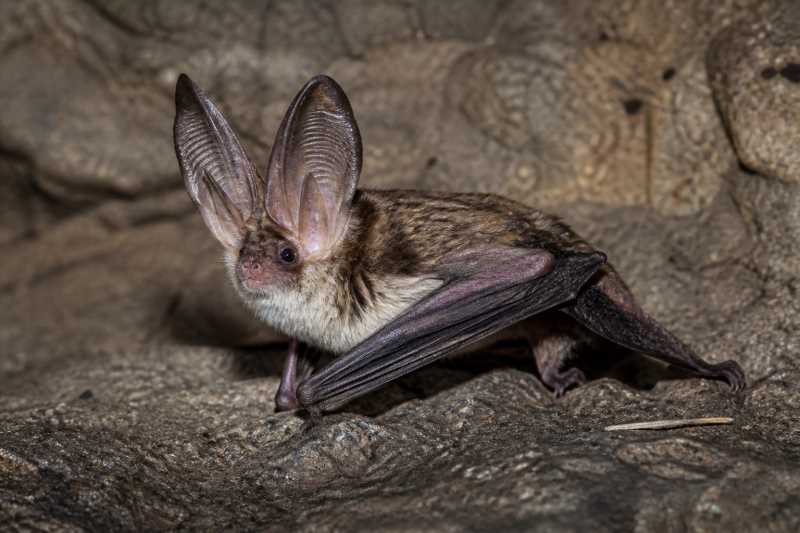
Townsend’s Big-eared Bat is easily recognizable due to its exceptionally large ears, which can measure up to 38 millimeters in length. These ears are not just for show; they are highly functional, enabling the bat to detect the faintest of sounds as it navigates and hunts. The species exhibits a wingspan ranging from 28 to 30 centimeters, and it typically weighs between 5 to 12 grams, making it a medium-sized bat.
The fur of Townsend’s Big-eared Bat is soft and varies in color from gray to brown, often with a lighter underbelly. A key distinguishing feature is the presence of two glandular lumps on either side of its nose, which are believed to play a role in social communication. This bat’s face is relatively flat, and its eyes are small but adapted to low-light conditions, complementing its echolocation abilities.
Range and Habitat
Townsend’s Big-eared Bat can be found across a wide range of North America, from southern Canada through the United States and into parts of Mexico. They prefer habitats that offer a combination of roosting sites and foraging grounds, typically selecting areas with abundant caves or old mines. Forested regions, deserts, and even urban areas can serve as suitable habitats, provided there is access to appropriate shelter.
Roosting preferences vary seasonally; during warmer months, they may choose solitary roosting sites such as tree hollows or abandoned buildings, whereas in colder months, they often congregate in larger numbers in caves or mines to hibernate. These bats are particularly sensitive to disturbances, requiring stable environments for both day and night roosts.
Behavior and Diet
Townsend’s Big-eared Bat is primarily nocturnal, emerging at dusk to forage. Its diet consists predominantly of moths, but it will also consume other insects, such as beetles and flies. The bat uses echolocation to detect prey, emitting high-frequency sounds that bounce off objects and return as echoes, allowing it to pinpoint the location of its meal.
Socially, these bats are relatively solitary outside of the breeding season. Mating occurs in the fall, with females storing sperm over the winter and fertilization occurring in the spring. This delayed fertilization ensures that young are born during the summer when food is abundant. Females typically give birth to a single pup, which they nurse and rear in maternity colonies.
Identification Tips
Identifying Townsend’s Big-eared Bat in the field can be challenging without the right cues. Here are some tips to help:
- Ear Size: The most distinguishing feature is the bat’s large ears. They are often as long as the bat’s body and are visible even when the bat is at rest.
- Flight Pattern: These bats exhibit a slow, deliberate flight pattern, which can help distinguish them from other, faster-flying species.
- Roosting Sites: Look for them in undisturbed caves, mines, or abandoned buildings, especially where human activity is minimal.
- Echolocation Calls: Their echolocation calls are typically at a frequency range that requires specialized equipment to detect.
Conservation Status
The conservation status of Townsend’s Big-eared Bat is currently listed as "Near Threatened" on the IUCN Red List. The primary threats to their survival include habitat destruction, disturbance of roosting sites, and White-nose Syndrome, a fungal disease that has devastated bat populations across North America.
Conservation efforts are underway to protect this species by preserving critical habitats and minimizing human disturbances in known roosting areas. Legislation, such as the U.S. Endangered Species Act, provides some protection, but more targeted actions are needed to address specific threats like disease and habitat fragmentation.
Frequently Asked Questions
What do Townsend’s Big-eared Bats eat?
Townsend’s Big-eared Bats primarily feed on moths, but their diet also includes other insects like beetles and flies. They hunt using echolocation to locate and capture their prey.
How do Townsend’s Big-eared Bats communicate?
These bats communicate using a combination of echolocation calls and pheromonal signals. Their large ears are highly sensitive, allowing them to pick up on subtle auditory cues from other bats.
Where do Townsend’s Big-eared Bats live?
Townsend’s Big-eared Bats are found throughout North America in a variety of habitats, including caves, old mines, forests, and even urban areas, as long as there is access to suitable roosting sites.
Are Townsend’s Big-eared Bats endangered?
They are currently classified as "Near Threatened," primarily due to habitat loss, roost disturbance, and the spread of White-nose Syndrome. Conservation efforts are in place to help protect their populations.
How can I help conserve Townsend’s Big-eared Bats?
You can help by supporting conservation organizations, advocating for habitat protection, and avoiding disturbing known roosting sites. Public awareness and education are also key components in conservation efforts.
Related posts