Introduction
Mackilligin’s Gerbil, scientifically known as Gerbillus mackilligini, is a fascinating species of small rodent belonging to the family Muridae. This gerbil is named after the British collector H. Mackilligin, who played a pivotal role in its discovery. Known for its adaptability to arid environments, Mackilligin’s Gerbil is an intriguing subject for ecological studies and conservation efforts. In this comprehensive article, we delve into the unique characteristics, habitat preferences, behavior, and conservation status of this species.
Physical Description
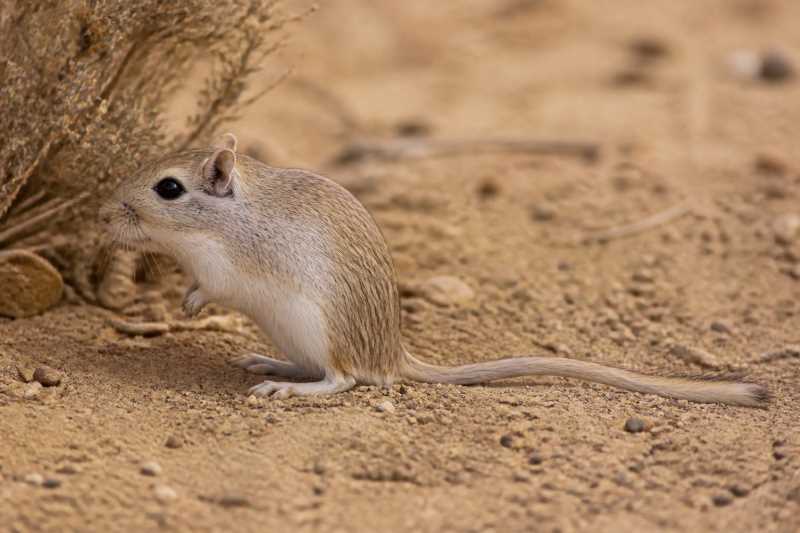
Mackilligin’s Gerbil is a small, agile rodent characterized by its slender body and long tail, which often exceeds the length of its body. This species typically weighs between 30 to 50 grams and measures about 18 to 24 centimeters in total length, including the tail. The fur is soft and silky, usually displaying a sandy or grayish-brown coloration on the dorsal side, which aids in camouflage against the desert landscape. The ventral side is typically white, providing a stark contrast.
Notable features include large, dark eyes adapted for nocturnal vision, and long hind legs that facilitate swift movement across sandy terrains. The ears are relatively large and rounded, enhancing their auditory sensitivity, which is crucial for detecting predators. The tail is tufted at the end, which may assist in balance and communication among individuals.
Range and Habitat
Mackilligin’s Gerbil is predominantly found in the arid and semi-arid regions of North Africa. Its range extends across countries such as Egypt, Libya, and Sudan. The species favors sandy deserts, dry grasslands, and scrublands, where it can dig complex burrow systems to escape the extreme temperatures and evade predators.
These gerbils are well-adapted to the harsh desert climate and can survive with minimal water, deriving moisture from the seeds and plants they consume. Their burrows provide a stable microenvironment that buffers against the temperature fluctuations typical of their habitat.
Behavior and Diet
Mackilligin’s Gerbil is primarily nocturnal, emerging from its burrow during the cooler nighttime hours to forage for food. This behavior minimizes water loss and exposure to predators. The species is omnivorous, with a diet that includes seeds, grains, roots, and occasionally insects. This dietary flexibility allows it to thrive in environments where food resources can be scarce or highly variable.
Social behavior in Mackilligin’s Gerbil is relatively solitary compared to other rodent species, though individuals may share burrows in areas where suitable habitat is limited. Communication is primarily through scent marking and vocalizations, which play a role in territory establishment and mating.
Identification Tips
Field recognition of Mackilligin’s Gerbil can be achieved by noting several key characteristics:
- Size and Shape: Look for a small, slender rodent with a long, tufted tail.
- Coloration: Distinctive sandy or grayish-brown dorsal fur with a white underbelly.
- Behavior: Nocturnal activity patterns and rapid, bounding movements.
- Habitat: Presence in sandy or semi-arid regions often signals the potential for Mackilligin’s Gerbil.
Conservation Status
Currently, Mackilligin’s Gerbil is listed as Least Concern on the IUCN Red List. However, it faces several threats, including habitat destruction due to agricultural expansion and infrastructure development. Climate change poses an additional risk by altering the delicate balance of arid ecosystems.
Despite these challenges, there are conservation measures in place aimed at preserving their habitat. Protected areas have been established in parts of their range, and ongoing research efforts are crucial for understanding the ecological needs and population dynamics of this species.
Frequently Asked Questions
1. What adaptations help Mackilligin’s Gerbil survive in the desert? Mackilligin’s Gerbil has several adaptations for desert survival, including nocturnal behavior to avoid daytime heat, efficient water utilization from food, and the ability to dig burrows for temperature regulation and predator avoidance.
2. How can you distinguish Mackilligin’s Gerbil from other gerbil species? Key distinguishing features include its size, long tufted tail, sandy dorsal coloration, and specific habitat preferences in North African deserts.
3. What is the breeding behavior of Mackilligin’s Gerbil? Breeding tends to occur during the wetter months when food is more abundant. Females typically give birth to litters of 3-5 young after a gestation period of about 25 days.
4. Are Mackilligin’s Gerbils kept as pets? While some gerbil species are popular pets, Mackilligin’s Gerbil is not commonly kept due to its specific habitat needs and conservation considerations.
5. What role do Mackilligin’s Gerbils play in their ecosystem? They serve as prey for various desert predators and contribute to seed dispersal, which aids in plant community dynamics.
Related posts