Introduction
The Syrian Brush-tailed Mouse, scientifically known as Calomyscus tsolovi, is a lesser-known but fascinating rodent species within the Calomyscidae family. These intriguing mammals are often overshadowed by their more prominent relatives in the rodent world. However, they play a crucial role in their ecosystems, contributing to biodiversity and serving as prey for various predators. In recent years, increased interest in biodiversity conservation has brought attention to the Syrian Brush-tailed Mouse, highlighting the importance of understanding and preserving this unique species.
Physical Description
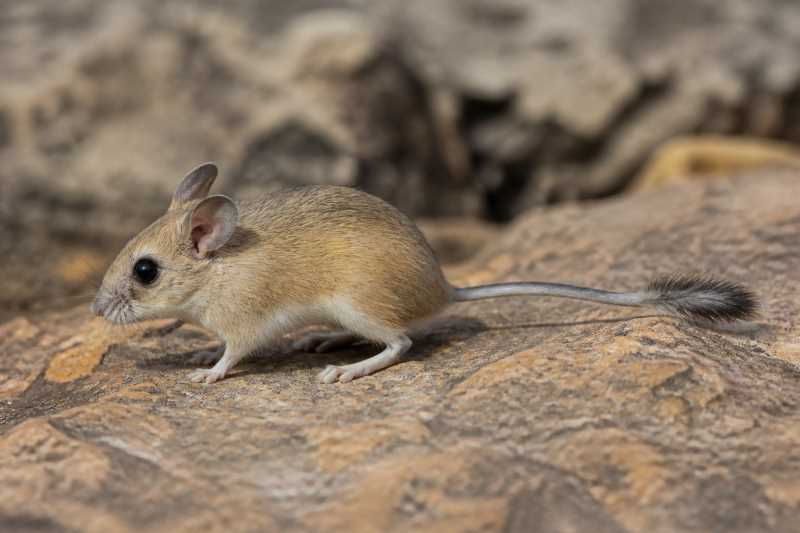
The Syrian Brush-tailed Mouse is a small rodent characterized by its distinctive brush-like tail. Adult mice typically weigh between 20 and 30 grams and measure approximately 8 to 12 centimeters in body length, with their tails adding an additional 9 to 14 centimeters. Their fur is soft and dense, predominantly a sandy or grayish-brown color, providing effective camouflage in their natural habitat. The underbelly is usually lighter, ranging from pale gray to cream.
Their large, round ears and prominent, dark eyes are adapted for nocturnal life, enhancing their ability to navigate and forage in low-light conditions. The whiskers are long and sensitive, aiding in spatial awareness and environmental exploration. The hind feet of the Syrian Brush-tailed Mouse are well-developed, enabling them to leap and climb with agility, a useful adaptation for escaping predators and foraging for food.
Range and Habitat
The Syrian Brush-tailed Mouse is primarily found in the Middle East, with its range extending through parts of Syria, Lebanon, and neighboring regions. These rodents inhabit a variety of environments, from arid and semi-arid areas to rocky hillsides and scrublands. They are particularly associated with regions that offer ample cover and food resources, such as areas with dense vegetation or rocky crevices.
Adaptability is a hallmark of the Syrian Brush-tailed Mouse, allowing it to thrive in environments that would be inhospitable to many other small mammals. Their ability to find shelter and food in challenging conditions illustrates their resilience and ecological significance.
Behavior and Diet
The Syrian Brush-tailed Mouse is primarily nocturnal, venturing out at night to forage for food. Their diet is omnivorous, consisting of seeds, fruits, insects, and small invertebrates. This dietary flexibility enables them to take advantage of seasonal food availability, optimizing their survival chances across varying environmental conditions.
These mice are solitary creatures, typically foraging alone, although they may communicate with each other through vocalizations and scent markings. Territorial by nature, they often defend their home ranges from intruders, especially during the breeding season. The Syrian Brush-tailed Mouse is known for its burrowing behavior, creating intricate underground nests that offer protection from predators and extreme weather.
Identification Tips
To accurately identify the Syrian Brush-tailed Mouse in the field, consider the following recognition cues:
- Tail Features: Look for the characteristic brush-like tail, which is bushy and covered in longer hairs compared to other rodent species.
- Size and Build: Note the small size, with a body length of 8 to 12 centimeters and a tail that can be longer than the body.
- Fur Coloration: Observe the sandy or grayish-brown fur with a lighter underbelly, which blends with the arid and rocky habitats they occupy.
- Ears and Eyes: Large, round ears and prominent dark eyes are indicative of their nocturnal lifestyle.
- Behavior: Watch for solitary and nocturnal activity, as well as the presence of burrows in suitable habitats.
Conservation Status
The current conservation status of the Syrian Brush-tailed Mouse is not well-documented, primarily due to its elusive nature and the challenges in studying its populations. However, like many small mammals, it faces threats from habitat destruction, climate change, and predation by introduced species.
Efforts to conserve the Syrian Brush-tailed Mouse involve habitat preservation and restoration, as well as further research to better understand its population dynamics and ecological needs. Protecting the natural landscapes where these mice thrive is crucial for their continued survival.
Frequently Asked Questions
1. What is the natural habitat of the Syrian Brush-tailed Mouse?
The Syrian Brush-tailed Mouse inhabits arid and semi-arid regions, rocky hillsides, and scrublands in the Middle East. They prefer areas with ample cover and food resources, such as dense vegetation or rocky crevices.
2. How does the Syrian Brush-tailed Mouse adapt to its environment?
This species adapts to its environment through its nocturnal habits, omnivorous diet, and ability to create burrows. These adaptations help it find food, avoid predators, and survive in harsh conditions.
3. Why is the Syrian Brush-tailed Mouse important for biodiversity?
The Syrian Brush-tailed Mouse contributes to biodiversity by serving as prey for larger animals and participating in seed dispersal. Its presence indicates a healthy ecosystem, highlighting the balance of predator-prey relationships.
4. Are there any conservation efforts in place for the Syrian Brush-tailed Mouse?
Conservation efforts focus on habitat preservation and further research to understand the species’ needs. Protecting natural landscapes and studying population dynamics are key to its conservation.
5. How can the Syrian Brush-tailed Mouse be distinguished from other rodents?
Distinctive features such as its brush-like tail, small size, sandy fur coloration, and nocturnal behavior differentiate the Syrian Brush-tailed Mouse from other rodents.
Related posts