Introduction
Bailey’s Pocket Mouse, scientifically known as Chaetodipus baileyi, is a fascinating small rodent native to North America. This species belongs to the family Heteromyidae, which is characterized by its members’ unique adaptations to arid environments. The pocket mouse is named after its fur-lined cheek pouches, which it uses to carry food. Despite their small size, these rodents play a significant role in the ecosystems they inhabit. This article delves into the various aspects of Bailey’s Pocket Mouse, offering insights into its physical characteristics, habitat, behavior, and conservation status.
Physical Description
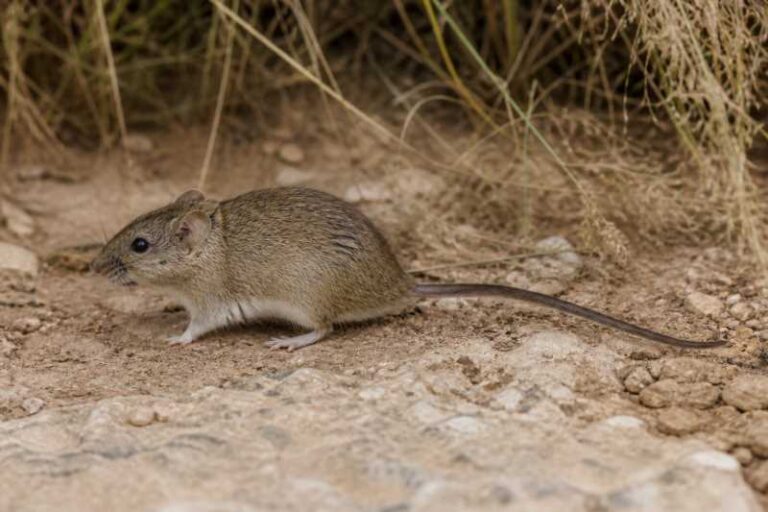
Bailey’s Pocket Mouse is a small rodent, typically measuring between 18 to 22 centimeters in total length, including its tail, which constitutes about half of its total size. The body is covered with soft fur, predominantly yellowish-brown with a white underbelly, providing effective camouflage against the desert landscape. One of the standout features of this species is its fur-lined cheek pouches, which are used for storing and transporting food.
The mouse’s hind legs are notably longer than its front legs, an adaptation that aids in its hopping locomotion, similar to that of a kangaroo rat. Its tail is tufted, providing balance and agility as it navigates its environment. This species also exhibits sexual dimorphism, with males generally being slightly larger than females.
Range and Habitat
Bailey’s Pocket Mouse is primarily found in the southwestern United States and northern Mexico. Its range extends across parts of Arizona, New Mexico, and Texas, and into the Mexican states of Sonora and Chihuahua. The species favors arid and semi-arid environments, thriving in sandy and rocky soils where it can easily dig burrows.
These rodents are typically found in desert scrub, grasslands, and areas with sparse vegetation. Their preference for such habitats is largely due to the availability of seeds and other food sources, as well as the suitability of the terrain for burrowing.
Behavior and Diet
Bailey’s Pocket Mouse is nocturnal, spending the day in its burrow to avoid the harsh desert heat and emerging at night to forage for food. Its diet primarily consists of seeds, which it collects and stores in its cheek pouches. The mouse is also known to consume insects and green vegetation when seeds are scarce.
This species exhibits solitary behavior, with individuals maintaining their own territories. Communication between mice is limited, typically occurring through scent markings and occasional vocalizations. Despite their solitary nature, these rodents play a crucial ecological role by aiding in seed dispersal and serving as prey for various predators.
Identification Tips
Identifying Bailey’s Pocket Mouse in the field requires attention to several key features:
- Size and Shape: Look for a small rodent with a body length of about 18 to 22 centimeters, including a tufted tail.
- Coloration: Note the yellowish-brown fur with a white underbelly, which helps it blend into desert surroundings.
- Cheek Pouches: Observe the presence of fur-lined cheek pouches, a distinctive characteristic of this species.
- Hind Legs: The noticeably longer hind legs aid in hopping, a behavior that may be observed during movement.
Conservation Status
The conservation status of Bailey’s Pocket Mouse is currently classified as Least Concern by the International Union for Conservation of Nature (IUCN). This status indicates that the species is not currently at risk of extinction. However, like many desert-dwelling species, it faces threats from habitat destruction due to human activities such as agriculture and urban development.
Protection efforts for Bailey’s Pocket Mouse focus on habitat preservation and restoration. Ensuring the conservation of desert ecosystems is vital for the continued survival of this species and the overall biodiversity of the region.
Frequently Asked Questions
1. What do Bailey’s Pocket Mice eat? Bailey’s Pocket Mice primarily consume seeds, which they gather and store in their cheek pouches. They also eat insects and green vegetation when seeds are not plentiful.
2. Where can you find Bailey’s Pocket Mouse? This species is found in the southwestern United States, including Arizona, New Mexico, and Texas, as well as northern Mexico. They inhabit desert scrub, grasslands, and areas with sandy and rocky soils.
3. How does Bailey’s Pocket Mouse adapt to its environment? Bailey’s Pocket Mouse has several adaptations for desert life, including nocturnal behavior to avoid daytime heat, fur-lined cheek pouches for food storage, and long hind legs for hopping locomotion.
4. Are Bailey’s Pocket Mice social animals? No, these mice are solitary animals. They maintain individual territories and communicate primarily through scent markings.
5. What threats do Bailey’s Pocket Mice face? The main threats include habitat destruction due to agriculture and urbanization. Conservation efforts focus on preserving and restoring their natural habitats.
Related posts