Introduction
The Black Bearded Saki, scientifically known as Chiropotes satanas, is a fascinating primate species native to the neotropical forests of South America. Renowned for its unique appearance and complex social structures, this species is an integral part of the region’s biodiversity. The Black Bearded Saki plays a crucial role in seed dispersal, aiding in the regeneration of tropical forests. Despite its ecological importance, this primate faces significant threats from habitat destruction and hunting, making its conservation a priority. In this comprehensive article, we will delve into the various aspects of the Black Bearded Saki, from its physical characteristics and behavioral patterns to its conservation status.
Physical Description
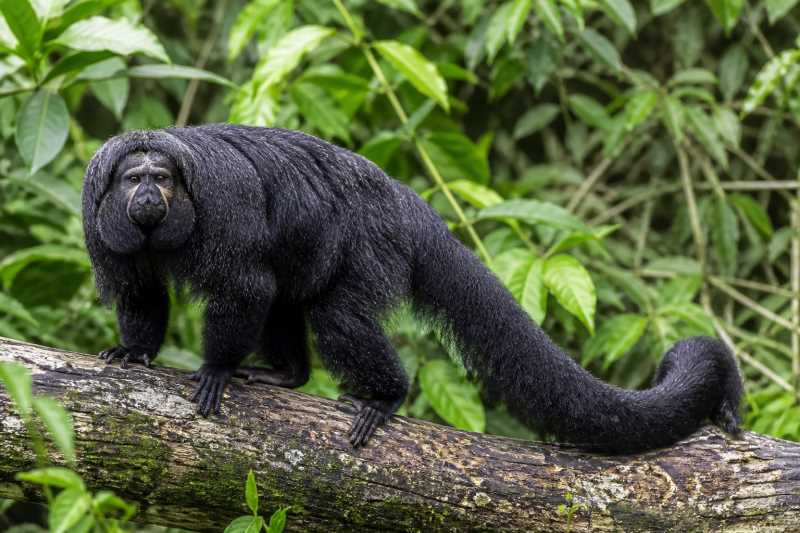
The Black Bearded Saki is a striking primate, easily recognizable by its glossy black fur and distinctive beard-like facial hair. Adult males and females exhibit sexual dimorphism, with males generally larger and more robust than females. On average, males weigh between 3.5 to 4.5 kilograms, while females tend to be slightly lighter, ranging from 2.5 to 3.5 kilograms. The body length of this species typically spans from 40 to 50 centimeters, complemented by a non-prehensile tail that adds another 30 to 45 centimeters.
The most notable feature of the Black Bearded Saki is its thick, bushy tail, which provides balance and agility as they maneuver through the dense forest canopy. Their limbs are strong and agile, adapted for a life spent mostly in the trees. The facial features include a prominent muzzle and a dense, black beard surrounding the chin and cheeks, which is particularly pronounced in males.
Range and Habitat
The natural range of the Black Bearded Saki is confined to the northeastern part of the Amazon Basin, predominantly within Brazil. They inhabit the lowland tropical rainforests, favoring areas with abundant fruiting trees. These primates are arboreal, spending the majority of their lives in the upper canopy of the forest, which provides both food resources and protection from ground-dwelling predators.
Black Bearded Sakis thrive in continuous forest habitats but are also found in secondary forests and forest fragments, although these fragmented habitats are less ideal due to increased vulnerability to predators and reduced food availability. The seasonal flooding of the Amazon Basin also influences their habitat choice, with these primates often moving to higher ground during the wet season.
Behavior and Diet
Black Bearded Sakis are highly social animals, living in groups that can range from a few individuals to over thirty members. These groups are typically composed of multiple adult males and females, along with their offspring. Their social structure is characterized by a complex hierarchy, where grooming and vocalizations play a crucial role in maintaining group cohesion and establishing dominance.
Their diet is primarily frugivorous, consisting largely of fruits, seeds, and nuts. They have strong jaws and specialized teeth, adapted for cracking open hard-shelled fruits. During periods when fruit is scarce, Black Bearded Sakis supplement their diet with leaves, flowers, and occasionally insects. Their foraging behavior is diurnal, with most activity occurring during the early morning and late afternoon.
Identification Tips (field recognition cues)
Identifying the Black Bearded Saki in the wild can be a rewarding experience for wildlife enthusiasts and researchers alike. Here are some tips for recognizing this unique primate:
- Fur and Coloration: Look for a primate with glossy black fur and a distinctive beard of dense hair around the face.
- Tail: Note the thick, bushy tail that is not prehensile but aids in balance.
- Size and Build: Observe the robust build, especially in males, and a body length of approximately 40 to 50 centimeters.
- Behavior: Watch for their social behavior, often seen in groups, and their agile movement through the canopy.
- Vocalizations: Listen for their vocal communications, which include a variety of calls used to communicate within the group.
Conservation Status (with threats and protections)
The Black Bearded Saki is currently classified as "Endangered" on the IUCN Red List. The primary threats to this species are habitat destruction and fragmentation due to logging, agricultural expansion, and infrastructure development. The loss of continuous forest cover not only reduces their living space but also isolates populations, limiting genetic diversity and increasing the risk of inbreeding.
Hunting poses an additional threat, as these primates are targeted for bushmeat and the illegal pet trade. Conservation efforts are underway to mitigate these threats, including the establishment of protected areas and reserves that safeguard critical habitats. Furthermore, initiatives aimed at promoting sustainable land-use practices and raising awareness about the ecological importance of the Black Bearded Saki are crucial for their long-term survival.
Frequently Asked Questions
1. What is the primary diet of the Black Bearded Saki?
The Black Bearded Saki primarily consumes a frugivorous diet, with a preference for fruits, seeds, and nuts. They possess strong jaws and teeth adapted for cracking open hard shells. During periods of fruit scarcity, they may also eat leaves, flowers, and insects.
2. How do Black Bearded Sakis communicate within their groups?
Black Bearded Sakis use a range of vocalizations to communicate within their groups. These include calls for maintaining group cohesion, signaling alarm, and establishing social hierarchies. Grooming is another important social activity that strengthens group bonds.
3. What are the main threats to the conservation of Black Bearded Sakis?
The primary threats to Black Bearded Sakis include habitat destruction due to deforestation and land conversion for agriculture, as well as hunting for bushmeat and the illegal pet trade. Conservation efforts focus on habitat protection and sustainable land-use practices.
4. In which countries can Black Bearded Sakis be found?
Black Bearded Sakis are endemic to Brazil, mainly found in the northeastern Amazon Basin. Their range is limited to this region, where they inhabit tropical rainforests.
5. How can one help in the conservation of Black Bearded Sakis?
Supporting conservation organizations that work to protect the Amazon rainforest and its biodiversity is crucial. Promoting sustainable land-use practices and raising awareness about the importance of primate conservation are also vital steps in helping protect the Black Bearded Saki.
Related posts