Golden-backed Squirrel Monkey (Saimiri ustus): A Comprehensive Guide
Introduction
The Golden-backed Squirrel Monkey, scientifically known as Saimiri ustus, is a captivating primate species native to South America. These charming creatures are renowned for their distinctive golden-hued fur and lively social behavior. While not as widely recognized as some of their primate cousins, Golden-backed Squirrel Monkeys possess unique characteristics that make them a subject of interest for wildlife enthusiasts and researchers alike. In this article, we will delve into the various aspects of these fascinating mammals, including their physical description, natural habitat, behavior, and conservation status.
Physical Description
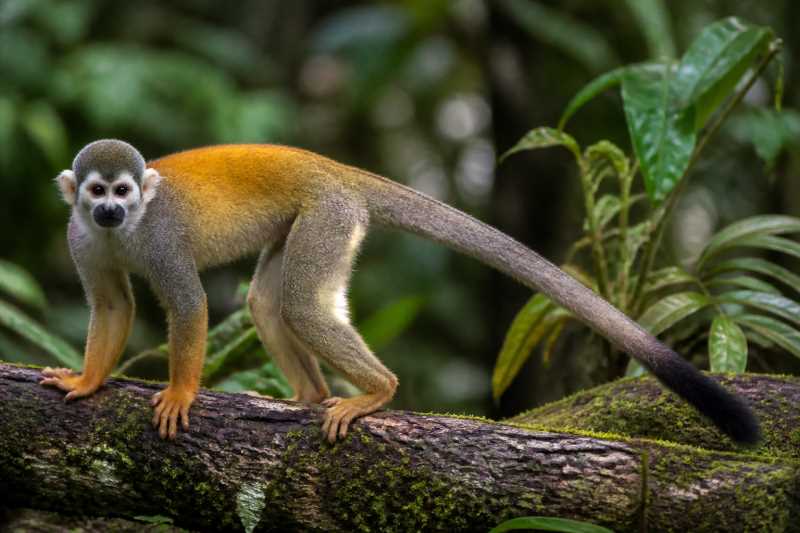
Golden-backed Squirrel Monkeys are small primates belonging to the family Cebidae. They are characterized by their striking golden or yellowish fur that primarily covers their back, hence their name. The vibrant coloring provides a stark contrast to the more subdued gray or olive hues of their limbs and underparts. Adult males typically measure between 25 to 35 centimeters in body length, with an additional tail length of approximately 35 to 45 centimeters. Females are usually slightly smaller than their male counterparts.
One of the most distinguishing features of the Golden-backed Squirrel Monkey is its expressive face. They possess large, almond-shaped eyes, which facilitate excellent vision, crucial for navigating their arboreal habitat. Their short, rounded ears and a black muzzle add to their distinctive facial appearance. The tail, although not prehensile, is used for balance as they maneuver through the forest canopy.
Range and Habitat
Golden-backed Squirrel Monkeys are primarily found in the tropical rainforests of South America. Their range extends across the Amazon basin, encompassing parts of Brazil, Bolivia, and Peru. These monkeys are arboreal, spending the majority of their lives in the treetops of the dense, humid rainforest. They prefer primary and secondary forests but have also been observed in gallery forests and occasionally in more fragmented landscapes.
The habitat of the Golden-backed Squirrel Monkey is characterized by a rich biodiversity and a complex structure that provides ample foraging opportunities and shelter. The canopy offers a wealth of fruits, insects, and small vertebrates, which constitute the primary diet of these monkeys. The dense foliage also provides protection from predators and a suitable environment for social interactions within their troops.
Behavior and Diet
Golden-backed Squirrel Monkeys are highly social animals that live in groups known as troops. These troops can range in size from a few individuals to over a hundred, although the average size is typically between 20 to 50 members. The social structure is matriarchal, with females often taking the lead in group decision-making and movement.
Their diet is omnivorous, consisting mainly of fruits, insects, small vertebrates, and sometimes flowers and leaves. The availability of food sources influences their daily and seasonal movements. Foraging is a group activity, and the monkeys communicate with each other through a variety of vocalizations, facial expressions, and body postures to coordinate their efforts.
Golden-backed Squirrel Monkeys are diurnal, meaning they are active during the day. They are known for their energetic and agile movements as they leap and climb through the forest canopy. This active lifestyle requires a high caloric intake, which is met through their diverse diet.
Identification Tips (Field Recognition Cues)
Identifying Golden-backed Squirrel Monkeys in the wild can be a rewarding experience for wildlife observers. Here are some tips to help you recognize them:
- Coloration: Look for the golden or yellowish fur on their backs, which is a key distinguishing feature.
- Size: Note their small size, with a body length of 25 to 35 centimeters and a tail length of 35 to 45 centimeters.
- Facial Features: Observe their expressive faces with large, almond-shaped eyes and a black muzzle.
- Behavior: Watch for their active, agile movements and social interactions within the canopy.
- Vocalizations: Listen for a range of vocal sounds used for communication and coordination among group members.
Conservation Status (With Threats and Protections)
The Golden-backed Squirrel Monkey is currently classified as Near Threatened on the IUCN Red List of Threatened Species. Several factors contribute to this status, including habitat loss, fragmentation, and human encroachment.
Threats
- Deforestation: The primary threat to these monkeys is habitat destruction due to logging, agricultural expansion, and urban development. As their rainforest habitat is cleared, the monkeys lose essential resources and are forced into smaller, isolated patches.
- Hunting and Pet Trade: In some areas, Golden-backed Squirrel Monkeys are hunted for food or captured for the illegal pet trade. This not only reduces their population but also disrupts social structures within troops.
Protections
- Protected Areas: Many regions within their range are designated as national parks or reserves, providing some level of habitat protection.
- Conservation Programs: Efforts are underway to raise awareness and promote conservation initiatives that involve local communities in protecting these primates and their habitats.
- Research and Monitoring: Continuous research and monitoring are essential to understand population dynamics and implement effective conservation strategies.
Frequently Asked Questions
What is the primary diet of Golden-backed Squirrel Monkeys?
Golden-backed Squirrel Monkeys are omnivores, primarily eating fruits, insects, and small vertebrates. Their diet may also include flowers and leaves, depending on availability.
How do Golden-backed Squirrel Monkeys communicate?
These monkeys communicate using a variety of vocalizations, facial expressions, and body postures. Their vocal repertoire includes chirps, whistles, and calls to coordinate group activities and alert members to potential threats.
Are Golden-backed Squirrel Monkeys endangered?
Golden-backed Squirrel Monkeys are classified as Near Threatened by the IUCN. While not currently endangered, they face threats from habitat loss and hunting, necessitating conservation efforts.
Where can Golden-backed Squirrel Monkeys be found?
They are found in the tropical rainforests of the Amazon basin, particularly in Brazil, Bolivia, and Peru. They prefer dense, humid forests with abundant food sources.
What are the main threats to Golden-backed Squirrel Monkeys?
The primary threats include deforestation, habitat fragmentation, and hunting for food or the illegal pet trade. Conservation efforts aim to mitigate these threats and protect their populations.
Related posts