Guereza (Colobus guereza): A Detailed Insight
Introduction
The Guereza, scientifically known as Colobus guereza, is a striking species of Old World monkey native to Africa. Known for its distinctive black and white color pattern, the Guereza is an arboreal primate that plays a vital role in its ecosystem. This article explores various aspects of the Guereza, including its physical characteristics, habitat, behavior, and conservation status. By understanding these elements, we can appreciate the importance of protecting this fascinating species.
Physical Description
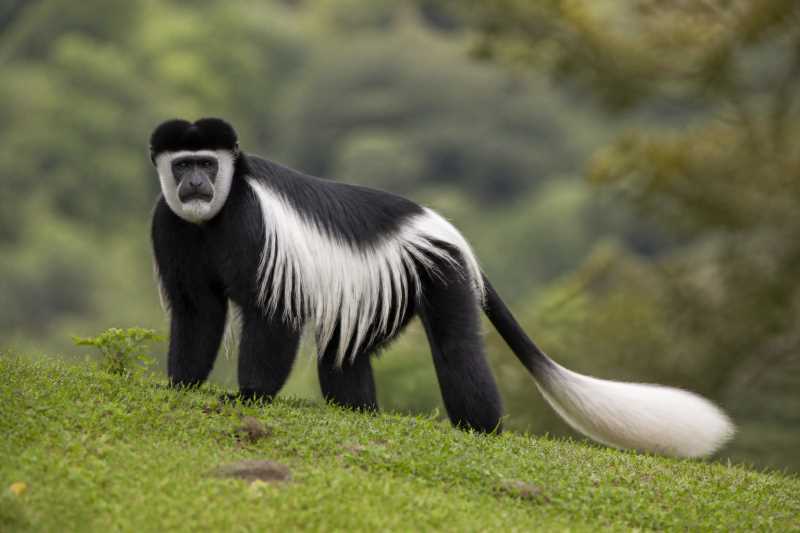
The Guereza, or Eastern Black-and-white Colobus, is a medium-sized primate distinguished by its unique pelage. Adult Guerezas typically weigh between 9 and 13 kilograms, with males being larger than females. One of the most remarkable features of the Guereza is its stark black body contrasted with long, white fringes of hair that run along its sides and back. These fringes form a cape-like appearance, which is particularly noticeable when the animal is in motion.
The face of the Guereza is hairless, with a black skin tone and expressive eyes that reflect its intelligence. They have a long tail, which is mostly white and assists them in maintaining balance while navigating the treetops. Unlike many other primates, Guerezas lack thumbs, a characteristic that is thought to aid in their specialized arboreal lifestyle.
Range and Habitat
The Guereza inhabits the dense forests and wooded grasslands of central to eastern Africa. Its range extends from Nigeria and Cameroon in the west to Ethiopia, Kenya, Uganda, and Tanzania in the east. These primates are highly adaptable and can be found at various altitudes, from sea level to 3,500 meters in the Ethiopian highlands.
Their preferred habitat includes riverine forests and montane forests, where they can find abundant foliage for feeding. Guerezas are primarily arboreal, spending most of their lives in the tree canopy. However, they are also known to venture into open areas, particularly in search of food.
Behavior and Diet
Guerezas are social animals, living in groups that range from 3 to 15 individuals. These groups are typically composed of a dominant male, several females, and their offspring. The social structure is cohesive yet flexible, with members grooming each other to maintain bonds.
Their diet consists mainly of leaves, supplemented by fruits, seeds, and flowers. Guerezas have a specialized digestive system with a multi-chambered stomach, allowing them to efficiently process the cellulose-rich leaves that form the bulk of their diet. They are known for their selective feeding habits, often choosing young leaves that are more nutritious and easier to digest.
Identification Tips
Recognizing the Guereza in the wild involves noting several key features:
- Coloration: Look for the distinct black body with white side fringes and a long white tail.
- Habitat: They are often seen high in the canopy of forested areas.
- Social groups: Guerezas are usually observed in small troops led by a dominant male.
- Vocalizations: Listen for their loud, distinctive calls, which are used to communicate within the group and establish territory.
- Movement: Watch for their graceful leaps between branches, characteristic of their arboreal lifestyle.
Conservation Status
The International Union for Conservation of Nature (IUCN) currently classifies the Guereza as a species of "Least Concern." However, this status does not imply they are free from threats. The primary threats to Guereza populations include habitat destruction due to logging and agricultural expansion, as well as hunting for bushmeat and the illegal pet trade.
Conservation efforts are in place to mitigate these threats, including habitat protection initiatives and legal protections in many of the countries within their range. National parks and reserves play a crucial role in safeguarding their habitats. Efforts are also being made to educate local communities about the ecological importance of Guerezas and reduce hunting pressures.
Frequently Asked Questions
1. What does a Guereza eat?
Guerezas primarily feed on leaves but also consume fruits, seeds, and flowers. Their digestive system is adapted to break down tough plant materials, allowing them to thrive on a leaf-heavy diet.
2. How do Guerezas communicate?
Guerezas communicate using a variety of vocalizations, including loud calls to establish territory and softer sounds for group cohesion. Grooming is also an important social behavior for communication.
3. Are Guerezas endangered?
While Guerezas are currently classified as "Least Concern" by the IUCN, they face threats from habitat loss and hunting. Conservation efforts are ongoing to protect their populations and habitats.
4. Where can I see a Guereza in the wild?
Guerezas can be observed in several East African countries, including Ethiopia, Uganda, and Kenya, particularly within national parks and protected areas.
5. Why do Guerezas not have thumbs?
Guerezas lack thumbs, which is thought to aid in their arboreal lifestyle by providing a more streamlined hand for navigating the treetops and grasping branches.
Related posts