The Slaty-backed Flycatcher: A Comprehensive Overview
The Slaty-backed Flycatcher (Ficedula erithacus) is a captivating member of the Muscicapidae family, noted for its striking appearance and intriguing behaviors. This small passerine bird, native to parts of Asia, has garnered attention from ornithologists and bird enthusiasts alike, who are drawn to its unique characteristics and the ecological role it plays in its habitat.
Physical Characteristics
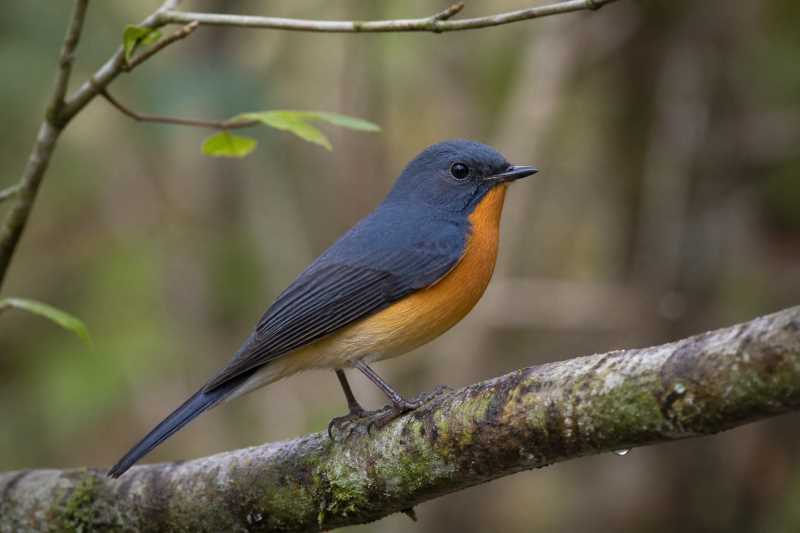
The Slaty-backed Flycatcher is relatively small, measuring about 13 centimeters in length. The male is particularly distinguished by its slate-blue back, contrasting with a bright orange throat and chest. Its striking plumage is complemented by a white belly and a tail that fans out with a mix of black and white feathers. The female, while less vividly colored, exhibits a more subdued palette with olive-brown upperparts and a paler, buffy underside. This sexual dimorphism is commonplace among flycatchers, aiding in mate selection and courtship.
These birds have a fine bill adapted for their insectivorous diet, and their beady black eyes give them a keen sense of sight, essential for spotting prey. Their legs are relatively short, but strong enough to support their agile movements through the branches and foliage.
Habitat and Distribution
The Slaty-backed Flycatcher is predominantly found in the forests and woodlands of the Himalayan foothills, extending across northern and northeastern parts of the Indian subcontinent, including regions of Nepal, Bhutan, and Myanmar. They prefer subtropical or tropical moist lowland forests and montane forests, often favoring areas with dense undergrowth and a rich supply of insects.
These birds are altitudinal migrants, descending to lower elevations during the colder months. This seasonal migration is driven by the availability of food resources, as insects become scarcer in higher altitudes during winter.
Behavior and Diet
Slaty-backed Flycatchers are primarily insectivorous, feeding on a variety of insects and their larvae. They exhibit a strategy known as ‘sallying,’ where they perch conspicuously on a branch before flying out to catch prey in mid-air. This dynamic approach to foraging is not only effective but also showcases their impressive aerobatic skills.
In addition to sallying, they occasionally glean insects from foliage, demonstrating their adaptability in foraging strategies. Their diet may also include small amounts of fruit, particularly during seasons when insects are less abundant.
Breeding and Reproduction
The breeding season for the Slaty-backed Flycatcher typically occurs between April and June. During this time, males are especially vocal, using their melodious song to establish territories and attract females. The song is an essential component of their courtship, often consisting of a series of sweet, whistling notes.
Nests are usually constructed in tree hollows or on branches, often disguised by moss and lichen to protect against predators. The female lays a clutch of about 2-5 eggs, which she incubates for approximately two weeks. Both parents are involved in feeding and caring for the fledglings, ensuring they are well-nourished and protected from potential threats.
Conservation Status
Currently, the Slaty-backed Flycatcher is classified as a species of "Least Concern" by the International Union for Conservation of Nature (IUCN). Despite this reassuring status, habitat loss due to deforestation and land conversion remains a potential threat. Conservation efforts focused on preserving forest habitats are crucial in maintaining stable populations of this and other forest-dependent species.
Importance in Ecosystem
The role of the Slaty-backed Flycatcher in its ecosystem is significant. As insectivores, they help control insect populations, contributing to the balance within their habitats. Their presence also indicates a healthy, intact forest ecosystem, as they rely on rich insect biodiversity and dense vegetation.
Moreover, these birds are a source of fascination and joy for birdwatchers and nature lovers, promoting interest in the natural world and the importance of conservation.
Conclusion
The Slaty-backed Flycatcher is a remarkable example of avian diversity, with its vibrant plumage and dynamic lifestyle. It serves as a reminder of the rich biodiversity found in Asian forests and the need to protect these environments. As we continue to study and appreciate these birds, we must also be vigilant in our efforts to preserve their natural habitats, ensuring that future generations can enjoy and learn from these fascinating creatures.
The Slaty-backed Flycatcher may be a small bird, but its presence is a testament to the intricate web of life within the ecosystems it inhabits. By understanding and protecting such species, we take significant steps towards maintaining the ecological balance and natural beauty of our world.
Related posts