The Enchanting Black-headed Nightingale-Thrush: A Symphony of Nature
The Black-headed Nightingale-Thrush (Catharus mexicanus) is a captivating bird species known for its melodious songs and striking appearance. Found primarily in Central America, this bird has intrigued ornithologists and bird enthusiasts alike, not only for its vocal prowess but also for its ecological significance and unique behavioral traits.
Habitat and Distribution
The Black-headed Nightingale-Thrush inhabits the dense undergrowth of montane forests, thriving in the humid and temperate zones from southern Mexico to western Panama. These birds prefer elevations ranging from 900 to 3000 meters, often found in cloud forests where the environment is rich in mosses and epiphytes. Their preference for such habitats makes them an essential component in the biodiversity of these regions.
Physical Characteristics
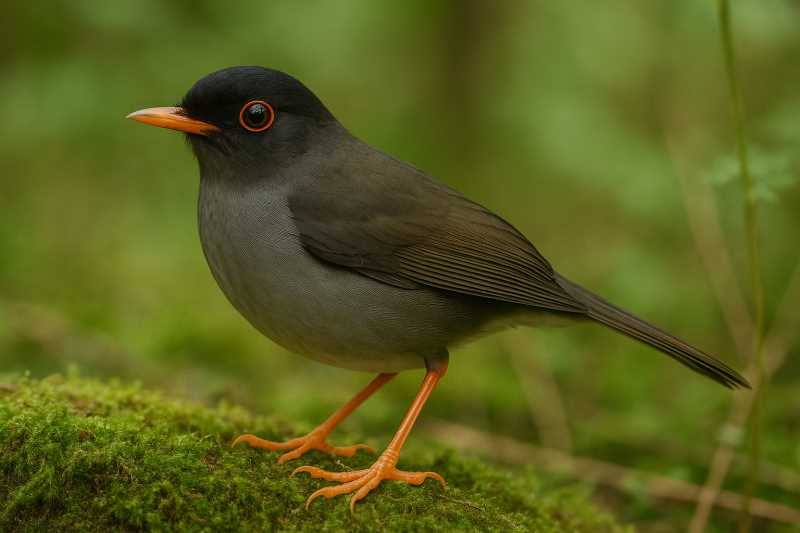
The Black-headed Nightingale-Thrush is a medium-sized bird, measuring approximately 16-18 cm in length. Its most distinctive feature is its bold black head, contrasting sharply with its olive-brown upperparts and a more subdued grayish underbelly. The bird’s eyes are strikingly large and dark, accentuated by a white eye-ring that gives it an inquisitive expression. This combination of features not only makes it visually appealing but also aids in its identification in the wild.
Vocalizations
Renowned for its song, the Black-headed Nightingale-Thrush produces a series of flute-like notes that are both melodious and complex. These songs play a vital role in communication, particularly during the breeding season when males use their vocal abilities to attract mates and establish territories. The intricate melodies are a testament to the bird’s exceptional vocal capabilities, earning it a revered place among songbirds.
Feeding Habits
Primarily insectivorous, the Black-headed Nightingale-Thrush forages on the forest floor, using its keen eyesight to spot insects and other invertebrates among the leaf litter. It also consumes small fruits and berries, which helps in seed dispersal, thereby contributing to the forest’s ecological balance. The bird’s diet reflects its adaptability, allowing it to thrive in various environmental conditions within its range.
Breeding and Nesting
The breeding season for the Black-headed Nightingale-Thrush typically coincides with the onset of the rainy season, ensuring an abundance of food for the growing chicks. Nests are usually constructed in dense foliage, offering protection from predators. The female lays two to three eggs, which both parents incubate and care for, showcasing a strong pair bond and cooperative breeding behavior.
Conservation Status
Despite its limited range, the Black-headed Nightingale-Thrush is currently classified as Least Concern by the International Union for Conservation of Nature (IUCN). However, habitat loss due to deforestation poses a significant threat to its populations. Conservation efforts focused on protecting montane forest habitats are crucial for the long-term survival of this species.
The Role in Ecotourism
The Black-headed Nightingale-Thrush is a favorite among birdwatchers and nature enthusiasts, contributing to the growing ecotourism industry in Central America. Its presence in biodiverse regions attracts visitors, highlighting the importance of conserving natural habitats for both ecological and economic benefits.
In conclusion, the Black-headed Nightingale-Thrush is more than just a bird with a beautiful song. It is an integral part of its ecosystem, playing a vital role in seed dispersal, insect population control, and as an indicator of forest health. Protecting this species and its habitat ensures the preservation of the rich biodiversity that characterizes Central American montane forests.
Future Prospects
Research into the Black-headed Nightingale-Thrush’s behavior, vocalizations, and ecology continues to offer insights into the complex dynamics of forest ecosystems. As efforts to conserve these habitats intensify, the Black-headed Nightingale-Thrush stands as a symbol of the intricate web of life that thrives in the world’s montane forests.
Related posts