The Curve-billed Thrasher: A Detailed Exploration
The Curve-billed Thrasher (Toxostoma curvirostre) is a fascinating bird species that captivates ornithologists and bird enthusiasts alike. Known for its distinctive curved bill and melodious song, this bird is a prominent member of the Mimidae family, which also includes mockingbirds and other thrashers. Native to the arid regions of the Southwestern United States and Mexico, the Curve-billed Thrasher is a resilient species that has adapted well to desert life.
Taxonomy and Classification
The Curve-billed Thrasher belongs to the order Passeriformes, which encompasses more than half of all bird species. Within this order, it is part of the family Mimidae, a group known for their vocal mimicry abilities. The genus Toxostoma includes several other thrashers, all of which share similar morphological features such as long tails and down-curved bills.
Physical Characteristics
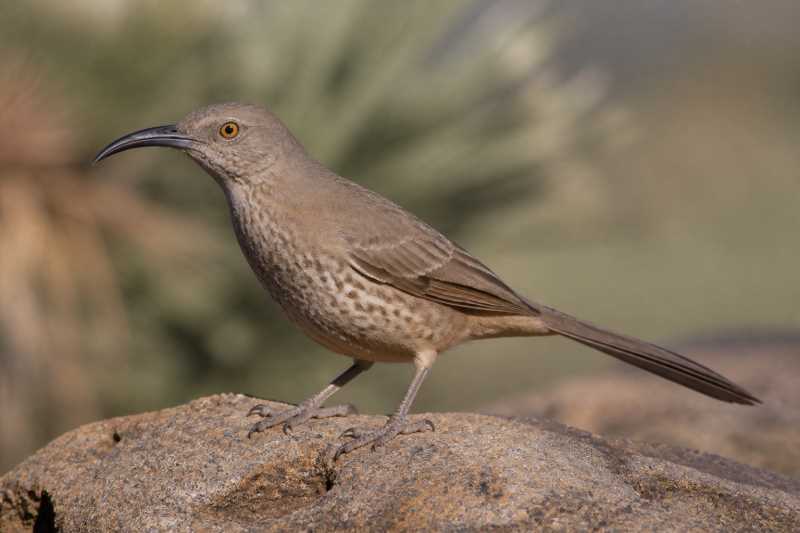
Adult Curve-billed Thrashers are medium-sized birds, measuring approximately 25 to 28 cm in length, with a wingspan of about 33 to 38 cm. They typically weigh between 70 to 85 grams. Their plumage is predominantly a grayish-brown with lighter underparts. The most distinctive feature of this species is its long, decurved bill, which aids in foraging for insects and other invertebrates in the soil.
The eyes of the Curve-billed Thrasher are a striking orange or yellow, providing a vivid contrast to their earthy plumage. Their long legs and strong feet are well-suited for ground foraging, a common behavior among thrashers.
Habitat and Distribution
The natural habitat of the Curve-billed Thrasher includes desert scrublands, thorn forests, and arid grasslands. They are commonly found in the southwestern United States, particularly in Arizona, New Mexico, and Texas. Their range extends southward into Mexico, including the Chihuahuan and Sonoran Deserts.
These birds are highly adaptable and can often be found in suburban areas where suitable vegetation is present. They prefer habitats with dense shrubs or cactus plants, which provide ample foraging opportunities and nesting sites.
Behavior and Ecology
Curve-billed Thrashers are known for their energetic and inquisitive nature. They are primarily ground foragers, using their curved bills to probe the soil and leaf litter for insects, seeds, and fruits. Their diet is diverse, allowing them to thrive in various environments.
These birds are also recognized for their vocalizations. Males are particularly vocal during the breeding season, using a series of melodious and complex songs to establish territory and attract mates. They are capable mimics, sometimes incorporating sounds from their surroundings into their songs.
Reproduction and Lifespan
Breeding season for the Curve-billed Thrasher typically occurs from March to July. During this time, males engage in elaborate displays to court females. Once paired, the female constructs a nest using twigs, grass, and other materials. Nests are usually built in thorny shrubs or cactus plants to deter predators.
The female lays a clutch of 2 to 4 eggs, which she incubates for about 14 days. Both parents participate in feeding the chicks, which fledge approximately two weeks after hatching. Curve-billed Thrashers can produce multiple broods in a single breeding season.
In the wild, these birds can live up to 10 years, although their lifespan is often shorter due to predation and environmental challenges.
Conservation Status
Currently, the Curve-billed Thrasher is listed as "Least Concern" by the International Union for Conservation of Nature (IUCN). This classification reflects their stable population and wide distribution. However, habitat loss due to urbanization and agriculture poses a potential threat to their habitats.
Conservation efforts emphasize the importance of preserving natural habitats and promoting native vegetation in urban landscapes to support this species and other desert-dwelling birds.
Interaction with Humans
The Curve-billed Thrasher is a familiar sight in many southwestern communities, often visiting bird feeders and gardens. They play a beneficial role in controlling insect populations and dispersing seeds through their foraging activities.
Bird enthusiasts appreciate their presence for the lively songs and unique behaviors they bring to backyard birdwatching. Educating the public about the ecological role of these birds can foster greater appreciation and conservation efforts.
Conclusion
The Curve-billed Thrasher is a remarkable example of avian adaptation to desert environments. With its striking appearance, complex vocalizations, and resilience, it continues to captivate those who study and observe it. As we continue to encroach upon their natural habitats, it is crucial to implement conservation measures that ensure the survival and thriving of this species for future generations.
By understanding the ecological importance of the Curve-billed Thrasher and promoting habitat conservation, we can help preserve the vibrant biodiversity of our planet’s desert ecosystems.
For birdwatchers and nature lovers, the Curve-billed Thrasher offers a unique glimpse into the rich tapestry of life in arid regions, reminding us of the beauty and complexity of our natural world.
Related posts