Yellow-breasted Antwren: A Jewel of the Amazon Rainforest
Introduction
The Yellow-breasted Antwren (Herpsilochmus axillaris) is a distinctive and captivating bird species that resides predominantly in the dense canopies of the Amazon Rainforest. Known for its vibrant plumage and unique behaviors, this small passerine bird has piqued the interest of ornithologists and bird enthusiasts alike. This article delves into the various facets of the Yellow-breasted Antwren’s life, including its habitat, behavior, conservation status, and the challenges it faces in today’s rapidly changing world.
Taxonomy and Physical Description
The Yellow-breasted Antwren belongs to the family Thamnophilidae, a diverse group commonly referred to as antbirds. First described by ornithologists in the mid-19th century, the species carries the scientific name Herpsilochmus axillaris. This bird is relatively small, measuring approximately 11 to 12 centimeters in length and weighing around 10 grams.
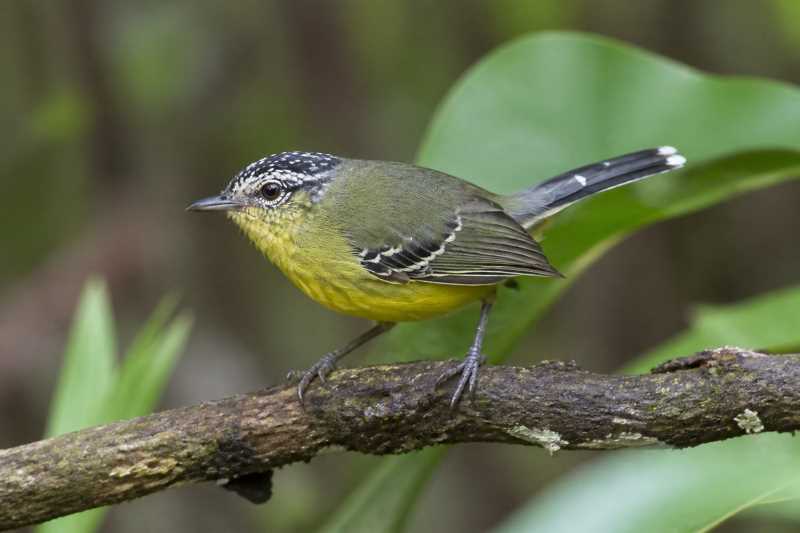
The Yellow-breasted Antwren is easily recognizable by its striking plumage. The male typically exhibits a bright yellow chest and underparts, contrasted by a dark, almost black, back and wings. The head is adorned with a subtle white eye-ring, adding to its distinctive appearance. Females, while similarly patterned, tend to display more muted colors, providing them with better camouflage in their native habitat.
Habitat and Distribution
This antwren species is endemic to the Amazon Basin, with its range extending across several South American countries, including Brazil, Colombia, Ecuador, and Peru. It thrives in lowland tropical rainforests, particularly favoring the dense, humid canopy layers where it forages and nests.
The Yellow-breasted Antwren’s preference for undisturbed primary forests means that it is often found in remote areas, far from human settlements. Its habitat choice makes it especially vulnerable to deforestation and habitat fragmentation—issues of significant concern in the Amazon region.
Behavior and Diet
The Yellow-breasted Antwren exhibits fascinating behaviors that are characteristic of many antbird species. It is primarily insectivorous, feeding on a diet rich in small arthropods, including ants, beetles, and spiders. The bird forages actively, flitting from branch to branch in search of prey, often in mixed-species flocks that provide safety and increase foraging efficiency.
These birds are known for their complex vocalizations, which play a crucial role in communication, territory defense, and mate attraction. Their calls are a series of rapid, high-pitched notes that can be heard echoing through the rainforest canopy.
Breeding and Reproduction
The breeding season for the Yellow-breasted Antwren typically aligns with the onset of the rainy season, which varies geographically within the Amazon Basin. During this time, pairs establish territories and engage in courtship displays that include vocal duets and synchronized movements.
Nests are usually constructed as small, cup-shaped structures built with twigs and leaves, strategically placed in the dense foliage to minimize predation risks. Both male and female participate in incubating the eggs and feeding the chicks, showcasing a cooperative breeding strategy that ensures the survival of their offspring.
Conservation Status
The International Union for Conservation of Nature (IUCN) currently lists the Yellow-breasted Antwren as a species of Least Concern. However, its reliance on pristine forest environments means that ongoing deforestation poses a significant threat to its future. The Amazon Rainforest, often dubbed the "lungs of the Earth," is experiencing unprecedented rates of deforestation due to logging, agriculture, and infrastructure development.
Conservation efforts are crucial to ensure the survival of the Yellow-breasted Antwren and countless other species that depend on the Amazon. Protected areas, sustainable land-use practices, and community engagement are vital components of effective conservation strategies.
Challenges and Future Outlook
The future of the Yellow-breasted Antwren is intertwined with the fate of the Amazon Rainforest. Climate change, habitat destruction, and political challenges pose significant hurdles to conservation efforts. However, there is hope in the form of international cooperation, scientific research, and grassroots movements that aim to preserve this invaluable ecosystem.
Efforts to map the distribution and population trends of the Yellow-breasted Antwren are underway, providing crucial data that can inform conservation policies. Public awareness and education are also key to garnering support for the protection of the Amazon and its unique biodiversity.
Conclusion
The Yellow-breasted Antwren, with its stunning appearance and intriguing behaviors, serves as a reminder of the rich biodiversity that the Amazon Rainforest harbors. Protecting this species requires a concerted effort to address the environmental challenges facing the region. By fostering collaboration between governments, conservation organizations, and local communities, there is hope for a future where the Yellow-breasted Antwren and its habitat can thrive.
In summary, the Yellow-breasted Antwren is a small yet significant player in the grand tapestry of the Amazon ecosystem. Its survival is emblematic of the broader struggle to conserve the world’s rainforests—a task that is critical not only for the species that inhabit them but for the health of our planet as a whole.
Related posts