The Coppery-chested Jacamar: A Jewel of the Andean Foothills
The Coppery-chested Jacamar (Galbula pastazae) is a bird species that captivates both birdwatchers and ornithologists with its striking appearance and distinctive behaviors. Found primarily in the Andean foothills, this elusive species is a testament to the rich biodiversity of South America. This article delves into the natural history, habitat, behavior, and conservation of the Coppery-chested Jacamar, offering a comprehensive understanding of this remarkable bird.
Taxonomy and Description
Belonging to the family Galbulidae, the Coppery-chested Jacamar is a member of the order Piciformes, which also includes woodpeckers and puffbirds. It is the only species in the genus Galbula that is endemic to the Andean region.
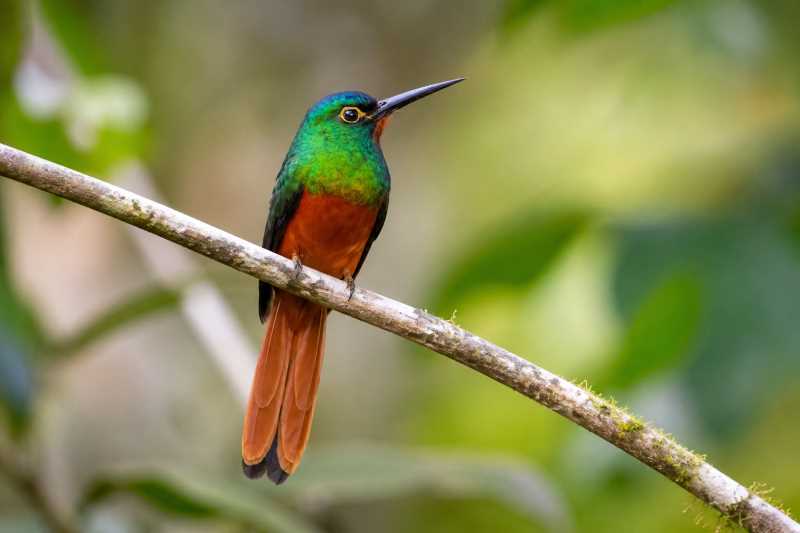
The bird is named for its distinctive coppery hue on the chest, which shimmers in sunlight, providing a striking contrast to its otherwise dark green plumage. The iridescent green feathers cover much of the body, while the underparts exhibit a rich, coppery tone. The bird’s long, slender bill is perfectly adapted for capturing insects, its primary food source.
Habitat and Distribution
The Coppery-chested Jacamar is primarily found in the subtropical and tropical moist montane forests of the eastern Andes, ranging from southern Colombia through Ecuador and into northern Peru. This bird favors the dense understory of these forests, where it can often be found perched quietly, waiting to ambush passing insects.
The elevation range for the Coppery-chested Jacamar typically spans from 600 to 2,100 meters above sea level. The bird’s preference for such specific habitats makes it a reliable indicator of forest health in these regions.
Behavior and Ecology
The Coppery-chested Jacamar is an insectivore, predominantly feeding on flying insects such as butterflies, beetles, and ants. It employs a sit-and-wait hunting strategy, where it perches silently before launching into the air to snatch prey with its sharp bill.
This bird is known for its distinctive call, which is a series of high-pitched, rapid notes that can be heard echoing through the forest. The call is used for communication between mates and to establish territory.
Despite its vibrant appearance, the Coppery-chested Jacamar is surprisingly difficult to spot. Its preference for sitting still for long periods and its ability to blend into the leafy environment make it a challenge for birdwatchers to observe.
Reproduction
The breeding season for the Coppery-chested Jacamar typically coincides with the onset of the wet season, when insect prey is most abundant. The species is monogamous, with pairs maintaining territories year-round.
Nesting occurs in burrows excavated in earthen banks or termite mounds. Both sexes participate in the excavation and care for the young. The female lays two to four white eggs, which both parents incubate. Once hatched, the chicks are altricial and require extensive parental care until they fledge.
Conservation Status
The Coppery-chested Jacamar is currently classified as Near Threatened by the International Union for Conservation of Nature (IUCN). The primary threats to its survival are habitat destruction and fragmentation, largely due to agriculture, logging, and mining activities in the Andean region.
Conservation efforts for the species focus on preserving its natural habitat. Protected areas and reserves within its range play a crucial role in safeguarding the remaining populations. Organizations are also working to promote sustainable land-use practices and raise awareness about the importance of conserving the Andean forests.
Importance to Ecosystem
As an insectivore, the Coppery-chested Jacamar plays a vital role in controlling insect populations within its habitat. By consuming large numbers of insects, it helps to maintain the balance of the ecosystem, preventing any single species from becoming overly dominant.
Furthermore, the presence of the Coppery-chested Jacamar is an indicator of a healthy forest ecosystem. Its reliance on pristine habitats makes it a valuable species for monitoring environmental changes and the impacts of human activities.
Observing the Coppery-chested Jacamar
For birdwatchers, observing the Coppery-chested Jacamar requires patience and a keen eye. The best chance of spotting this bird is in the early morning or late afternoon when it is most active. Visiting protected reserves and areas within its range increases the likelihood of an encounter.
Binoculars and a good field guide are essential tools for birdwatchers seeking to identify the Coppery-chested Jacamar. Additionally, learning to recognize its call can aid in locating the bird amidst the dense forest foliage.
Conclusion
The Coppery-chested Jacamar is a stunning example of the biodiversity found within the Andean foothills. Its shimmering plumage and unique behaviors make it a fascinating subject for study and observation. However, the threats it faces highlight the urgent need for conservation efforts to preserve its habitat and ensure its survival.
Efforts to protect the Coppery-chested Jacamar are critical not only for the species itself but also for the broader ecosystem. By safeguarding this bird, we help to maintain the delicate balance of life in the Andean forests and contribute to the overall health of our planet.
As we continue to learn more about the Coppery-chested Jacamar and its role within the ecosystem, it serves as a reminder of the beauty and complexity of the natural world, and the responsibility we bear in preserving it for future generations.
Related posts