Jameson’s Firefinch: A Jewel of the Avian World
The avian world is replete with remarkable species that capture the imagination of bird enthusiasts and naturalists alike. Among these, Jameson’s Firefinch (Lagonosticta rhodopareia) stands out not only for its vivid coloration but also for its intriguing behavior and habitat preferences. This article delves into the fascinating world of Jameson’s Firefinch, exploring its physical characteristics, distribution, behavior, and conservation status.
Physical Characteristics
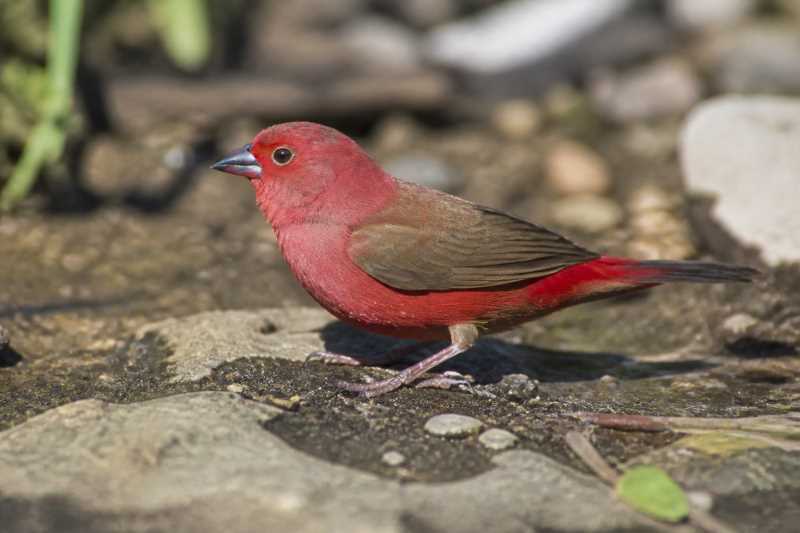
Jameson’s Firefinch is a small passerine bird that belongs to the family Estrildidae. The species exhibits sexual dimorphism, with the male being particularly striking. Males typically boast a vibrant red plumage on the head, breast, and rump, which contrasts beautifully with the brownish wings and back. The eye-catching red coloration is a key identification marker that helps distinguish it from other finches in its range. Females, on the other hand, are more subdued in appearance, with a primarily brown body and a subtle hint of red on the face and breast. Both sexes have a conical bill, adapted for seed eating, and a relatively short tail.
Distribution and Habitat
Jameson’s Firefinch can be found across a broad swath of sub-Saharan Africa, inhabiting countries such as Zambia, Zimbabwe, Angola, Tanzania, and the Democratic Republic of the Congo. The species favors open savannas, grasslands, and areas with scattered shrubs and trees, often in proximity to water bodies. This preference for varied habitats provides the firefinch with ample opportunities for foraging and nesting.
The bird’s ability to adapt to different environments is evident in its presence in both moist and dry savanna regions. This adaptability ensures that Jameson’s Firefinch can exploit a range of ecological niches, which is a key factor in its relatively stable population numbers.
Behavior and Diet
Jameson’s Firefinch is primarily a seed-eater, with a diet that includes grass seeds, millet, and other small grains. However, it is not strictly granivorous; it supplements its diet with small insects, especially during the breeding season when the demand for protein-rich food increases. This flexibility in diet enables the firefinch to thrive across diverse habitats.
In terms of behavior, Jameson’s Firefinch is known for its social nature. It often forms small flocks outside the breeding season, and these groups can sometimes include other species of firefinches and waxbills. Such flocking behavior provides safety in numbers, reducing the risk of predation.
During the breeding season, which typically coincides with the rainy season, males perform elaborate courtship displays. These displays include vocalizations and a series of hops and flights designed to attract females. Once paired, the birds engage in cooperative nesting, with both parents involved in building the nest, incubating the eggs, and feeding the chicks.
Conservation Status
The International Union for Conservation of Nature (IUCN) currently lists Jameson’s Firefinch as a species of Least Concern. This classification is due to its wide distribution and presumably large population size. Nevertheless, like many other bird species, Jameson’s Firefinch faces threats from habitat destruction and changes in land use, which can impact local populations. Conservation efforts aimed at preserving savanna ecosystems and promoting sustainable land management practices are crucial to ensuring the continued survival of this vibrant species.
In some regions, the firefinch is also captured for the pet trade, although this is not considered a significant threat at the population level. Continued monitoring of trade practices and enforcement of regulations are important to prevent any potential negative impacts on wild populations.
Conclusion
Jameson’s Firefinch is a captivating example of the beauty and diversity inherent in the avian world. Its striking appearance, adaptable nature, and intriguing social behaviors make it a favorite among birdwatchers and researchers alike. By understanding and appreciating such species, we can foster a greater appreciation for the natural world and the need to protect it.
As with all wildlife, the future of Jameson’s Firefinch depends on concerted conservation efforts and a commitment to preserving the habitats that support its life. Through education and awareness, we can ensure that this jewel of the avian world continues to thrive for generations to come.
Related posts