The Enchanting Red-breasted Toucan: An Avian Marvel of the Neotropics
In the vibrant tapestry of the Neotropical forests, few birds capture the imagination quite like the Red-breasted Toucan (Ramphastos dicolorus). With its striking plumage and charismatic presence, this species stands as a testament to the beauty and biodiversity of South America. This article delves into the fascinating world of the Red-breasted Toucan, exploring its characteristics, habitat, behavior, and conservation status.
A Portrait of Color and Elegance
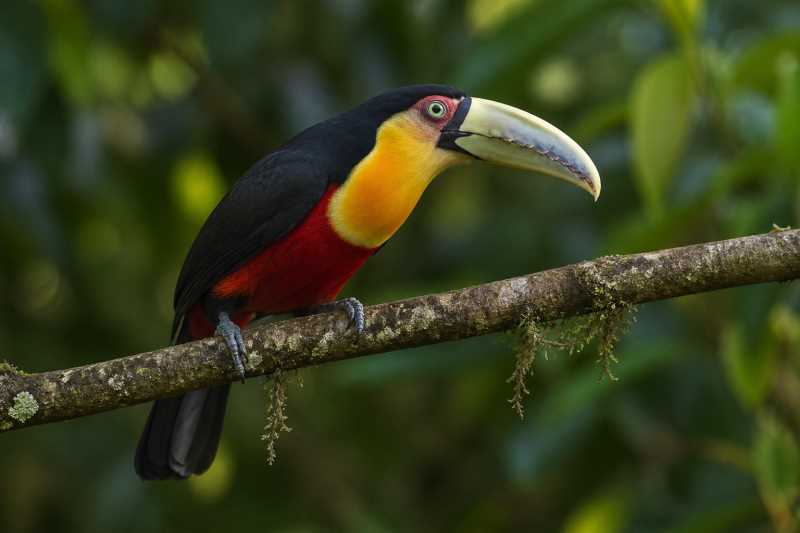
The Red-breasted Toucan is a medium-sized bird, measuring approximately 40 cm (16 inches) in length and weighing around 265–400 grams (9.3–14.1 ounces). Its most distinctive feature is its vibrant plumage: a bright red breast contrasts dramatically with a predominantly black body. The bird’s head is adorned with a striking yellow throat and a greenish-black crown. The bill, while not as large as those of some other toucan species, is equally arresting with its greenish-yellow hue and serrated edges, perfectly adapted for manipulating fruits and small prey.
Habitat and Distribution
This toucan species is predominantly found in the lush, broadleaved forests of eastern and southeastern Brazil, with its range extending into parts of Paraguay and northeastern Argentina. The Red-breasted Toucan’s preference for lowland and montane forests, primarily those in the Atlantic Forest biome, underscores the ecological importance of these habitats. Unfortunately, this biome has been subject to extensive deforestation and habitat fragmentation, posing significant threats to the species that reside there.
Behavior and Diet
Red-breasted Toucans are social creatures, often seen in pairs or small groups. Their social behavior is characterized by playful interactions and vocalizations, which include a series of high-pitched calls that echo through the forest canopy. These vocalizations serve multiple purposes, from marking territory to maintaining social bonds within groups.
The diet of the Red-breasted Toucan is omnivorous but predominantly frugivorous. They play a crucial role in seed dispersal, aiding in maintaining the health of their forest ecosystems. In addition to fruits, these toucans consume insects, small reptiles, and bird eggs, showcasing their adaptability in foraging.
Reproduction and Lifespan
The breeding season for Red-breasted Toucans typically occurs from September to January. During this period, they nest in tree cavities, often taking over abandoned woodpecker nests. The female lays 2 to 4 white eggs, which are incubated by both parents. The cooperative nature of parenting extends beyond incubation; both parents actively feed and care for the chicks, which fledge after about 40 to 50 days.
In the wild, Red-breasted Toucans have an average lifespan of 15 to 20 years. However, factors like predation and habitat loss can impact their longevity.
Conservation Status and Challenges
Currently, the Red-breasted Toucan is classified as Least Concern by the International Union for Conservation of Nature (IUCN), but this does not paint the full picture. The bird faces significant threats due to habitat destruction, primarily from logging and agricultural expansion. Additionally, the illegal pet trade poses a risk, as toucans are often sought after for their beauty and exotic appeal.
Conservation efforts are critical to ensuring the survival of the Red-breasted Toucan and its habitat. Protecting the Atlantic Forest, implementing sustainable land-use practices, and enforcing wildlife trade regulations are vital steps in safeguarding this species.
Conclusion: A Symbol of Biodiversity
The Red-breasted Toucan serves as a vibrant symbol of the rich biodiversity found within the Neotropical forests. Its striking appearance, social behavior, and ecological role underscore the interconnectedness of life within these ecosystems. As we continue to face environmental challenges, the preservation of species like the Red-breasted Toucan reminds us of the intricate beauty and complexity of the natural world, urging us to act with mindfulness and responsibility in our conservation efforts.
In conclusion, the Red-breasted Toucan is more than just a bird; it is an ambassador for the forests it inhabits. By understanding and protecting this avian marvel, we contribute to the broader mission of preserving the rich tapestry of life that defines our planet.
Related posts