Introduction
The Great Snipe (Gallinago media) is a fascinating and somewhat elusive bird species that has intrigued ornithologists and birdwatchers alike. Known for its unique courtship displays and long migratory journeys, the Great Snipe is a subject of extensive research and conservation efforts. This article delves into the various aspects of the Great Snipe’s life, including its habitat, behavior, migration patterns, and conservation status, providing a comprehensive understanding of this remarkable bird.
Taxonomy and Physical Description
The Great Snipe belongs to the family Scolopacidae, which comprises various species of wading birds including sandpipers, curlews, and other snipes. The scientific name, Gallinago media, reflects its classification within the genus Gallinago.
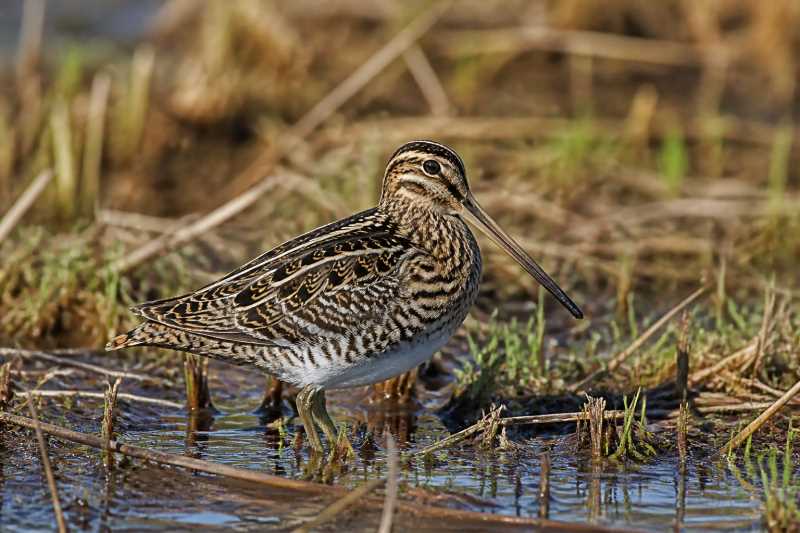
Physically, the Great Snipe is a medium-sized bird, measuring approximately 27-29 cm in length with a wingspan of about 42-50 cm. It is characterized by its cryptic plumage, which provides excellent camouflage in its natural habitat. The bird’s plumage is predominantly brown with intricate patterns of black and buff, which help it blend seamlessly into the marshy and grassland environments it frequents. The long, straight bill is a distinctive feature, aiding in foraging for invertebrates below the surface.
Habitat and Distribution
The Great Snipe primarily inhabits wet meadows, marshes, and grasslands across its breeding range, which extends from Scandinavia through Eastern Europe to Western Siberia. During the breeding season, these birds prefer areas with dense vegetation and adequate water supply, which support a rich invertebrate fauna necessary for feeding.
In contrast, during the non-breeding season, the Great Snipe migrates to sub-Saharan Africa, where it occupies savannas and similar open habitats. This migratory behavior is one of the most remarkable aspects of the Great Snipe’s life, showcasing its ability to undertake long-distance flights across continents.
Behavior and Ecology
The Great Snipe is primarily crepuscular, meaning it is most active during the dawn and dusk hours. Its behavior is heavily influenced by the need to remain inconspicuous to predators, relying on its camouflage and staying motionless when threatened.
Courtship Display
One of the most spectacular behaviors of the Great Snipe is its courtship display, often conducted in leks. A lek is a communal display area where males congregate to perform and compete for the attention of females. These displays are intricate and involve a combination of visual and auditory signals. Males will perform aerial displays, accompanied by a series of clicking and drumming sounds produced by the rapid vibration of their tail feathers. This combination of sound and movement creates an impressive display that can be heard from a considerable distance.
Feeding Habits
The diet of the Great Snipe is largely composed of invertebrates, including insects, worms, and mollusks. Foraging primarily occurs in soft, damp soil where these food sources are abundant. The bird uses its long bill to probe into the ground, detecting prey through tactile receptors.
Migration Patterns
The Great Snipe is a long-distance migrant, covering thousands of kilometers between its breeding and wintering grounds. This migration is remarkable not only for the distances covered but also for the speed and endurance demonstrated by these birds. Studies using tracking devices have shown that Great Snipes can fly non-stop for several days, traveling at speeds of up to 100 km/h.
The migration routes typically span from the breeding grounds in Europe and western Asia to the wintering areas in sub-Saharan Africa. This journey is fraught with challenges, including adverse weather conditions and habitat loss along migratory pathways.
Conservation Status
The Great Snipe is currently listed as ‘Near Threatened’ on the IUCN Red List. The primary threats to its survival include habitat destruction, particularly the drainage of wetlands for agricultural expansion and urban development. Additionally, climate change poses a significant threat by altering the availability and distribution of suitable habitats.
Conservation efforts are focused on protecting and restoring wetland habitats, as well as monitoring population trends through bird banding and satellite tracking. International cooperation is crucial, as the species’ migratory nature means it traverses numerous countries with varying conservation policies.
Conclusion
The Great Snipe is a remarkable bird that exemplifies the wonders of avian life, from its intricate courtship displays to its incredible migratory feats. Understanding and protecting this species requires concerted efforts from the global community, addressing both local and international threats. Through continued research and conservation initiatives, there is hope that the Great Snipe will continue to grace the wetlands of Europe and Africa for generations to come.
References
- BirdLife International. (2020). "Gallinago media." The IUCN Red List of Threatened Species 2020.
- Włodarczyk, R., et al. (2013). "Migration of the Great Snipe Gallinago media: New insights from satellite telemetry." Journal of Avian Biology.
- Van Gils, J., & Wiersma, P. (2020). "Family Scolopacidae (Sandpipers, Snipes and Phalaropes)." In Handbook of the Birds of the World Alive.
Meta Title
"Exploring the Great Snipe: A Migratory Marvel"
Meta Description
"Discover the Great Snipe’s unique courtship, habitat, and migratory patterns, and learn about conservation efforts for this remarkable bird."
Related posts