The Enigmatic Sapphire Quail-Dove: Jewel of the Tropical Forests
The Sapphire Quail-Dove (Geotrygon saphirina), an avian gem of the Neotropical forests, remains one of the lesser-known yet most captivating members of the Columbidae family. This elusive bird, with its striking iridescent plumage and secretive habits, offers a glimpse into the rich biodiversity of the South American rainforest and the critical roles such species play in their ecosystems.
Taxonomy and Distribution
Belonging to the genus Geotrygon, the Sapphire Quail-Dove shares its lineage with other ground doves known for their forest-dwelling habits. Primarily found in the lowland forests of the upper Amazon basin, its range extends across countries such as Peru, Ecuador, Colombia, and Brazil. However, due to its inconspicuous nature and preference for dense understory, much about its distribution remains speculative.
Physical Characteristics
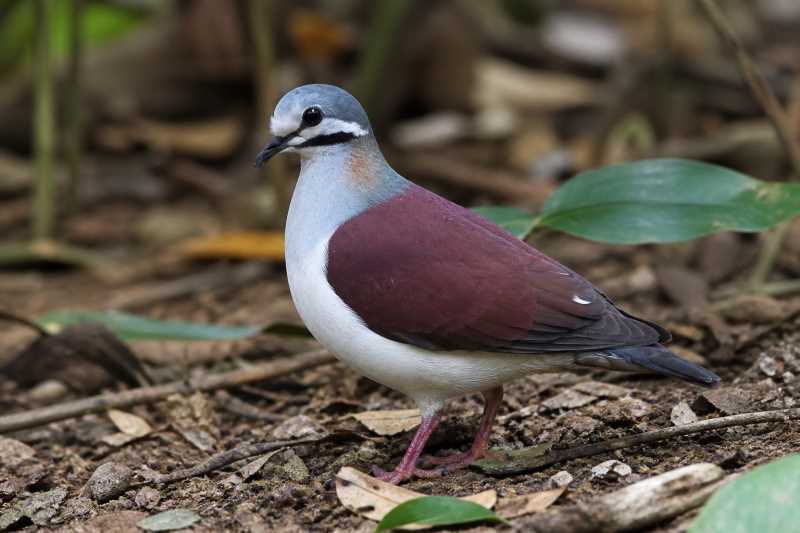
The Sapphire Quail-Dove is aptly named for its dazzling sapphire-blue plumage, which shimmers with metallic hues under the dappled sunlight of the forest canopy. This iridescence is contrasted by a rich, chestnut-brown back, and a pale underbelly, which together create a striking visual spectacle. With an average length of 22 to 25 cm, the bird possesses a strong, stocky build typical of ground doves, designed for life within the forest floor.
The bird’s eyes are a deep, penetrating red, adding a touch of mystique to its appearance. Its short wings and tail, coupled with powerful legs, make it a proficient runner, an adaptation crucial for navigating the thick forest underbrush where it forages.
Behavioral Traits
The Sapphire Quail-Dove is predominantly terrestrial, spending most of its life on the forest floor. Its diet primarily consists of seeds, fruits, and small invertebrates, which it pecks from the ground. This foraging behavior plays an essential role in seed dispersal, contributing to forest regeneration and health.
Known for its shy and reclusive nature, the Sapphire Quail-Dove is often heard rather than seen. Its soft, haunting cooing calls echo through the forest, particularly during dawn and dusk. These vocalizations are believed to play a role in territorial defense and mate attraction.
Reproduction and Lifespan
Little is documented about the breeding habits of the Sapphire Quail-Dove, a testament to its secretive lifestyle. However, like other members of its genus, it is likely to engage in monogamous pair bonding, with both parents sharing responsibilities in nest building and chick rearing. Nests are typically constructed on the ground or low shrubs, providing camouflage from predators.
The bird’s lifespan in the wild remains largely unknown, yet its survival is closely tied to the health of its habitat.
Conservation Status
The IUCN Red List categorizes the Sapphire Quail-Dove as Least Concern. However, its population is suspected to be in decline due to ongoing habitat destruction and fragmentation, primarily from logging and agricultural expansion. The delicate balance of the rainforest ecosystem means that even small changes can have significant impacts on species like the Sapphire Quail-Dove.
Conservation efforts aimed at preserving large tracts of undisturbed forest are crucial for the survival of this species. Protected areas and sustainable land-use practices offer hope for maintaining the biodiversity that supports not just the Sapphire Quail-Dove but countless other interdependent species.
The Ecological Significance of the Sapphire Quail-Dove
As a seed disperser, the Sapphire Quail-Dove contributes to the maintenance of forest dynamics, helping to ensure that a variety of plant species thrive. This ecological role underscores the interconnectedness of forest species and highlights the importance of conserving all members of the ecosystem, regardless of their size or perceived importance.
Future Research Directions
Given its elusive nature, the Sapphire Quail-Dove presents an intriguing subject for further study. Understanding its full range, breeding habits, and ecological roles could provide insights into the health of tropical forest ecosystems. Moreover, increased public awareness and interest in such species can drive conservation actions and policies to protect these vital habitats.
Conclusion
The Sapphire Quail-Dove, with its exquisite plumage and secretive ways, embodies the mystery and beauty of the tropical forests. While it remains a challenge to study due to its elusive nature, every glimpse and whisper of this bird reminds us of the intricate tapestry of life within these ecosystems. Protecting the Sapphire Quail-Dove means safeguarding the rich biodiversity of our planet’s rainforests, ensuring that these natural treasures continue to enchant future generations.
Related posts